
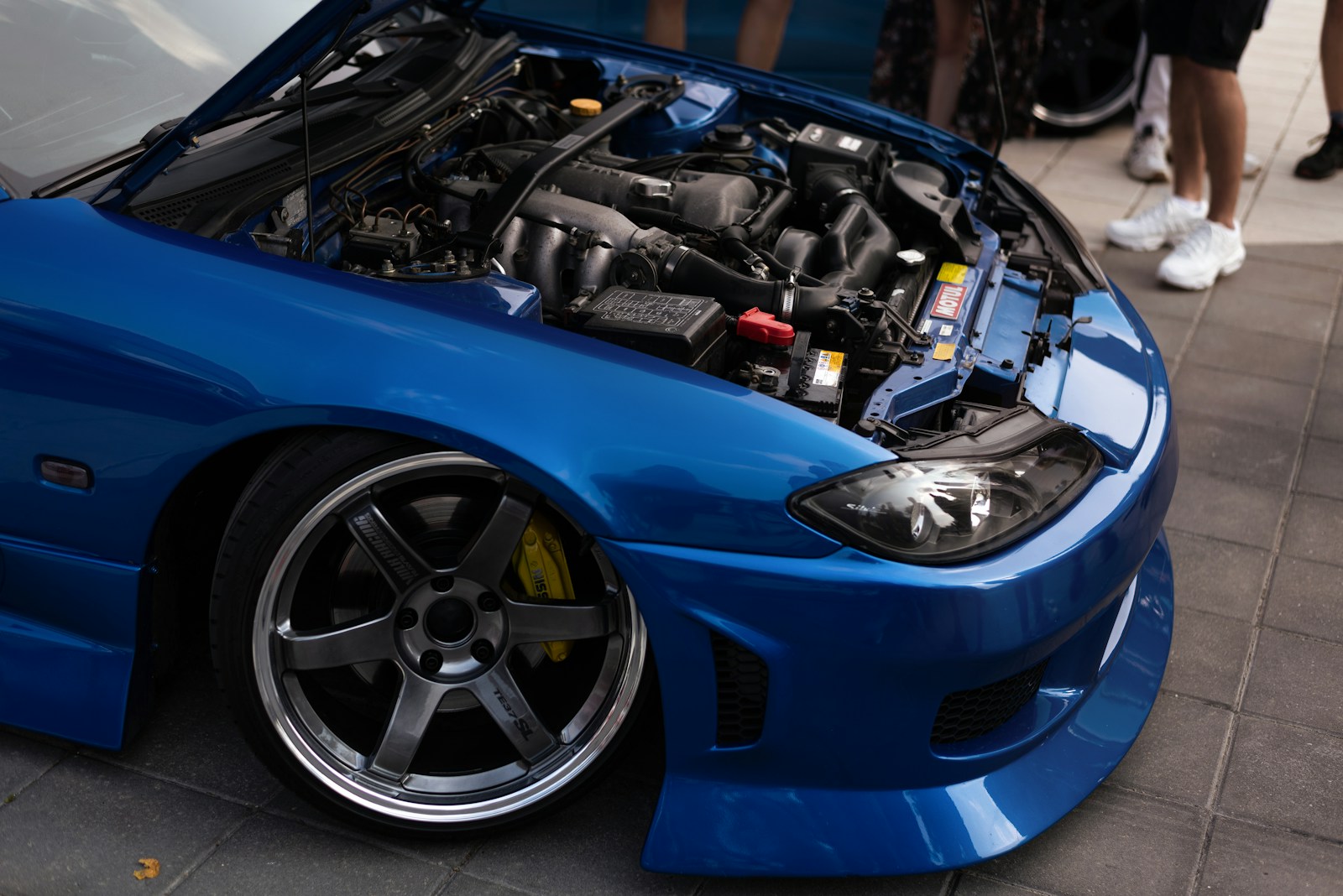

Right now, in September 2026, a Nissan Silvia built in June 2001 is federally legal to import and register anywhere in the United States. A Silvia built fourteen months later, in August 2002, when the very last one rolled off Nissan’s line, is not — and won’t be until 2027. That gap is the whole story behind the “Silvia is banned” myth, and it has nothing to do with the S13 or S14 generations that most people picture when they hear the name.
The 25-Year Rule Runs on Manufacture Date, Not Model Year
Federal law doesn’t care what a car looks like or how iconic it is. Under the exemption administered by the National Highway Traffic Safety Administration, “a motor vehicle that is at least 25 years old can be lawfully imported into the U.S. without regard to whether it complies with all applicable” federal safety standards, and the clock starts on the actual date of manufacture, not the calendar model year printed on a spec sheet. U.S. Customs and Border Protection enforces the same standard on the way in, and requires documentation — a manufacturer’s plate, a sales invoice, or a registration record — proving the build date when the factory label doesn’t spell it out, per CBP’s own import guidance. That single detail is why two Silvias built barely a year apart can have completely different legal status today.

S13: Fully Legal Since 2013
The S13 Silvia launched in May 1988 and ran through the 1994 model year before Japan moved on to facelifted variants. That means the newest S13 in existence turned 25 sometime in 2019 at the latest, and the entire generation — the notchback, the fastback, the CA18DET cars and the later SR20DET-powered ones — has been import-eligible for years. There is no ambiguity left in the S13 story: if you can find one and pay to ship it, it’s legal.
S14: Also Fully in the Clear
Nissan’s S14 debuted in Japan in October 1993 and production continued, including the facelifted “kouki” S14A, until November 1998. The youngest S14 on the planet is now roughly 27 to 28 years old, well past the quarter-century mark. Enthusiasts sometimes lump the S14 in with vague “it’s still illegal” chatter, but that confusion almost certainly traces back to the newer S15 — not this generation, which cleared the bar years ago.
S15: The Generation That’s Actually Split
Here’s where the real nuance lives. The S15 launched in January 1999 and Nissan kept building it until August 2002, when the company ended S-platform production entirely. Do the math against today’s date and the split becomes obvious: any S15 manufactured before roughly September 2001 has already crossed the 25-year threshold and can be imported and titled today. But S15s built in that final year of production — late 2001 into August 2002 — are still federally nonconforming. Those cars won’t become legal until their own individual 25th manufacture anniversary arrives, which for the last examples off the line means sometime in 2027. It’s a rolling deadline, not a fixed one, and it only affects the tail end of one generation out of three.
Clearing Federal Doesn’t Mean Clearing Your State
Federal eligibility is only the first gate. Once a Silvia is old enough to bypass Federal Motor Vehicle Safety Standards, it still has to satisfy whatever the buyer’s home state requires for titling, safety inspection, and emissions — and those rules vary enormously. A 25-year-exempt S13 that sails through registration in Texas can still get hung up in a state that runs its own smog testing on vehicles regardless of import status, or requires a VIN verification appointment specifically for foreign-market cars. None of that changes the federal timeline above, but it explains why “it’s legal now” and “I can drive it tomorrow” aren’t always the same sentence for a Silvia owner.
Why the Confusion Persists
Most of the “Silvia is banned” chatter treats the nameplate as a single car instead of three distinct chassis spanning fourteen years of production. In reality, roughly the first thirteen and a half of those fourteen years are already clear, and only the last several months of S15 production remain in legal limbo — a shrinking window that closes for good by 2027. The pattern says more about how import myths spread than it does about the Silvia itself: a rule that’s genuinely complicated, applied unevenly across three generations, gets flattened into a single wrong headline that outlives its own expiration date.