
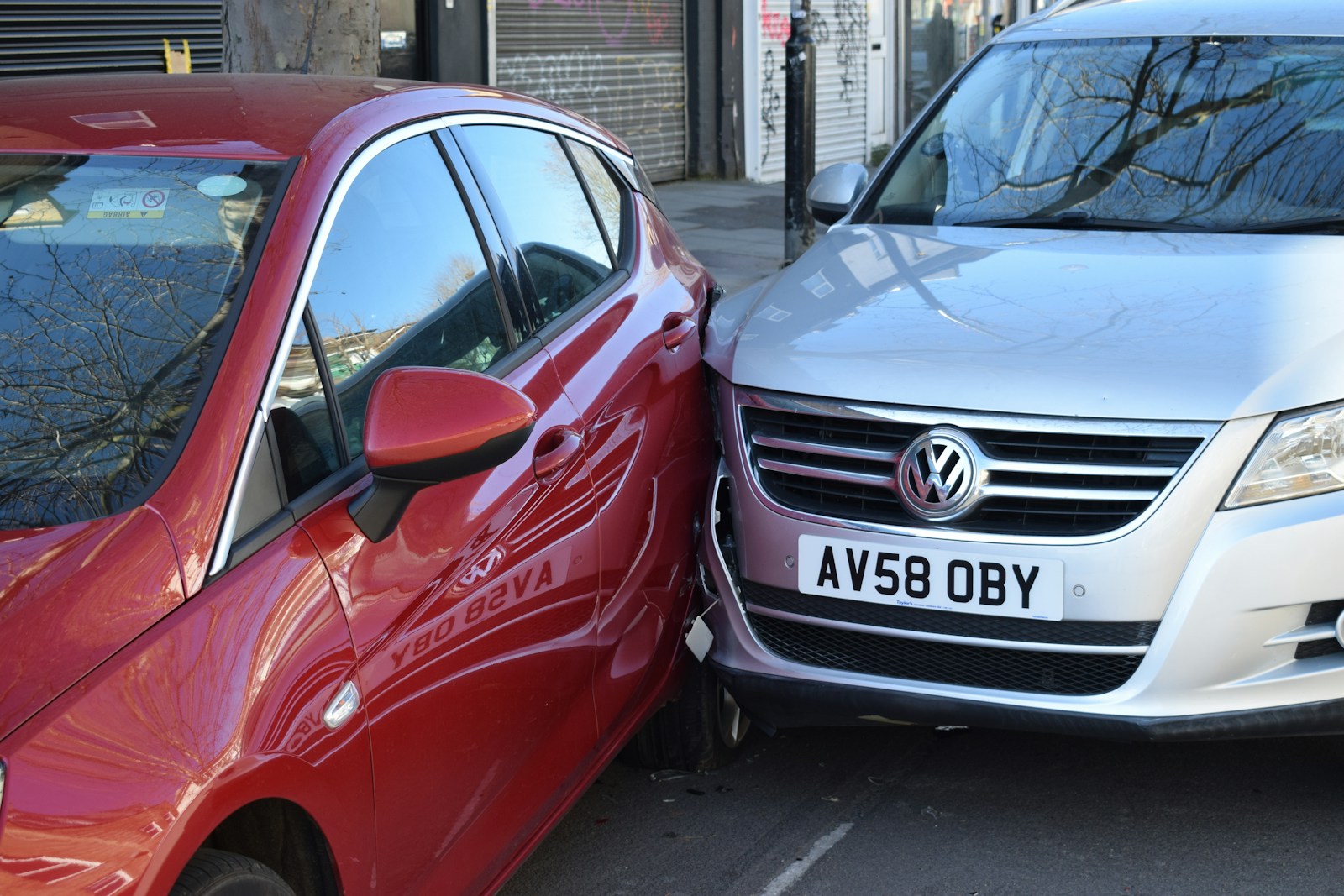


When an adjuster looks at a wrecked car and decides whether to cut a repair check or declare it a total loss, the call in most states isn’t really theirs to make freely — it’s dictated by a number written into state insurance regulation, and that number swings hard depending on which side of a state line the crash happened. In Iowa, an insurer has to total a car once repair costs hit just 50% of its actual cash value. Cross into Colorado, and repair costs can run all the way to 100% of the car’s worth before the insurer is required to total it. More than a third of states skip a fixed percentage entirely and use a formula instead. Almost nobody learns which version of the rule applies to them until they’re holding a settlement offer that feels wrong.
Two different systems are doing the same job
States generally regulate total-loss decisions one of two ways. The more familiar version is a straight percentage: once estimated repair costs equal or exceed a set share of the vehicle’s actual cash value (ACV), state law requires the insurer to treat it as a total loss rather than pay for repairs. The other version, called the Total Loss Formula (TLF), skips the fixed percentage and instead adds the car’s projected salvage value to the repair estimate — if that combined number exceeds the ACV, it’s totaled. The practical effect is that a TLF state can total a car at a lower apparent repair percentage than a flat-threshold state would, because the salvage value gets added into the equation rather than ignored. A breakdown of the state-by-state rules compiled by claims-dispute resource Collision Help maps out which states use which system, and the split is close to even.
The percentage states span a huge range
Among states that use a flat percentage, the low end and high end aren’t close. Iowa sets its threshold at 50%. Oklahoma requires a total-loss declaration once repairs hit 60% of ACV, and Nevada sets the bar at 65%. A cluster of states — Arkansas, Indiana, Minnesota and Wisconsin — use 70%. The single most common threshold, used by more than twenty states including Alabama, Kentucky, Louisiana, Maryland, Michigan, North Carolina, Tennessee and Virginia, is 75%. Another large group — Connecticut, Florida, Illinois, Missouri, Oregon, Utah and Washington among them — sets the line at 80%. Colorado stands alone at 100%, meaning a Colorado insurer can, at least on paper, pay to repair a car all the way up to its full replaced value before state law forces a total-loss call. That means the exact same collision, with the exact same repair estimate, could legally be totaled in Iowa and legally be repaired in Colorado.
Where formula states — including some of the biggest — land
The TLF approach is used by roughly a dozen states, among them California, Texas, Arizona, Alaska, New York and the District of Columbia — which collectively cover a huge share of the country’s registered vehicles. California’s insurance regulations don’t set a bare percentage at all; instead, 10 CCR § 2695.8, the state’s binding standard for auto claims handling, requires insurers to base any total-loss cash settlement on the documented cost of a comparable replacement vehicle, according to the regulation’s text as published by Cornell Law School’s Legal Information Institute. Under the TLF math, a car with relatively modest collision damage can still get totaled if its salvage value is high enough to push the combined figure over ACV — which is part of why TLF outcomes can feel less predictable to drivers than a flat percentage would.
Three states hand the decision to the insurer
Then there’s a third category that surprises people the most: New Jersey, Ohio and Pennsylvania don’t set a statutory total-loss threshold at all. Insurers in those states are left to apply their own internal guidelines, which in practice tend to cluster somewhere around 70% to 80%, according to the state-by-state legal reference compiled by insurance defense law firm Matthiesen, Wickert & Lehrer, which tracks total-loss statutes and regulations across all fifty states for the insurance industry. Without a hard number in state law, a policyholder in those states has less footing to argue that an insurer’s total-loss call — or refusal to total a car — was wrong.
- Lowest fixed threshold: Iowa at 50%
- Highest fixed threshold: Colorado at 100%
- Most common fixed threshold: 75%, used by more than 20 states
- No statutory threshold: New Jersey, Ohio, Pennsylvania
- Formula states (TLF) instead of a flat percentage: roughly a dozen states including California, Texas and New York
None of this shows up on the insurance card in your glovebox, and it rarely comes up until an adjuster is already walking around your bumper with a clipboard. Knowing which system your state runs — and what the actual number is — is the difference between negotiating a total-loss claim from an informed position and simply accepting the first number you’re handed.