

Fifth Third Bank, one of the largest regional banks in the country, agreed to pay $18 million after federal regulators accused it of charging Black and Hispanic auto loan borrowers higher interest rate markups than white borrowers with comparable credit profiles — a gap the bank’s own dealer pricing policy made possible. The joint action from the Consumer Financial Protection Bureau and the Department of Justice covers loans made between January 2010 and September 2015, a window during which the Bureau says thousands of minority borrowers were overcharged by an average of more than $200 per loan for reasons that had nothing to do with their creditworthiness.
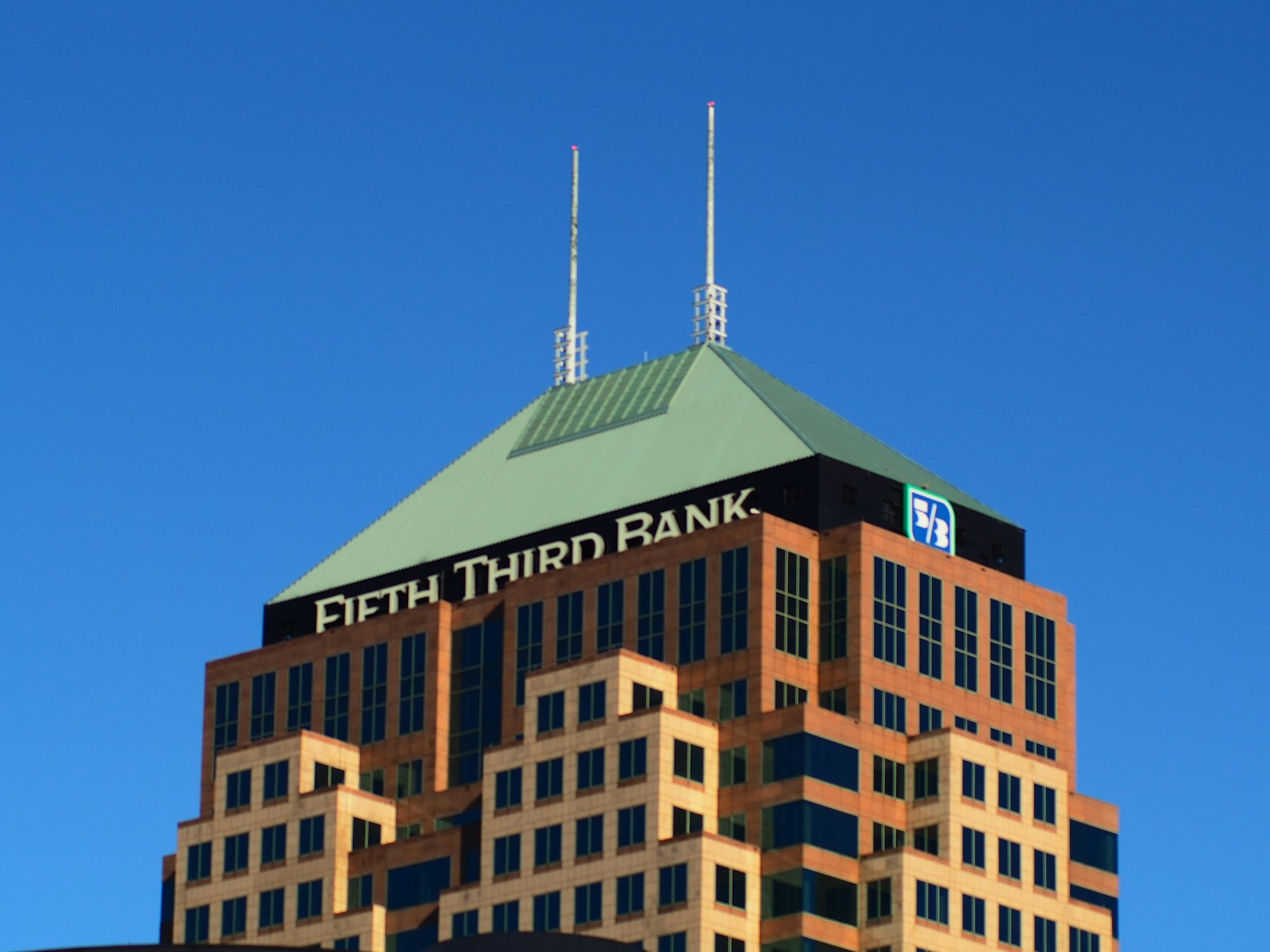
How a routine dealer markup became a discrimination case
Fifth Third didn’t set every borrower’s interest rate directly. Like most indirect auto lenders, it set a baseline “buy rate” reflecting a borrower’s actual credit risk, then gave participating dealers discretion to mark that rate up by as much as 2.5 percentage points and pocket the difference as compensation. That discretion is exactly where regulators say the discrimination crept in: according to the Department of Justice’s own announcement, the unchecked markup policy resulted in African-American and Hispanic borrowers paying systematically higher rates than non-Hispanic white borrowers with similar credit files, even though the dealer’s markup decision was supposed to be about compensation, not risk.
That’s the mechanism regulators have flagged across the indirect auto lending industry more broadly for years: a lender’s own rate-setting can be perfectly neutral on paper, and disparities can still show up once individual dealers are given wide, largely unmonitored discretion to add their own markup on top.
$18 million, and a cap on how much discretion dealers get
The settlement required Fifth Third to pay $18 million total — $12 million placed into a settlement fund for harmed borrowers, with roughly $5-6 million credited against remediation efforts the bank had already undertaken before the deal was finalized, according to the CFPB’s newsroom release. A settlement administrator was tasked with identifying and distributing funds to the affected borrowers.
Beyond the money, the more structurally significant piece of the settlement is what it did to Fifth Third’s pricing model going forward. The bank agreed to sharply reduce how much discretion dealers get to mark up rates: a maximum 1.25 percentage point markup on loans with terms of five years or less, and a maximum 1 percentage point markup on longer loans — with the option to eliminate discretionary dealer markup altogether. Then-CFPB Director Richard Cordray said at the time that the agency was “committed to promoting fair and equal access to credit in the auto finance marketplace,” while then-Principal Deputy Assistant Attorney General Vanita Gupta framed the settlement as part of a broader shift, noting it reflected an industry “moving toward a model of dealer compensation that fairly compensates dealers” without opening the door to disparate pricing.
The credit card allegations bundled into the same action
The same enforcement action also addressed a separate problem inside Fifth Third’s credit card business: deceptive marketing of an add-on “Debt Protection” product sold via telemarketing between 2007 and February 2013. Regulators found that telemarketers routinely failed to properly disclose that customers were being enrolled in the product at all, or what it would cost them, while fulfillment materials sent afterward sometimes described the product’s benefits and eligibility terms incorrectly. That piece of the case resulted in roughly $3 million in consumer relief for about 24,500 affected customers and a separate $500,000 civil penalty.
What it means for anyone financing through a dealership today
Indirect auto lending — financing arranged through the dealership rather than a separate trip to your own bank or credit union first — still runs on largely the same structure that produced the Fifth Third case: a lender’s baseline rate, plus a dealer’s markup on top. That markup is negotiable in most cases, even when a finance manager presents it as fixed.
- Get pre-approved through your own bank or credit union before you ever sit down at the dealership finance desk
- Ask the finance manager directly whether the rate you’re being offered includes a dealer markup, and by how much
- Compare your dealership-arranged rate against your outside pre-approval before signing anything
- Request your rate reasoning in writing if you suspect it doesn’t match your actual credit profile
Walking in with your own financing already lined up doesn’t just get you a better rate on paper — it removes the exact point in the transaction where regulators say pricing gaps like Fifth Third’s have historically opened up.