
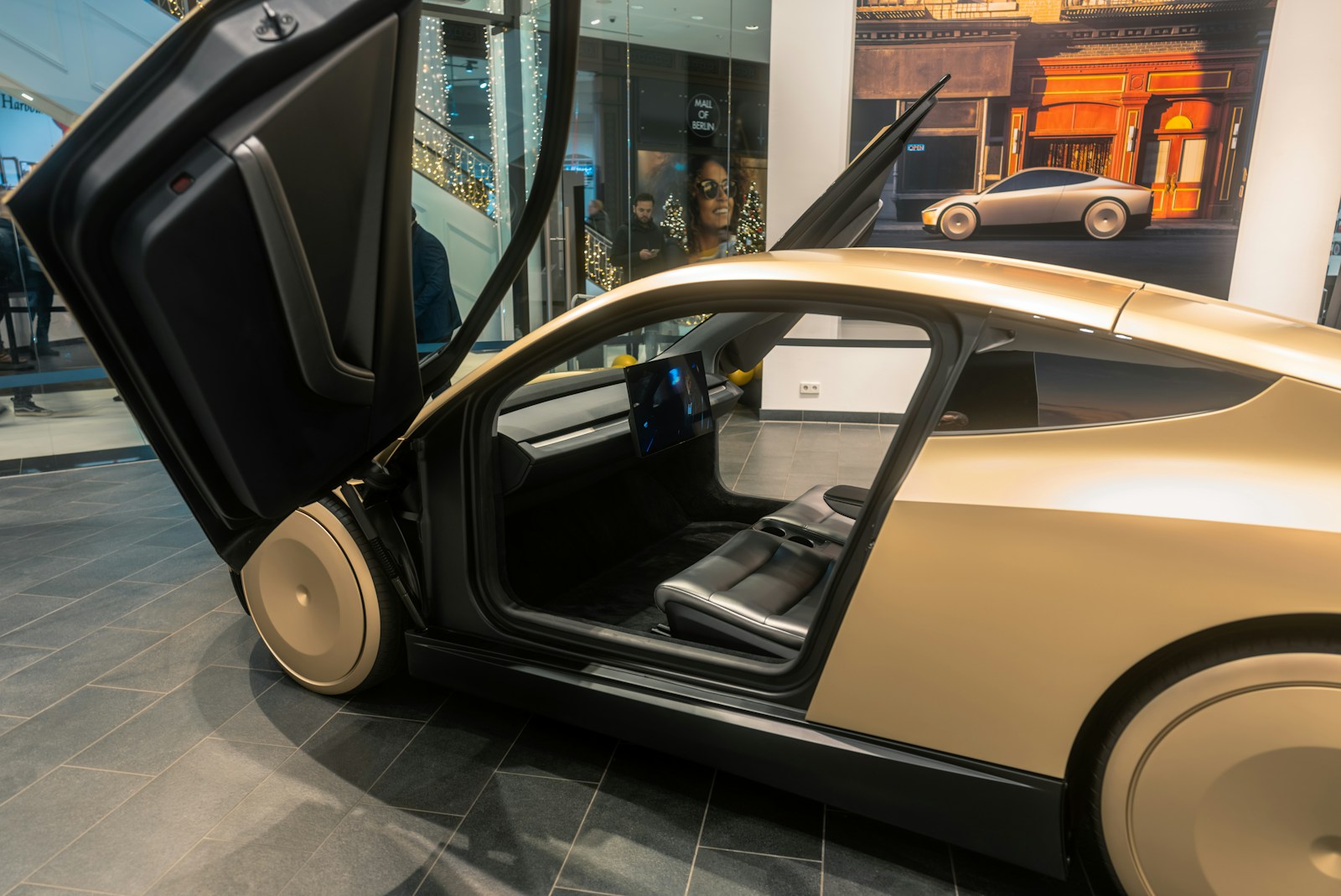

Elon Musk posted on X on Sept. 8 that Tesla had “redesigned Cybercab production for production over 5 times faster than conventional automotive manufacturing” — a claim that, if it holds up once independent output data exists, would put a car every 12 to 18 seconds against an industry average of 60 to 90 seconds per vehicle, according to manufacturing-engineering benchmarks from AllAboutLean.com.
Key Points
- Musk’s post on his own X account made the 5x claim directly, with no supporting production data attached.
- Tesla’s official Cybercab account posted video of the “unboxed” assembly method the same week, describing it as building vehicle modules in parallel and framing the car in a single final step — a change that cuts the physical line’s footprint by roughly half, according to 24/7 Wall St‘s reporting on the post.
- The fastest conventional mass-production lines running today, such as GAC Motor’s Yichang plant, complete a vehicle roughly every 46 seconds — already close to the theoretical low end of what Musk’s 5x figure would require Cybercab to beat, per AllAboutLean.com‘s industry data.
- Tesla shares actually slipped slightly overnight after the post, down to $367.69, according to Benzinga — a sign investors are waiting on delivery numbers rather than X posts.
Musk made the claim in reply to a Tesla owner’s post about a Robotaxi ride in Austin, and used the same thread to write “hopefully soon” when asked about a European launch, per Benzinga. No timeline, plant location, or unit count accompanied either statement.
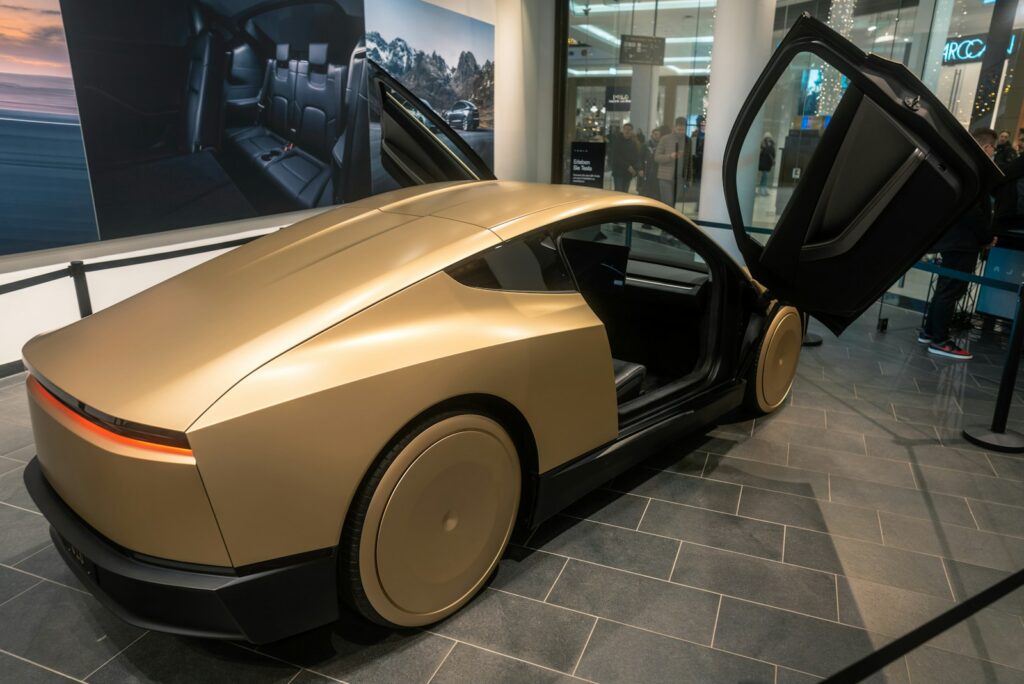
Why the Math Is Aggressive
A conventional automotive line moves at roughly 0.1 to 0.13 meters per second — slower than a person’s walking pace — because stations along the line each need enough time to bolt, weld, or wire a section of the car before it advances, per AllAboutLean.com. Tesla’s pitch is that building the modules off-line in parallel, then joining them at the very end, sidesteps that station-by-station bottleneck entirely. It’s a real engineering swing at a real constraint, not a marketing rename of the same process. Whether Tesla can actually run that line at 5x speed on a repeatable, quality-controlled basis — across body, battery, and interior modules simultaneously — is a different question than whether the concept is sound on paper.
What’s Missing
Nothing in either the Musk post or the Cybercab account’s video included a vehicles-per-hour figure, a plant name, or third-party verification. Tesla has previously pushed back its own Cybercab production timeline more than once, and the company has a track record of citing eventual line speeds well before a factory hits them in practice. The claim stands as Musk’s own statement for now — a real number will only exist once Cybercabs start rolling off that line in volume and someone outside Tesla can count them.