
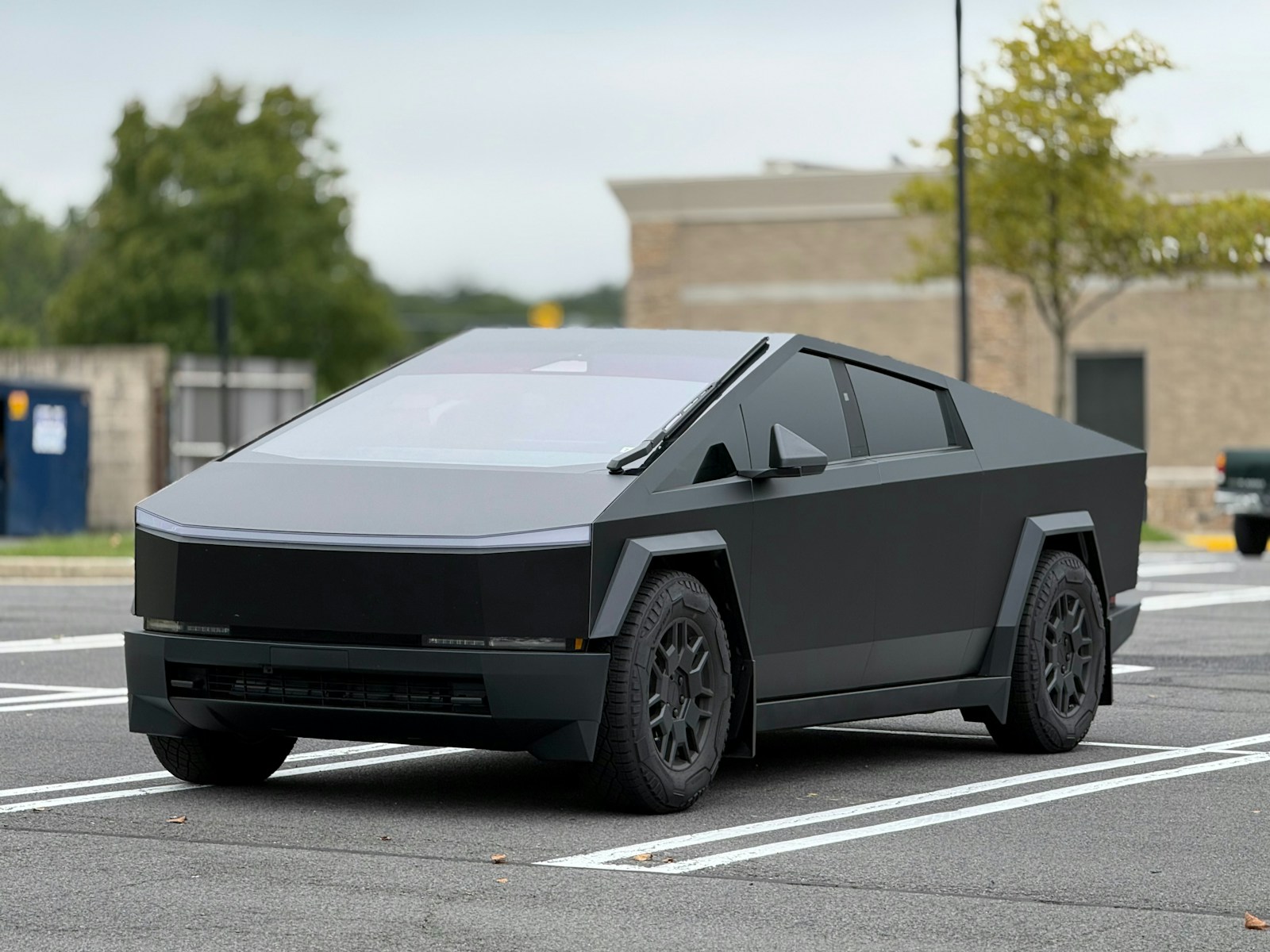

A Tesla Cybertruck rated at 320 miles managed roughly 149 miles of real-world range once a 7,000-pound Rivian R1T was hitched to its back, according to independent testing published by InsideEVs. That is not a fluke result from one bad run. Separate tests on the Ford F-150 Lightning towing a similar-weight Airstream trailer landed in almost the identical range band, and Consumer Reports has found electric trucks pulling near their maximum rating can drop to about a third of their EPA number. The gap between the window sticker and the road is wide enough that owners who plan a trip around the advertised figure routinely come up short by more than 100 miles.
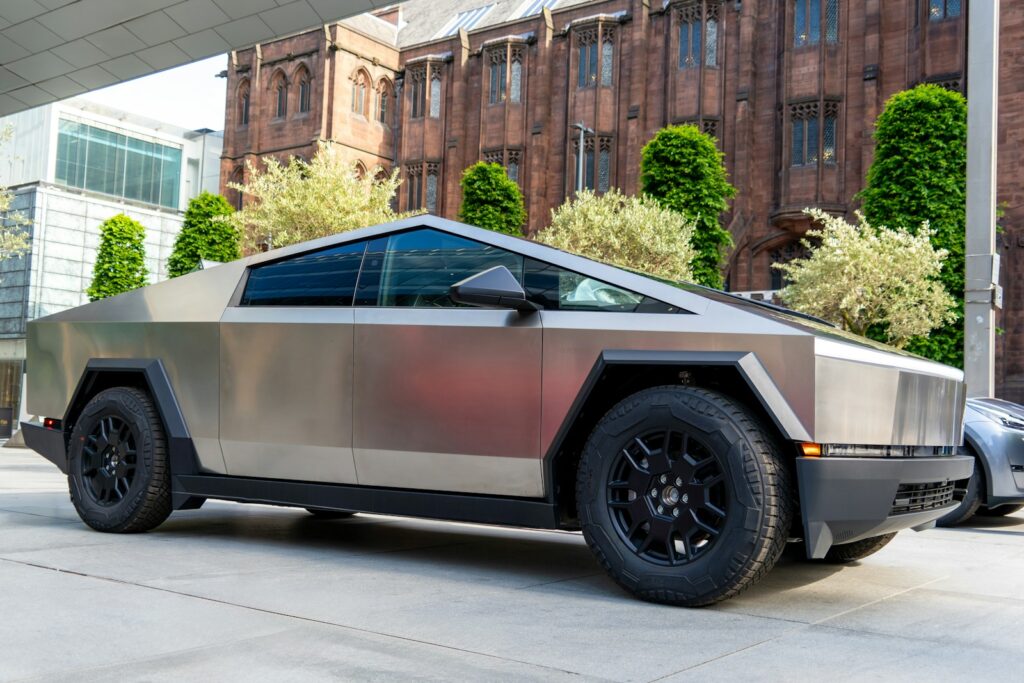
The Cybertruck Lost More Than Half Its Rated Range in One Documented Run
Towing a 7,000-pound Rivian R1T over an 86-mile mixed route of highway, mountain grades, and dirt road, a Cybertruck rated for 320 miles finished with 38 percent of its battery left, translating to a projected real-world towing range of about 149 miles, InsideEVs reported. Energy consumption during the tow averaged 824 watt-hours per mile, more than double what the truck typically uses unloaded. The outlet noted the result was consistent with what it has already documented across other electric pickups doing similar work.
The F-150 Lightning Tells the Same Story With a Different Trailer
A separate real-world test towing a 7,000-pound Airstream behind an F-150 Lightning produced roughly 150 miles of usable range at highway speeds of 55 to 60 mph, or about two and a half hours between charging stops, according to InsideEVs’ testing coverage. That works out to roughly a 50 percent cut from the truck’s EPA-rated range. Two different trucks, two different trailers, and the same rough math: half the advertised distance gone before the tailgate even starts working.
Consumer Reports and Car and Driver Found It Gets Worse Near Max Capacity
Pulling closer to a truck’s full towing rating pushes the losses further. Testing summarized by Recurrent, an EV battery data and research firm, found that Consumer Reports measured the Rivian R1T and F-150 Lightning landing at roughly one-third of their EPA ratings while towing loads near 10,000 pounds, and that Car and Driver clocked the R1T, Lightning, and Hummer EV all falling below half their EPA range in highway-speed towing runs. Edmunds’ own testing, using a different baseline that compares loaded versus unloaded consumption rather than measuring against the EPA number, found a comparatively milder 27 percent range penalty from towing.
Even Just Hauling Cargo, Not Towing, Cuts Deeper Than in Gas Trucks
The problem is not limited to trailers. A study by the American Automobile Association loaded a 2022 F-150 Lightning to near its maximum payload capacity of about 1,400 pounds and watched its range fall from 278 miles to 210 miles, a 24.5 percent drop against a 300-mile EPA rating, Kelley Blue Book reported. AAA’s estimate for a comparably loaded gas truck, based on Department of Energy fuel-economy-per-pound figures, put the loss at roughly 14 percent. Weight costs an EV proportionally more range than it costs a combustion truck.
The Window Sticker Was Never Tested Under These Conditions in the First Place
None of this is a defect or a broken promise, technically speaking, because the number on the window sticker was never generated under towing or heavy-payload conditions to begin with. The EPA’s own published testing procedure runs a vehicle on a dynamometer through city, highway, high-speed, hot-weather, and cold-weather cycles in its standard configuration, then applies a 0.7 adjustment factor before combining the city and highway results into the number that ends up on the sticker. Trailer weight, hitch drag, and cargo load never enter the equation. The rating is a real, standardized measurement of something, just not of towing.
The Pattern That Should Change How Buyers Shop
Every independent test that has actually hooked up a trailer or loaded a bed lands in the same neighborhood: somewhere between a third and half of the advertised number once real weight is involved, worse the closer you get to the truck’s max rating. That is not a reason to write off electric trucks for towing, since combustion trucks lose range too and charging networks are improving. It is a reason to stop treating the window sticker as a towing number, because it was never built to be one, and to plan a real trip around what independent testers have actually measured rather than what the spec sheet implies.