

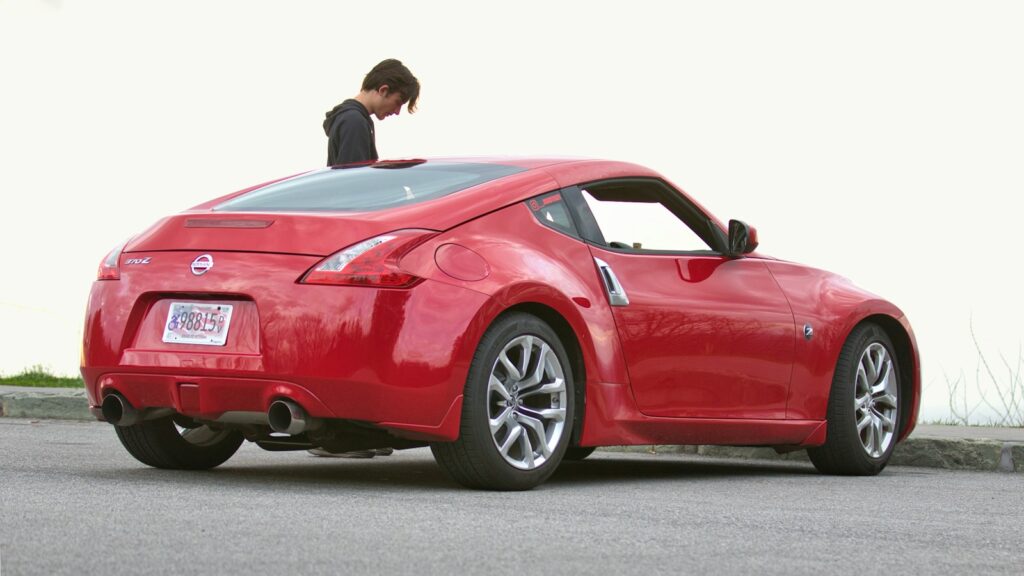
A teenager driving a small two-door car files an insurance claim at a rate of 15.4 per 100 insured vehicle years. Put that same age group behind the wheel of a very large SUV and the rate drops to 5.4, according to an analysis by the Insurance Institute for Highway Safety. That’s not a marginal difference between two reasonably safe categories. It’s nearly a threefold gap, and it cuts directly against the instinct a lot of parents have when they go shopping for a first car, which is to find something small, cheap, and supposedly easy to park. The federal and industry crash data says that instinct is backwards, and it says so with numbers that have held up across more than one study cycle.
The Scale of the Problem
Teen driving remains dangerous by any measure. In 2024, 2,899 teenagers between 13 and 19 died in motor vehicle crashes, and passenger vehicle occupants made up 70 percent of those deaths. IIHS puts the fatal crash rate for 16-to-19-year-olds at just over three times the rate for drivers 20 and older, and the most recent mileage-adjusted comparison shows 7.5 fatalities per 100 million miles driven for teen drivers versus 5.1 for drivers in their twenties. None of that is news to anyone who has watched a teenager pull out of a driveway for the first time. What’s less well known is how much of that risk gap can be closed simply by picking the right vehicle before the keys ever get handed over.
Why Small Cars Keep Losing
IIHS researchers found that teens file claims at more than twice the rate of drivers aged 35 to 50 when the vehicle in question is a small two-door car, and the spread widens to 2.6 times for midsize sports cars. A separate IIHS study of teens killed in crashes between 2013 and 2017 found that 28 percent were driving micro, mini, or small cars, compared with 19 percent of adults aged 35 to 50 killed in the same window. The vehicles teens were driving when they died averaged 250 pounds lighter than the vehicles adults were driving. Mass matters in a crash, and a lighter car simply has less structure to absorb energy before that energy reaches the people inside it.
Vehicle age compounds the problem. Fewer than 4 percent of teens killed in crashes were driving a vehicle less than three years old, compared with 9 percent of adults, and nearly two-thirds of killed teens were behind the wheel of something 6 to 15 years old. A budget-conscious parent buying a decade-old subcompact is often stacking two risk factors on top of each other: a smaller car and an older one, missing whatever stability control or structural updates came along in the years since it rolled off the line.
The Category That Keeps Outperforming
Large and midsize SUVs, along with minivans, consistently post the lowest teen claim and injury rates in IIHS’s research, and the institute has built that finding into a standing set of buying guidance. Its criteria, summarized in Kelley Blue Book’s coverage of the IIHS recommendations, call for avoiding high-horsepower models, favoring larger and heavier vehicles for their crash protection, requiring electronic stability control, and sticking to vehicles rated “good” in IIHS’s moderate-overlap front test and at least “acceptable” in the side test. Under those rules, a midsize or large SUV or a minivan checks every box that a small sporty coupe or subcompact typically fails, size and weight most of all. It’s a less exciting recommendation than a sensible sedan, and that’s precisely the point: the data rewards mass and stability over anything resembling excitement.
There’s a real-world mismatch here worth naming directly. Parents gravitate toward smaller cars because they seem more forgiving to learn on and cheaper to insure and fuel, and those instincts aren’t unreasonable on their own terms. But the crash data measures a different outcome than parking ease or gas mileage, and on that outcome, size keeps winning by a wide margin. A midsize SUV a few years old, equipped with stability control and a strong IIHS crash rating, does more for a new driver’s odds than almost any other single purchasing decision a parent can make before that first solo drive.