
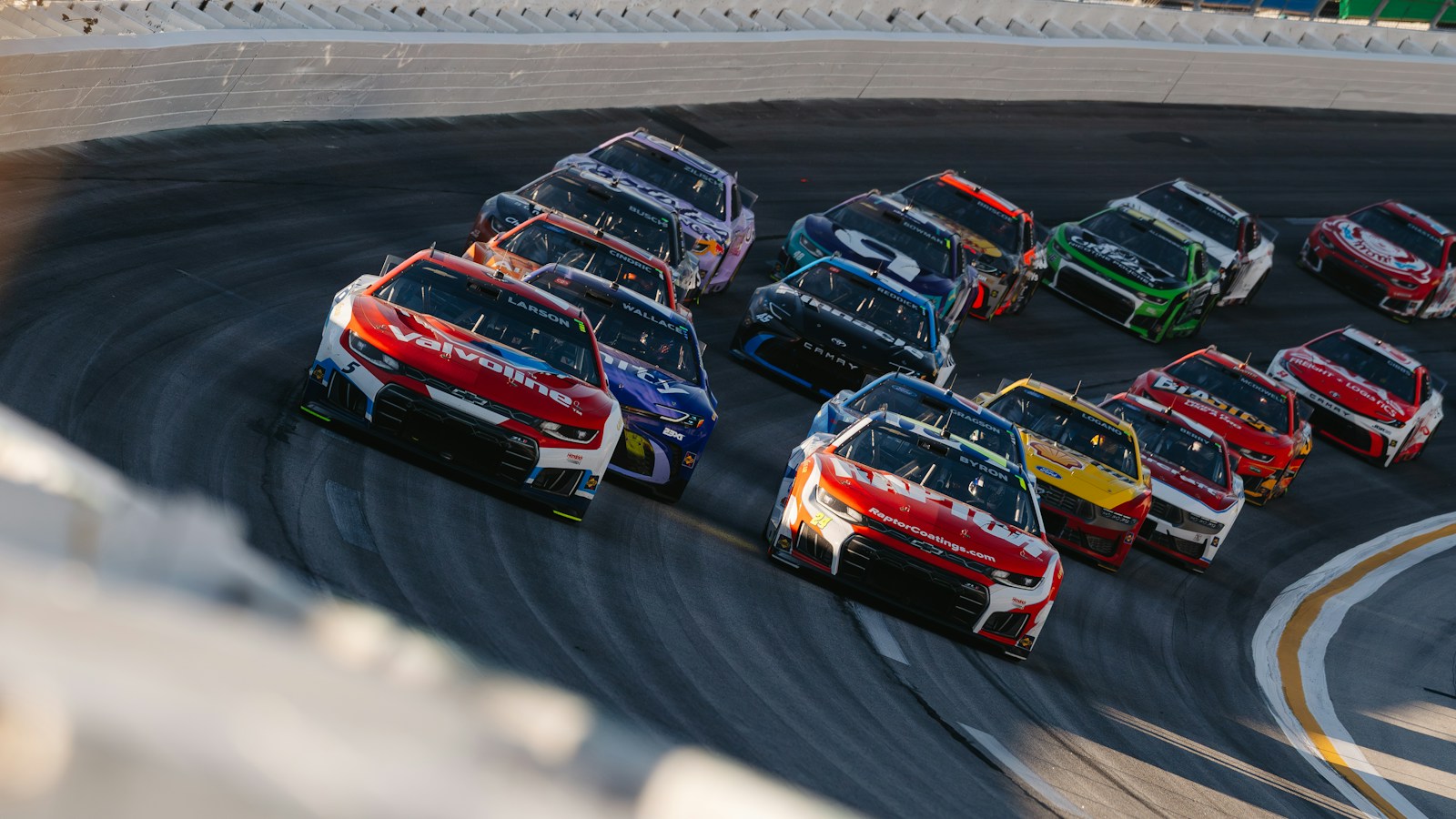

NASCAR’s full-time field of 36 chartered Cup Series cars is now down to a 16-driver playoff field, and the sport’s revived scoring system means none of them get eliminated between now and November, according to NASCAR’s own announcement of the format change.
Key Points
- The 2026 Cup Series playoffs opened with the Southern 500 at Darlington Raceway on September 6, the first race run under NASCAR’s restored “Chase” format.
- All 16 playoff drivers qualified purely on regular-season points; the “win-and-you’re-in” automatic playoff berth is gone for 2026.
- Unlike the elimination-round system NASCAR ran from 2014 through 2025, there are no cutoff races this year. All 16 drivers race every remaining playoff event, and the highest point total after the finale wins the title.
- Points reset at Darlington with Denny Hamlin seeded first at 2,100 points, Ryan Blaney second at 2,075, and Tyler Reddick third at 2,065, dropping five points per seed after that, per NASCAR’s own standings.

Why NASCAR Brought Back an Old Format
NASCAR President Steve O’Donnell said the change was made to reflect what “hardcore fan” communities had been asking for, according to NASCAR’s own release announcing the switch back in January. The elimination-bracket system the sport used for over a decade condensed the championship fight into a handful of do-or-die races, which produced drama but also meant a single bad pit stop or a late-race wreck could end a full season’s work in one afternoon. The restored Chase spreads that risk across all 10 playoff races instead, rewarding the driver with the best sustained run rather than whoever survives the most single-elimination rounds. O’Donnell’s framing was that “every race matters,” while the sport still wants wins to carry weight along the way.
What Changed in the Scoring
Race winners now collect 55 points, a 15-point bump from the prior scoring scale, and NASCAR added a 25-point bonus for whoever wins the regular-season championship, a reward for consistency across 26 points races before the playoffs even begin. There’s no bankable stash of playoff points to protect a driver through a bad week anymore; every one of the 10 postseason races counts on a single running tally, decided by the same stage-point and finishing-position system NASCAR uses all year.
The Field Heading Into Darlington
The 16 drivers who punched their tickets into the playoffs by finishing inside the regular-season top 16 included Denny Hamlin, Kyle Larson, Ryan Blaney, Chase Elliott, Tyler Reddick, Christopher Bell, Joey Logano, William Byron, Chris Buescher, Chase Briscoe, Daniel Suárez, Austin Cindric, Bubba Wallace, Carson Hocevar, Ryan Preece and one additional qualifier, according to the entry list confirmed ahead of the Southern 500. Ten races now stand between that group and a champion, run at tracks ranging from short tracks to superspeedways, before the schedule closes out at Homestead-Miami Speedway in November. For fans who spent a decade watching a single slip-up end a championship bid in September, this year’s format means the points race actually has to play out.