
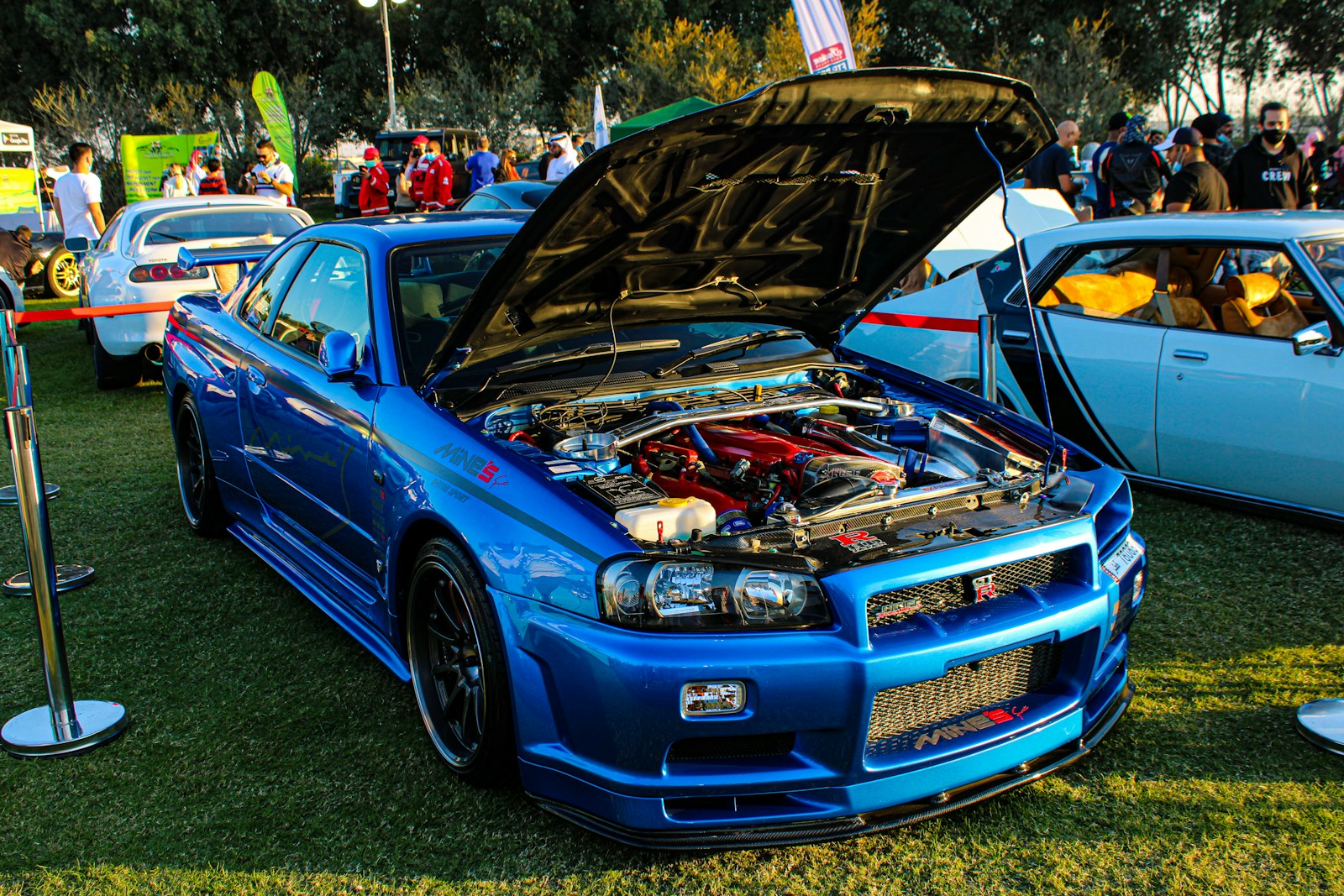

Federal law doesn’t require an act of Congress or a special waiver to let a Nissan Skyline GT-R onto American roads. It just requires a calendar. Under the rule NHTSA publishes in its own vehicle importation guidelines, “a motor vehicle less than 25 years old must comply with all applicable Federal motor vehicle safety standards” to be permanently imported, and once it clears that 25-year mark, it doesn’t. That threshold isn’t tied to a model year on a title. It’s tied to the date a specific car actually rolled off the line, which means the exemption arrives car by car, month by month, all year long. In 2026, cars built in 2001 are crossing that line. In 2027, it’s 2002. You don’t need a lawyer or a lottery number to bring one in once the date passes, just patience and a bill of sale.

The Rule, Straight From the Agencies That Enforce It
Two federal agencies police this door, and both publish their own version of the same line. NHTSA’s importation guidelines set the 25-year exemption from Federal Motor Vehicle Safety Standards compliance, and U.S. Customs and Border Protection’s own import guidance repeats it almost verbatim, since CBP is the agency actually standing at the port checking paperwork against it. What trips people up is that the clock runs from a vehicle’s date of manufacture, not its model year or the date it was first registered in Japan. A late-2001-build car and an early-2002-build car carrying the same nameplate can become eligible months apart, which is why serious importers track build dates off a chassis plate rather than a brochure year.
What Clears the Bar in 2026: The Class of 2001
Cars actually manufactured in 2001 are working through their 25th birthdays right now. That window includes early Nissan Skyline GT-R R34 V-Spec II and M-Spec builds, the Mitsubishi Lancer Evolution VII that debuted that February, and the Honda Integra DC5 Type R that went on sale that July, according to a 2026-2027 eligibility calendar published by Japanese export broker Provide Cars, which cross-references individual production dates against the federal rule rather than relying on model-year shorthand. None of these needed federal permission slips to arrive stateside once the math worked out. They needed a shipping container and someone willing to sort out state title paperwork on the other end.
What Clears the Bar in 2027: A Deeper, Rarer Bench
The 2002 model year hands over a shorter but arguably more desirable list, because it captures the final runs of several nameplates before Japanese manufacturers pulled the plug entirely. That includes the ultra-limited R34 GT-R V-Spec II Nür and M-Spec Nür, built in a combined production run of roughly 1,000 cars; the Mazda RX-7 Spirit R in its Type A, B and C trims, capping the FD generation at around 1,500 units; the final NSX-R, built on Honda’s NA2 chassis with weight-saving carbon parts; the last Japanese-market Toyota Supra A80s built through July of that year; and the final Nissan Silvia S15 units, which stopped rolling off the line that August, per Provide Cars’ build-date tracking. These are the cars that ended their own production runs, which is exactly why collectors circle their 25th birthdays on a calendar years ahead of time.
Clearing NHTSA Doesn’t Mean You’re Done
The 25-year exemption only settles the safety-standards half of the equation. Emissions compliance runs on a separate track handled by the EPA’s own import program, and CBP checks both boxes before a car is released at the port, not just one. In practice, most JDM imports old enough to qualify for the NHTSA exemption also clear EPA scrutiny without much friction, since a 25-year-old car is well past the emissions-defeat concerns that trip up newer gray-market vehicles. But the paperwork trail, state title requirements, and any state-specific emissions or lighting rules still sit on top of the federal exemption, which is the part a lot of first-time importers discover only after the car is already on a boat.
None of this is a loophole, a workaround, or a grey-market trick, whatever the forums call it. It’s a published federal rule running exactly as written, quietly promoting a fresh batch of Japanese engineering into legal U.S. ownership every single year, whether anyone’s paying attention to the calendar or not.