
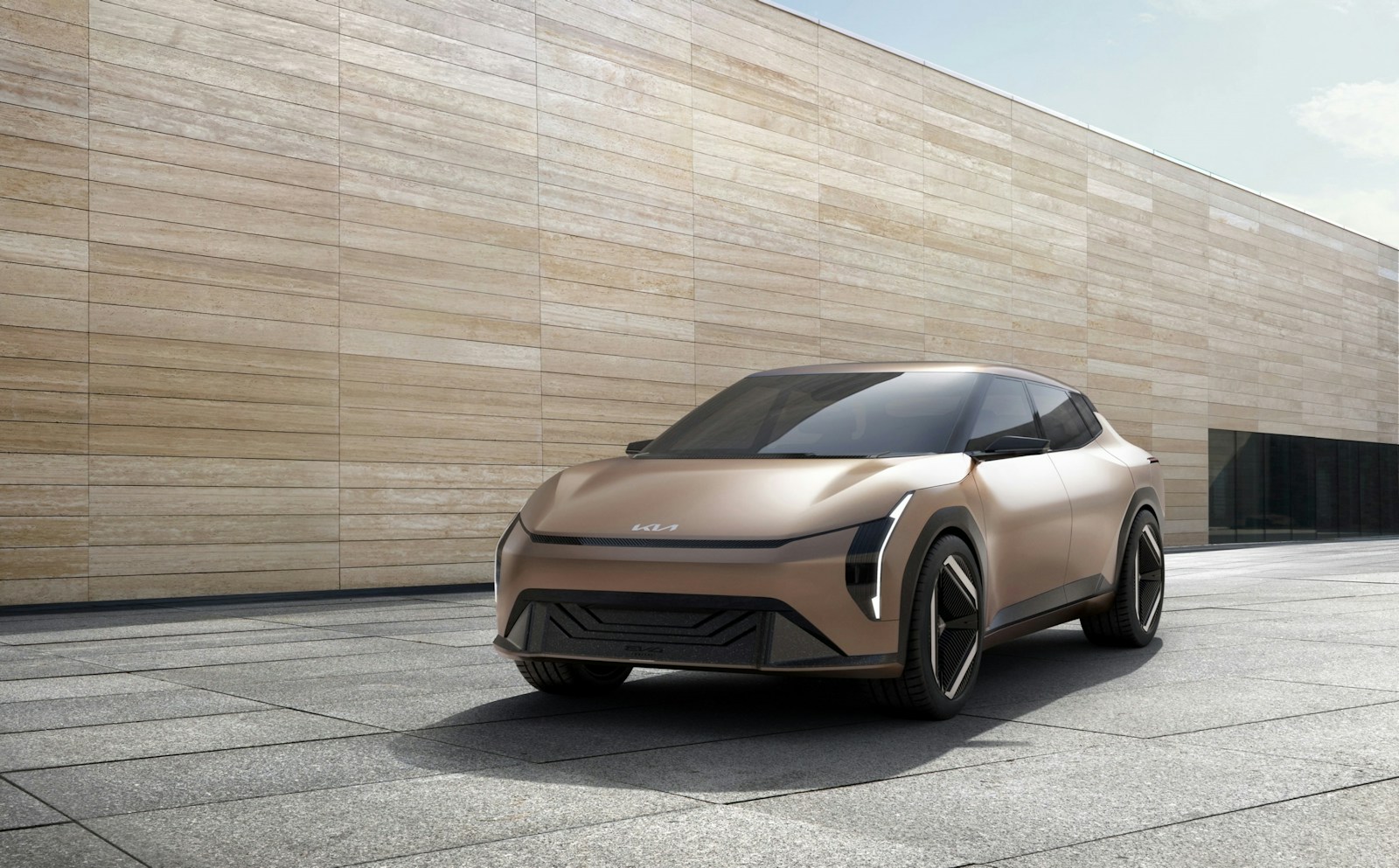

A concept car can roll onto a rotating stage with taillights buried inside its roofline, doors that swing instead of sliding, and not one conventional side mirror anywhere on its body, and not a single regulator will stop the unveiling. That’s not an oversight. Under 49 U.S.C. § 30112, the federal law that underpins every Federal Motor Vehicle Safety Standard (FMVSS), the certification requirement attaches to manufacturing, selling, or introducing a vehicle into interstate commerce for sale. It has nothing to do with building one-off show cars that never reach a dealer lot. The statute’s own exceptions list covers vehicles brought in solely for research, testing, evaluation, or display, a carve-out Congress broadened as recently as the FAST Act. The National Highway Traffic Safety Administration has said plainly that it may exempt vehicles used “for research, investigations, demonstrations, training, competitive racing events, show, or display.” A production Mustang or Silverado has to clear all of that. A concept car mostly just has to look good under studio lights.
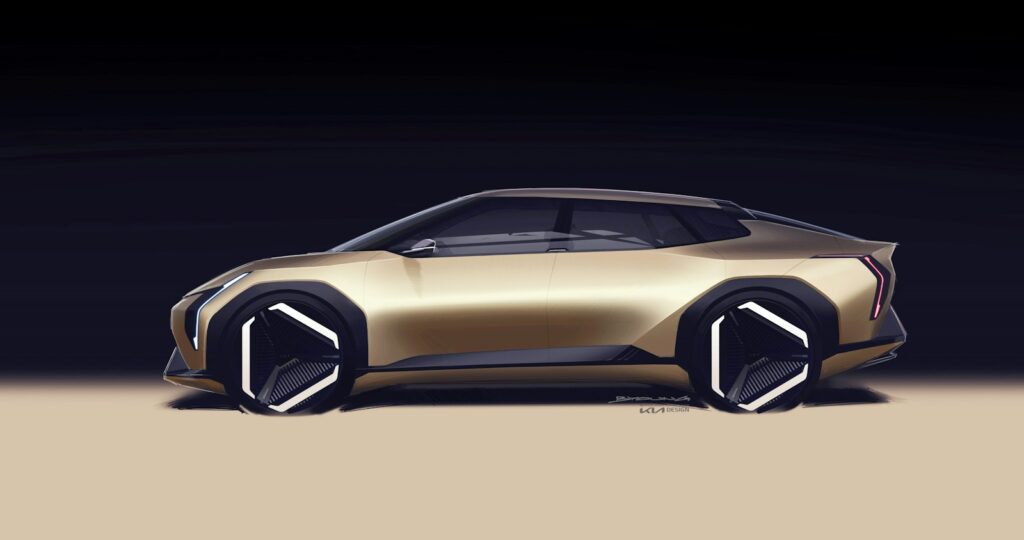
The Legal Hinge Is “Offered for Sale,” Not “Looks Dangerous”
People assume NHTSA polices how a car looks or behaves and waves off anything too extreme. That’s backwards. The agency’s authority under Title 49 is triggered by commerce, specifically by a manufacturer certifying a vehicle as compliant so it can legally be sold to you. A concept car, by design, is never for sale. It’s a rolling design statement built in tiny numbers, usually one, purely to test public reaction or preview a design language. Because it never crosses into that sale-and-distribution chain, the FMVSS certification obligation that would otherwise force compliance with dozens of numbered standards simply never attaches. NHTSA’s own show-or-display framework, laid out in a Federal Register notice on show and display vehicles, even authorizes blanket exemption from “all applicable Federal motor vehicle safety and bumper standards” for cars that show real historical or technological significance, provided they’re capped at 2,500 miles a year and kept off the regular used-car market. That’s a formal legal pathway, not a loophole regulators overlook.
What Show Cars Skip That Would Get a Production Car Recalled
Bumper standards are the most obvious casualty. FMVSS-adjacent bumper rules exist to limit damage in low-speed impacts, and concept cars routinely wear fascias with zero impact structure behind them because the panel is fiberglass or clay-finished composite built to be photographed, not rear-ended. Lighting placement rules under FMVSS 108 dictate exact height, spacing and visibility for headlamps and taillamps; a concept can bury its taillights inside a roof’s sail panel with no such constraint, which is precisely what Buick did on its 2022 Wildcat EV concept, per GM’s own press materials describing “blade-style taillights embedded in the roof’s sail panels” and unconventional “semi-swing doors” that skip the door-retention hardware FMVSS 206 would demand on a car you could actually buy. Full-vehicle crash testing is the biggest one of all — a concept never has to survive a 35-mph frontal barrier test, so designers are free to draw a nose with no crumple structure, a cabin with no airbags, and a dash with no impact-rated materials, because nobody is legally allowed to be strapped into it on a public road anyway.
Autonomy Concepts Take the Exemption Furthest
You can watch this play out most dramatically in the self-driving concepts that have skipped the steering wheel entirely. Cadillac’s InnerSpace, shown at CES in January 2022, did away with a steering wheel and pedals altogether in favor of a two-seat lounge layout, a configuration that would violate multiple FMVSS occupant-control and crash-avoidance standards the instant it carried a paying customer on public roads, according to General Motors’ own reveal materials for the concept. It’s a legitimate glimpse of where GM’s design studio thinks autonomy is headed, and it’s also proof of how far a manufacturer can push a design once the sale requirement, and with it the standards that requirement triggers, is off the table. None of this makes concept cars unsafe in some sinister sense; they’re generally driven only a few feet at a time on a closed stage or a trailer ramp. It makes them a different legal category of object entirely, one built to communicate rather than commute.
Why the Wildest Ideas Never Quite Survive Contact With Showrooms
That’s also why the concept you see in September rarely resembles the production car that arrives two years later wearing the same nameplate. Somewhere between the stage and the assembly line, engineers have to reintroduce everything the concept was allowed to skip: real bumper structure, FMVSS-compliant lighting geometry, door latches rated to specific pull-force tests, mirrors sized and positioned by regulation instead of aesthetics. Doors that swung go back to hinges that meet retention standards. Buried taillights move to where FMVSS 108 says pedestrians and following drivers can actually see them. The concept car’s real job was never to preview a finished product — it was to buy a design team a few months of freedom from the rulebook every car sold in America eventually has to answer to.