
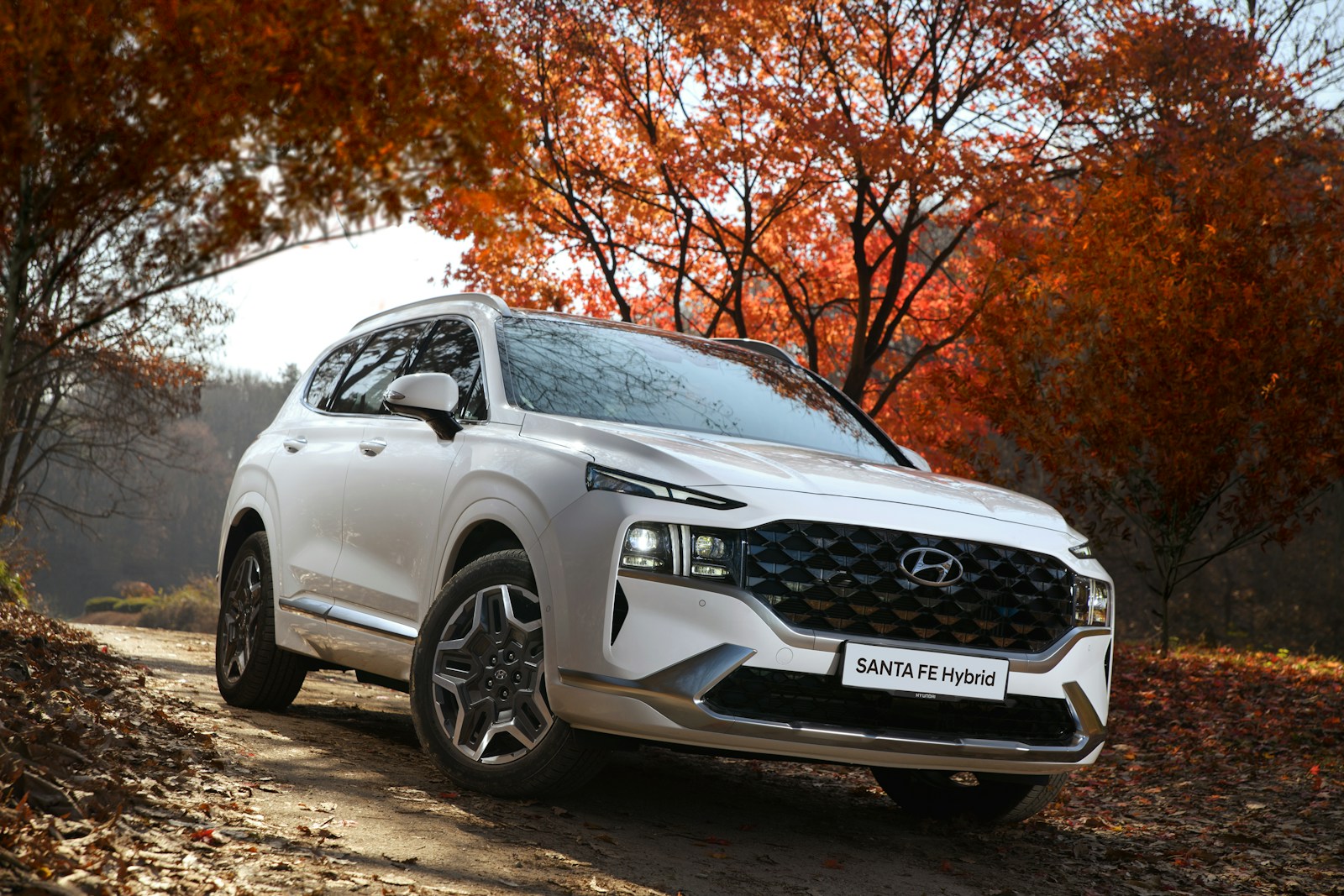

There is no federal regulation, no industry standard and no trademark rule that requires a badge like Tremor, XRT, TRD or AT4 to come with a locking differential, a skid plate or a single extra millimeter of ground clearance. An automaker can legally sell a trim with rugged-sounding branding, all-terrain-style graphics and nothing structurally different underneath, and that’s exactly what happens with some nameplates. Ford’s own published specification sheet for the F-150 Tremor lists an electronic-locking rear differential, front and rear off-road-tuned shocks, unique control arms, two-stage variable-rate rear leaf springs and standard 275/70R18 all-terrain tires as part of the trim. Hyundai’s own trim comparison for the Santa Fe XRT shows identical MacPherson strut front and multi-link rear suspension to the base SE trim, the same 3,500-pound tow rating, and no locking differential or low-range transfer case listed anywhere in the specs. It’s the same general idea, a rugged trim badge with an off-road color story, backed by two completely different levels of engineering commitment.
Ford’s Tremor Badge Is a Genuine Hardware Upgrade
Ford’s own consumer-facing spec page for the F-150 Tremor is specific almost to a fault. It lists standard skid plates covering the fuel tank, transfer case and front differential on 4×4 models, a locking rear differential, long-travel suspension built around unique front upper and lower control arms, and a factory drive-mode menu that includes a dedicated Rock Crawl setting alongside Mud/Rut, Deep Snow/Sand and Slippery modes. An optional Hi-Lock transfer case pushes the capability further for buyers who spec it. None of that is marketing language describing how the truck “feels” off-road. It’s a parts list, published by the manufacturer, that differs from the standard F-150 lineup in ways a technician could point to on a lift.
Hyundai’s XRT Badge Leans on Looks
The Santa Fe XRT sits at the other end of the same spectrum. Hyundai’s own trim-comparison tool shows the XRT keeping the same suspension architecture as every other Santa Fe trim, the same towing capacity as the base SE, and reserves the all-terrain-style 245/45R21 tire spec and “Terrain Mode” software for the pricier Limited trim rather than the XRT itself. What the XRT does add is 20-inch alloy wheels styled to look rugged and XRT-specific badging and trim. That’s not a knock on the vehicle, since a crossover with unibody construction was never going to get a low-range transfer case, but it is a clear illustration of a brand using off-road-adjacent naming and styling cues on a trim that a spec sheet shows is functionally a cosmetic package rather than a mechanical one.
Jeep’s Own Framework Explains Why the Gap Exists
Jeep’s Trail Rated badge, which underpins trims like the Trailhawk across its lineup, works differently from either example above. It’s tested and awarded based on performance across five measured categories the brand lists on its own site, traction, water fording, articulation, ground clearance and maneuverability, rather than a fixed checklist of required parts. That performance-based framework is itself the point. A brand can hit those benchmarks through steel skid plates and locking hardware, as Jeep’s own materials describe for several Trail Rated models, or in principle through tuning and geometry alone on a lighter-duty application. There’s no federal or industry rulebook forcing every automaker to define an off-road trim the same way Jeep does, which is exactly why comparing two “rugged” trims from two different brands by name alone tells you almost nothing.
Read the Spec Sheet, Not the Badge
None of this is illegal, deceptive in a regulatory sense, or even unusual. Trim badges are marketing tools first, and automakers are free to decide how much engineering effort backs one up. The practical upshot for a buyer is that the badge alone tells you the marketing department’s ambitions, not the engineering department’s changes. A Tremor or a Trail Rated Trailhawk earns its name with parts you can find on a spec sheet and verify on a lift. An XRT, on plenty of nameplates across the industry, earns its name with wheel design and paint. Both are legal, both are for sale on the same lot, and only one of them is going to matter the first time you actually point the front wheels at a rutted fire road instead of a photo backdrop.