
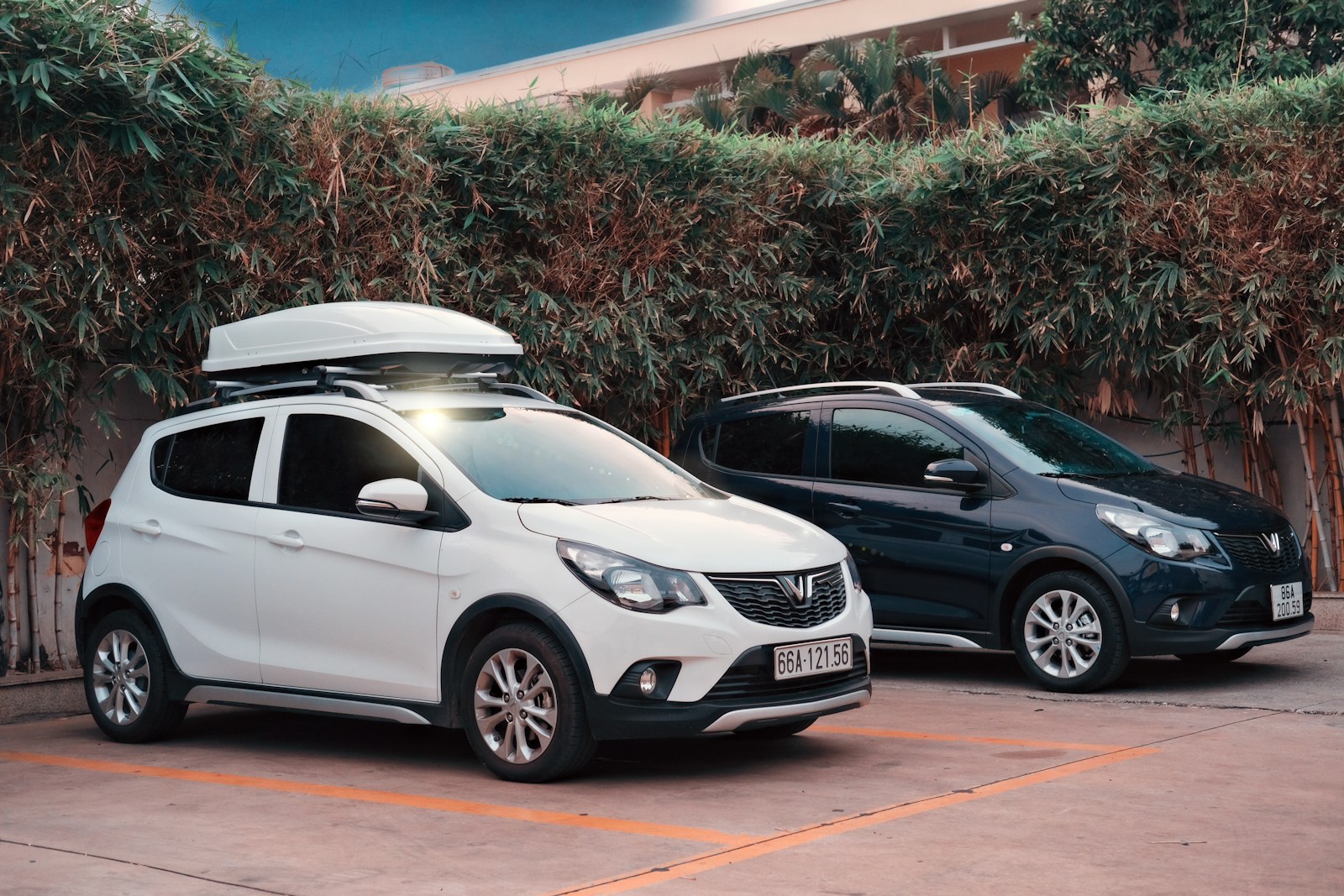

VinFast delivered its first VF8 City Edition SUVs to American customers on March 1, 2023, making the Vietnamese automaker’s US operation more than three years old rather than the two originally expected when this reliability check was first planned. That extra runway matters, because a federal safety database only becomes useful once enough vehicles have racked up enough miles to generate a real pattern instead of a handful of anecdotes. VinFast’s US fleet has now been through three separate NHTSA recalls, a fatal-crash investigation, and a still-expanding dealer network, and taken together the record reads less like a data set and more like a company still finding its footing.
Three Recalls in Three Years, All Tracing Back to Software
The first recall arrived quickly. On May 24, 2023, VinFast told NHTSA that a software defect in the VF8’s multifunction head unit could cause the entire instrument display, including the speedometer and warning lights, to go blank while driving. NHTSA’s own recall report puts the affected population at 999 vehicles, essentially the whole US fleet at that point, and the fix was an over-the-air update rather than a dealer visit.
Roughly two years later, VinFast filed a second recall covering the driver’s front center airbag. According to the NHTSA bulletin published February 10, 2025, the redesigned airbag has a different cushion shape and deployment angle than the original part, changing how it inflates; 4,888 VF8s built across the 2023, 2024, and 2025 model years needed the part swapped. Then in September 2025, VinFast issued a third recall, this one for 6,314 VF8s, after NHTSA’s Office of Defects Investigation examined complaints that the advanced driver assistance system could activate unexpectedly during wide turns. The recall filing describes “unexpected steering wheel movements that are difficult for the driver to override,” with a free software update as the remedy.

Three recalls in three-plus years is not extraordinary for a legacy automaker with a mature production system, but VinFast is not that. Every one of its US recalls has been software or electronics related rather than a mechanical part failure, which fits a young company still tuning code across a small and fast-changing lineup.
A Fatal Crash Brought Federal Investigators to VinFast’s Door
The steering-related recall did not happen in a vacuum. On April 24, 2024, a 2023 VF8 crashed into a tree in Pleasanton, California and caught fire, killing all four occupants, a family of two adults and two children, according to reporting from TechCrunch. NHTSA’s Special Crash Investigations division opened a formal probe into the crash and the fire that followed, and separately, a complaint filed with the agency days after the crash alleged the same VF8’s lane-assist system had previously jerked the wheel to the right on its own. A wrongful-death lawsuit tied to the same crash was still working through the courts as of April 2026, per the Pleasanton Weekly’s local coverage. NHTSA’s broader defect investigation into VF8 lane-keeping behavior, opened in September 2024, is what eventually produced the September 2025 steering recall described above.
What the Pattern Actually Tells Prospective Buyers
None of this means VinFast’s electric SUVs are unusually dangerous in the way that, say, a chassis or brake defect would suggest. It does mean the company’s advanced driver assistance software has drawn sustained federal scrutiny across two full recall cycles, which is a longer stretch than most three-year-old nameplates see for a single subsystem. Owners considering a used VF8 from the 2023 or 2024 model years should confirm through a dealer or VinFast’s own service department that all three recall remedies, the display software update, the airbag replacement, and the ADAS update, have actually been applied, since VinFast’s dealer network is still thin enough that notification and completion rates lag more established brands.
Growth Is Still Outrunning the Service Network
VinFast has kept expanding through this period rather than pulling back. The company opened its first authorized California dealership in San Diego in August 2025, and by that point had built out, in the outlet’s words, “a robust network of nearly 30 authorized dealerships” spread across 14 states. That is meaningful growth for a five-model-year-old import brand, but it also means most VF8 and VF9 owners are still served by a comparatively sparse service footprint relative to Toyota, Hyundai, or Ford, which matters directly when three separate recalls need to be worked through in sequence.
Reading the Data Honestly
The fair reading of VinFast’s first three-plus years in America is not that the company is failing on the numbers alone, since 999-to-6,314-unit recalls are modest by industry standards and the underlying defects were each addressed with software fixes rather than parts replacements across the board. The fair reading is that VinFast’s growing pains have concentrated almost entirely in the electronics and driver-assistance systems that increasingly define what a modern EV even is, and that a federal fatal-crash investigation naming the same subsystem that later triggered a recall is the kind of overlap that deserves more attention than a young, growth-focused import brand has generally received. Buyers who want to see where that story goes next will be watching whether recall number four looks like the first three, or like something new.