
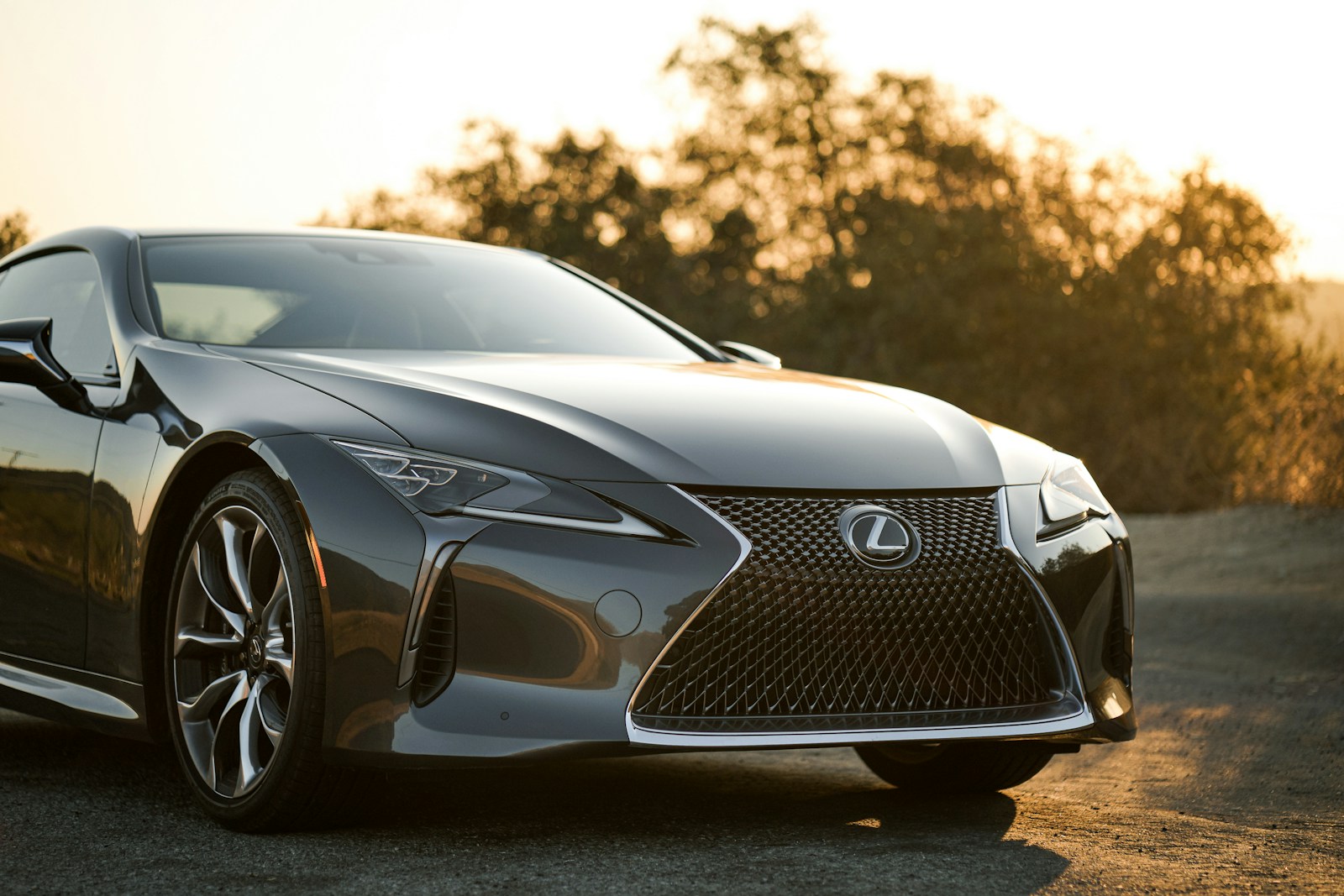

Toyota and Lexus sell two body-on-frame SUVs built on the same underlying architecture, badged differently, priced differently, and marketed to almost entirely different buyers, yet the actual hardware separating a 2026 Toyota Land Cruiser from a 2026 Lexus GX 550 is a lot thinner than the sticker prices imply. Pull the two automakers’ own published specification sheets side by side and the approach angles, ground clearance figures, and drivetrain hardware line up close enough that the real question is not which one climbs a trail better, but whether the Lexus badge is worth the premium Toyota is charging for it.
One Platform, Two Brands
Both SUVs ride on Toyota’s global body-on-frame architecture, what Toyota’s own newsroom and Lexus’s own pressroom refer to interchangeably as the TNGA-F or GA-F platform depending on which brand’s materials you’re reading. Lexus’s own launch release for the 2024 GX states plainly that “the 2024 GX shares the GA-F platform introduced on the current-generation LX 600,” the same body-on-frame architecture underpinning the current Land Cruiser and Land Cruiser Prado family sold globally. The two SUVs share a wheelbase, a basic double-wishbone front and multi-link rear suspension layout, and core off-road electronics: both come standard with Toyota’s Multi-Terrain Select, a Multi-Terrain Monitor camera system, and locking center and rear differentials.
Where the Numbers Actually Diverge
The geometry is close enough to be a rounding error for anyone who isn’t measuring rock ledges with a tape. The Land Cruiser’s approach angle is 31 degrees against the GX’s 26 degrees, according to Toyota dealer specification data drawn from the manufacturer’s own materials, while departure angle runs 22 degrees on the Land Cruiser versus 21 degrees on the GX per Lexus’s own 2026 GX press materials, which also list the GX’s breakover angle at 24 degrees against the Land Cruiser First Edition’s 25. Ground clearance actually favors the Lexus, at 9.84 inches on Overtrail-spec GX models compared with roughly 8.0 inches on the Land Cruiser, per Edmunds’ own back-to-back off-road test of the two vehicles. None of those differences, in either direction, is large enough to functionally change what terrain either SUV can cross.

The drivetrains are where the two SUVs genuinely part ways, and it cuts against the Lexus. The Land Cruiser runs Toyota’s i-FORCE MAX hybrid, a turbocharged 2.4-liter four-cylinder paired with a 48-horsepower electric motor for a combined 326 horsepower and 465 lb-ft of torque, mated to an 8-speed automatic. The GX 550 uses a twin-turbocharged 3.4-liter V6 making 349 horsepower and 479 lb-ft through a 10-speed automatic, per Lexus’s own specifications. The Lexus is quicker and quieter; the Toyota is rated at roughly 23 mpg combined against the GX’s 17, according to Edmunds’ testing, a gap that matters more on a long overland trip than a few degrees of breakover angle ever will.
The Price Gap Does Most of the Heavy Lifting
Here is where the headline math gets interesting. A base 2024 Toyota Land Cruiser 1958 Edition starts at $55,950, while the base 2026 Lexus GX 550 Premium starts at $68,335, a spread of more than $12,000 for what is, mechanically, the more basic version of the same platform. But that gap collapses at the off-road-focused trims that actually matter for this comparison: the Land Cruiser First Edition, Toyota’s top trim built specifically for capability rather than luxury, starts at $74,950, while the Lexus GX 550 Overtrail, the equivalent off-road-focused Lexus trim with the electronically controlled locking rear differential and E-KDSS suspension, starts at $75,980. That’s a difference of roughly $1,000 between the two vehicles’ actual off-road specialists, even though the Lexus badge alone typically commands a five-figure premium elsewhere in Toyota’s and Lexus’s overlapping model ranges.
What This Means If You’re Actually Shopping
The practical read is that Toyota buyers pay a smaller premium than expected to get genuine off-road capability once they climb into the First Edition trim, while GX shoppers who want the same capability at the Overtrail level are, in effect, paying Lexus prices for what remains a Toyota chassis with better sound insulation, a nicer interior, and a stronger V6. Neither company publishes an official wading depth or a numeric crawl ratio in its current US consumer materials for either model, which is itself worth knowing before assuming either brand’s marketing claims are more complete than they are. What both companies’ own numbers do confirm is that the mechanical gap between these two badges is real but small, and that the actual decision for most buyers comes down to whether the extra refinement of the GX, and the roughly even money at the top trims, is worth giving up the Land Cruiser’s better fuel economy and slightly more aggressive approach geometry. The platform doesn’t force that choice. The badge, and everything Lexus builds around it, does.