
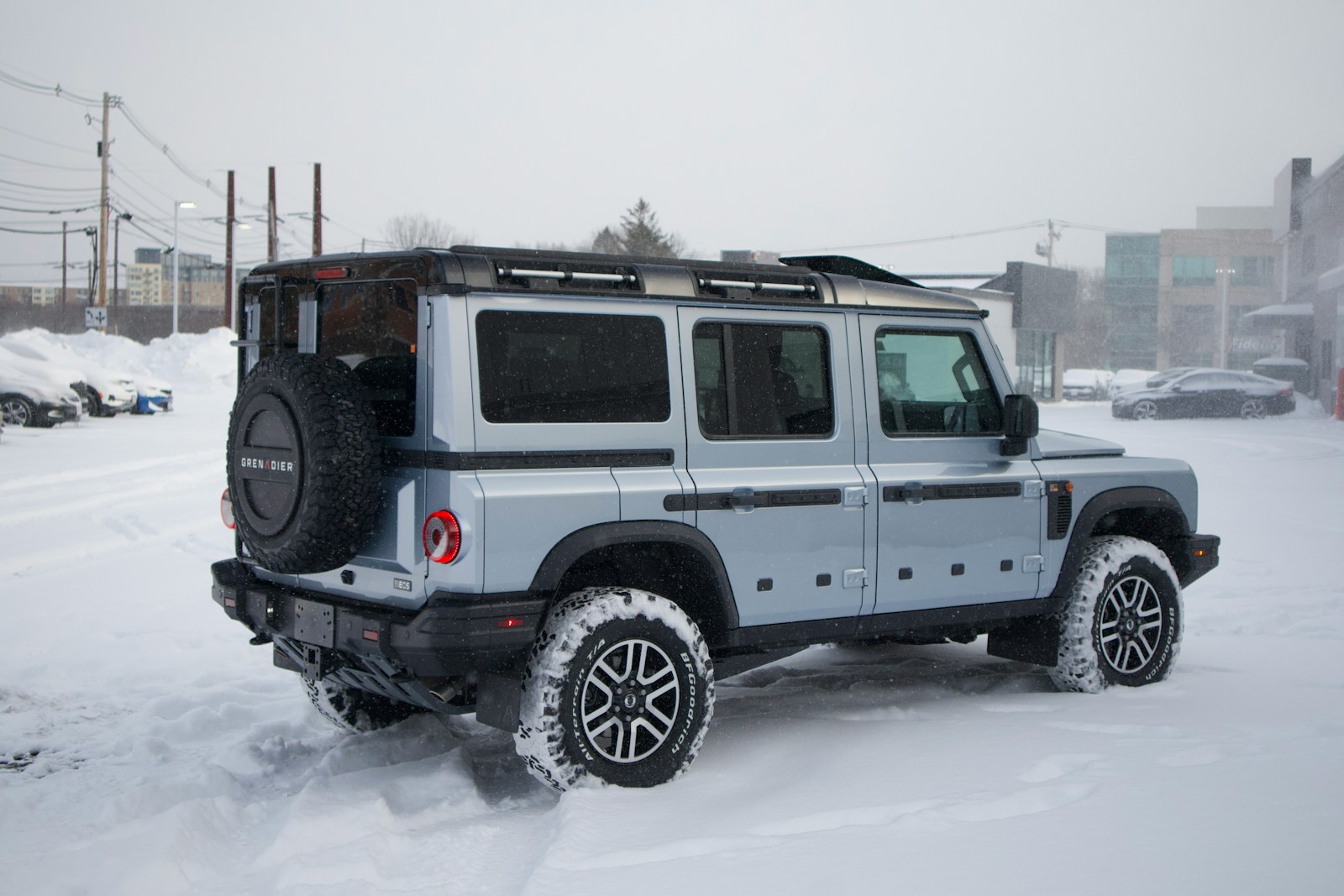

Ineos Automotive built the Grenadier as an unapologetic throwback, a boxy, ladder-frame, solid-axle off-roader designed explicitly to fill the void left when Land Rover moved the Defender upmarket and modernized it into something softer. British billionaire Jim Ratcliffe’s chemicals conglomerate started delivering Grenadiers to US customers in late 2023, and after roughly two full model years on American roads, the federal recall record is now substantial enough to say something real about how that old-school approach has held up in practice. The short version: it has held up mechanically about as well as a first-generation vehicle from an all-new automaker usually does, which is to say, not without some notable stumbles.
Two Recalls Arrived Within Weeks of Each Other
The Grenadier’s first US safety trouble showed up fast. On December 18, 2023, Ineos told NHTSA that the relay control wire on an optional auxiliary switch package could become trapped under a power cable connection nut during assembly, damaging the wire’s insulation and creating a short-circuit and fire risk. NHTSA’s own recall report puts the affected population at 727 vehicles, and notes that only a single vehicle had actually shown the defect by late November 2023 before Ineos recalled out of caution. Weeks later, a second defect surfaced: incorrect, non-locking steering rod ball joint nuts had been installed on some 2023 and 2024 Grenadiers during assembly instead of the correct locking hardware, which could allow the joint to loosen and detach over time. NHTSA’s filing on that recall lists just 61 affected vehicles, with an estimated 100 percent defect rate among that small population, underscoring how early in production the run of bad parts occurred.
Then the Doors Started Popping Open
The most visible defect came more than a year later and hit a much larger share of the US fleet. In March 2025, Ineos recalled 2024 model year Grenadiers built between July 6, 2023 and April 19, 2024, after finding that the door button mechanism “may have been assembled without a sufficient application of grease,” which could prevent the door from fully latching and let it swing open while the vehicle was moving, according to The Drive’s reporting on the NHTSA filing. That recall covered 7,022 vehicles, by far the largest of the three and roughly ten times the size of the two earlier campaigns combined, a sign that the defect touched a meaningful slice of Grenadier’s entire first production run for North America.

Reading the Pattern Instead of the Headlines
Three recalls totaling roughly 7,800 vehicle instances over two model years is not, by itself, damning for a brand-new manufacturer standing up an entirely new factory and supply chain from scratch. What stands out is the shape of the defects rather than the count: two of the three campaigns trace back to assembly-line workmanship issues, missing grease on a door mechanism and the wrong fastener installed on a steering joint, rather than to a design flaw baked into the engineering. That pattern is consistent with what independent trackers of Ineos’s early production have documented; recall history compiled from NHTSA data shows all three of the Grenadier’s US campaigns clustered in its first eighteen months of American sales, with no repeat issues on the same component to date. A door that can swing open while driving and a steering joint that can loosen are both serious safety defects on paper, and NHTSA treated them that way, but neither points to a fundamental design problem with the Grenadier’s traditional body-on-frame, solid-axle layout itself.
What Owners Should Actually Check
Anyone shopping a used 2023 or 2024 Grenadier should ask the selling dealer or a service department to run the VIN against all three recalls before buying, since the door latch campaign in particular affects a wide production window and the remedy, a replacement door button assembly, is straightforward but easy for a private-party seller to have skipped. The steering rod ball joint recall is the one worth taking most seriously, given that NHTSA’s own filing estimated the entire affected population had the defect, even though the total number of vehicles involved was small.
An Honest Verdict on the Spiritual Successor
The Grenadier was never going to be judged fairly against the softened, tech-laden modern Defender it was built to replace in spirit, and on the specific question of whether Ineos can build a mechanically old-school off-roader without old-school assembly headaches, the first two years of US recall data suggest the company is still working through the growing pains any new automaker faces, just concentrated in workmanship rather than in the fundamental hardware. That is a meaningfully different problem than a design defect, and one more likely to improve as Ineos’s production line matures. Buyers drawn to the Grenadier’s unapologetically mechanical approach to off-roading should go in clear-eyed that they’re buying into a young production system, not just an old-school design philosophy.