
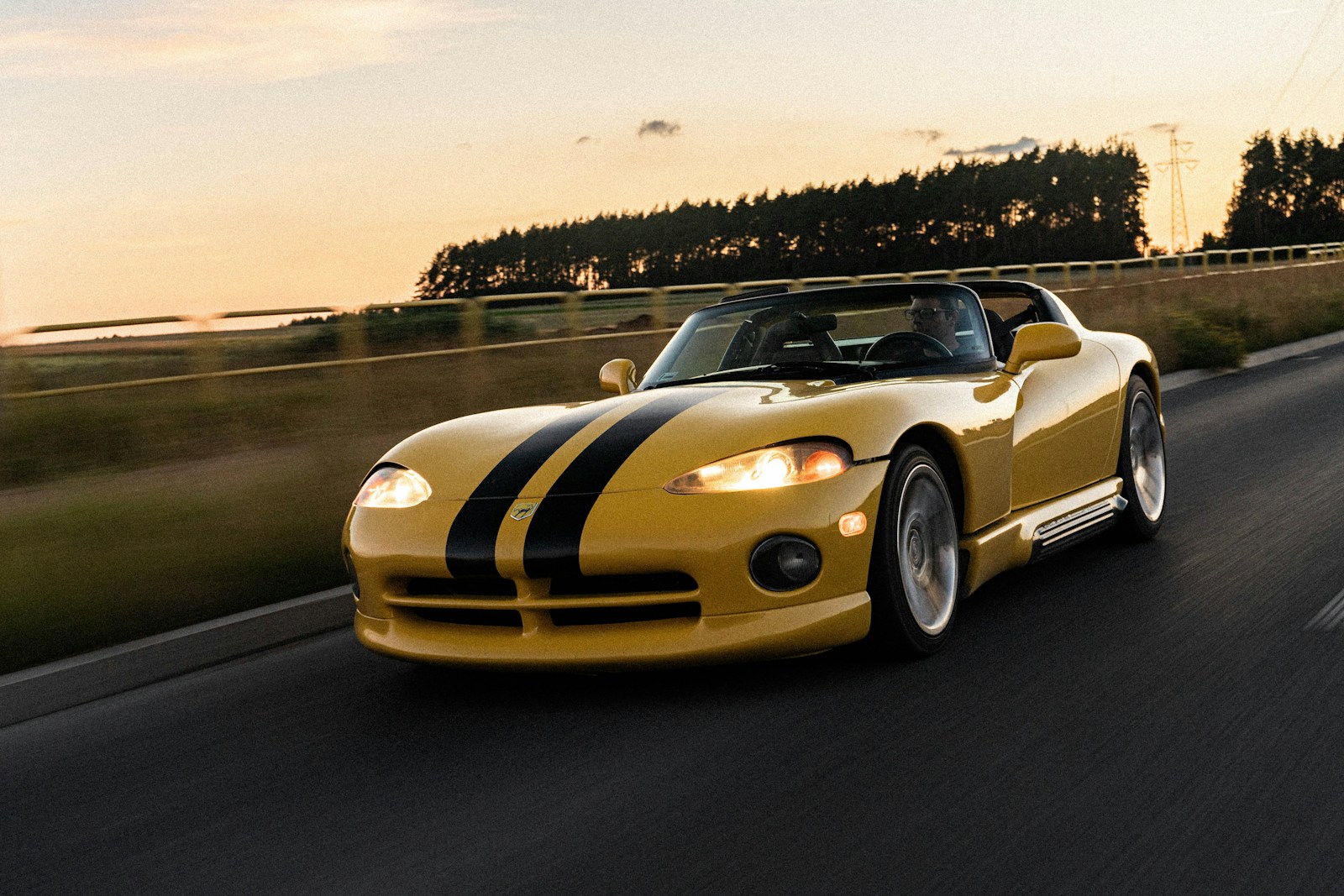

Dodge built the original Viper RT/10 with no traction control, no anti-lock brakes, no airbags in the earliest cars, and a 400-horsepower V10 shoehorned into a chassis that weighed barely 3,400 pounds. Insurers noticed almost immediately. A 1996 study by the Highway Loss Data Institute, covering more than seven million claims from the country’s largest auto insurers, found the Viper’s collision losses were the highest the institute had ever recorded, with average repair payments near $26,000 against an industry norm of roughly $2,666. That single number did more to build the “widowmaker” reputation than any magazine road test, and three decades later the nickname has outlived the car itself.
Where the reputation actually comes from
The 1996 HLDI figures measured money, not bodies. Collision severity is a proxy for how expensive a car is to fix after a crash, not a count of how many people died driving one. Chrysler’s own spokesman at the time pushed back on the framing, telling reporters the Viper posted among the fewest total claims of any vehicle in the study, consistent with a car bought as a weekend toy rather than a commuter. Low mileage and low claim frequency do not erase a scary crash, but they complicate the idea that Vipers were dropping like flies on public roads.

Getting a clean fatality count by generation is harder than it sounds, and that gap in the data is itself part of the story. The Insurance Institute for Highway Safety’s driver death rate tables require a vehicle to log at least 100,000 registered vehicle years or 20 deaths in a four-year study window before it even qualifies for inclusion. The Viper, built in low volumes across its entire run, has never generated enough registrations to clear that bar. So the widowmaker line has persisted for thirty years without the one dataset that would actually settle it.
What changed under the skin
The generation that did the most to earn the reputation is also the generation Dodge sold with the least driver assistance. Every Viper built from the original 1992 RT/10 through the ZB II cars that ended production in 2010 shipped without electronic stability control, traction control, or a four-channel anti-lock brake system. That is nearly two decades of Vipers, across four distinct generations, built on the same basic promise: massive torque, a live rear axle in the early cars, and nothing electronic standing between the driver’s right foot and the pavement.
That changed with the fifth-generation car. When Dodge relaunched the Viper for 2013 under the SRT badge, it finally added stability control, traction control, and modern anti-lock brakes as standard equipment, the first time any of those systems had appeared on the nameplate. The car kept essentially the same mission, a naturally aspirated V10 in a lightweight two-seat body, but it arrived with a safety net the earlier cars never had. If the widowmaker reputation is really about a car that punishes small mistakes, the fifth-generation Viper is the version built specifically to catch some of them.
What the market thinks it’s worth
None of that ambiguity has hurt values evenly. Hagerty currently lists a top-condition 1999 Viper GTS ACR, the raw, race-bred hardtop built without the electronic aids that came later, at $63,000 in concours condition, a figure that reflects real collector demand for exactly the generation with the scariest reputation. Buyers chasing the ACR aren’t shopping for a car that forgives mistakes. They’re shopping for the one that made the reputation in the first place, and they’re paying a premium for the privilege of driving it unassisted.
Context matters here too. When the IIHS most recently published driver death rates broken out by muscle car variant, the Dodge Challenger’s two-wheel-drive versions posted 154 driver deaths per million registered vehicle years, the Charger Hemi came in at 118, and even a Ford Mustang convertible landed at 97. Those are real, measurable numbers for cars people actually drive every day in meaningful volume. The Viper has never posted a comparable figure, for the simple reason that not enough of them were ever registered to generate one. A reputation built partly on repair bills and partly on a car too rare to measure isn’t nothing, but it isn’t the same thing as a documented body count either, and the fifth generation went out of its way to address the part of the complaint that was fixable.