
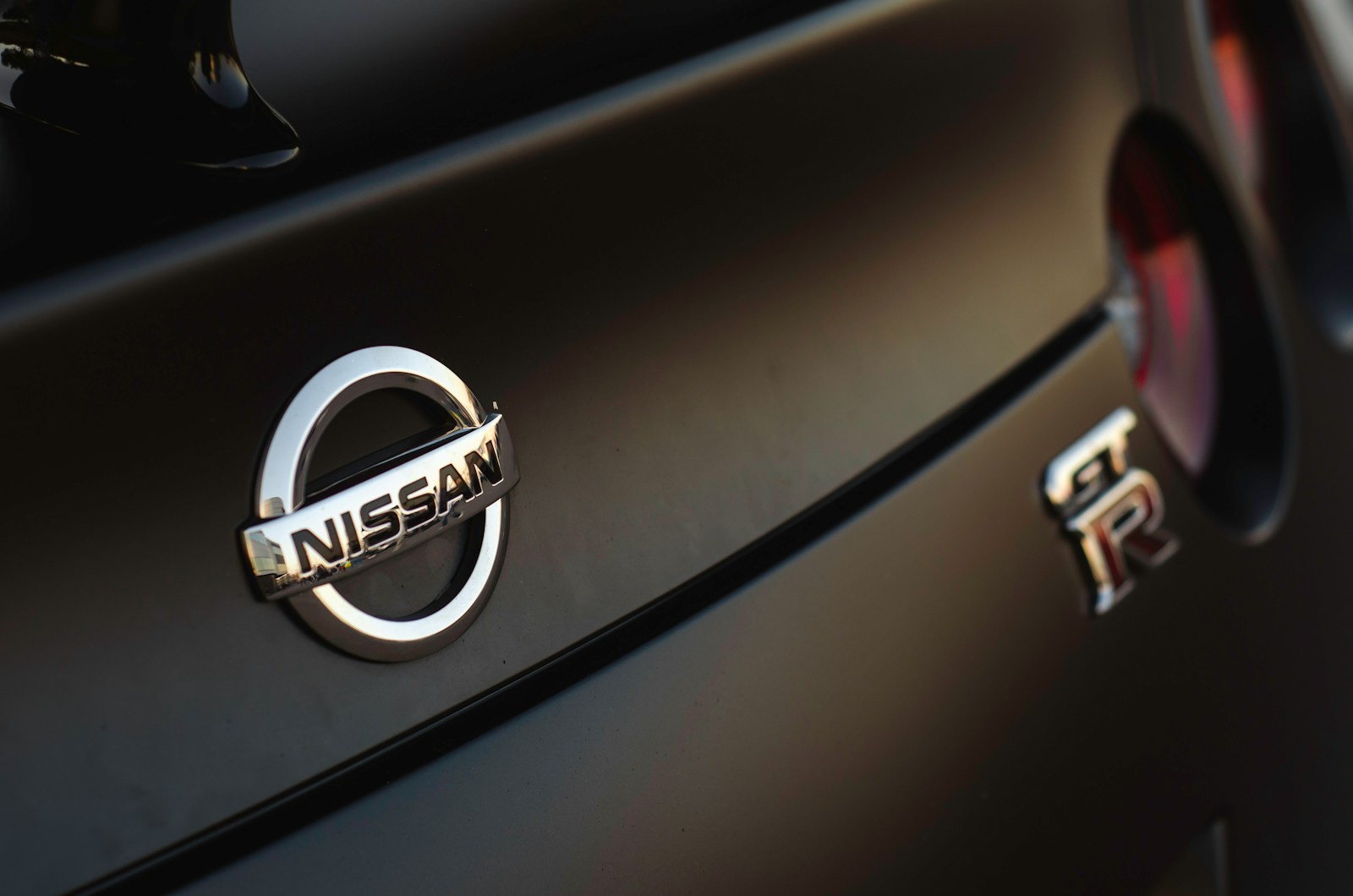

Nissan built exactly 44 examples of the NISMO 400R, and most enthusiasts will go their entire lives without seeing one in person, let alone hearing that twin-turbo six come on boost. So when the eighth car off that production run showed up on a major auction docket with a pre-sale estimate brushing up against seven figures, it was the kind of listing that gets forwarded around JDM circles within minutes. Only a handful of
these ever crossed the Pacific.
A Le Mans Engine in a Road Car
The NISMO 400R started life as a standard R33 GT-R before NISMO’s tuning division rebuilt it around what Broad Arrow Auctions’ own listing describes as the “Le Mans-derived RBX-GT2 twin-turbocharged straight-six,” a stroked and reworked version of the familiar RB26DETT that traces its development back to Nissan’s endurance racing program. The result was roughly 400 horsepower, a 120-horsepower jump over the standard R33’s factory output, funneled through bespoke suspension, uprated brakes, wider bodywork, and forged Ray’s LM-GT1 wheels wrapped in aggressive aero pulled straight from NISMO’s competition parts bin.
The Specific Car Heading to Auction
This particular example, chassis number eight of the 44 built, went under the hammer at Broad Arrow’s Amelia Auction, part of what the auction house billed as a headline lot among a broader slate of millennium-era Japanese performance cars. According to reporting on the sale, pre-auction estimates ran as high as $1 million. The car itself presents in QM1 White over a black NISMO interior, showing under 16,313 kilometers, roughly 10,136 miles, on the odometer, and spent three decades in Japanese ownership before making its way to the United States in 2024. It also picked up a Hagerty Car Culture Award at the 2024 Amelia Concours d’Elegance.
When the gavel came down, Broad Arrow’s own results listing recorded a final sale price of $918,000, a huge number for any Japanese car built in the 1990s, even if it landed just short of the million-dollar ceiling that pre-auction chatter had floated.
Why the Number Still Matters
Context helps explain why a six-figure result on a 1990s Japanese coupe barely registers as surprising anymore. Skyline GT-Rs across every generation have seen their values climb steadily as the generation that grew up idolizing them in video games and import culture has reached an age where seven-figure car purchases are within reach. The 400R sits at the very top of that hierarchy because of how few were built and how directly its engineering connects back to Nissan’s actual racing program.
Auction houses handling cars in this tier increasingly lean on third-party authentication and detailed condition reports precisely because the gap between a genuine, well-documented example and a car with a murkier history can mean hundreds of thousands of dollars in value. For a model as rare as the 400R, provenance research typically involves cross-referencing Nissan’s own factory production records against the specific chassis number, verifying that any modifications made since leaving the factory were performed by NISMO itself rather than an aftermarket shop trying to replicate the look. That level of diligence is part of why serious bidders were willing to push this particular example as high as they did.
Japanese automakers built relatively few true homologation and halo models during the 1990s and early 2000s compared to the sheer volume of standard production cars from the same era, which is part of why examples like the 400R command such outsized attention whenever one changes hands. Unlike a standard R33 GT-R, which Nissan built in the tens of thousands, NISMO-built specials required a customer to work directly through the tuning division rather than a standard dealership, adding a layer of exclusivity that mainstream production models from the same platform never carried, regardless of how heavily an owner might modify one after purchase.
Whoever eventually lands the next 400R to reach public auction will be bidding with this result as the new benchmark, a figure that will likely only climb from here.
Auction houses handling this tier of Japanese performance car increasingly court international bidders directly, recognizing that the strongest demand for cars like the 400R often comes from collectors well outside the country where the sale itself takes place.
For now, the $918,000 result stands as the clearest public benchmark the 400R market has produced in years.