
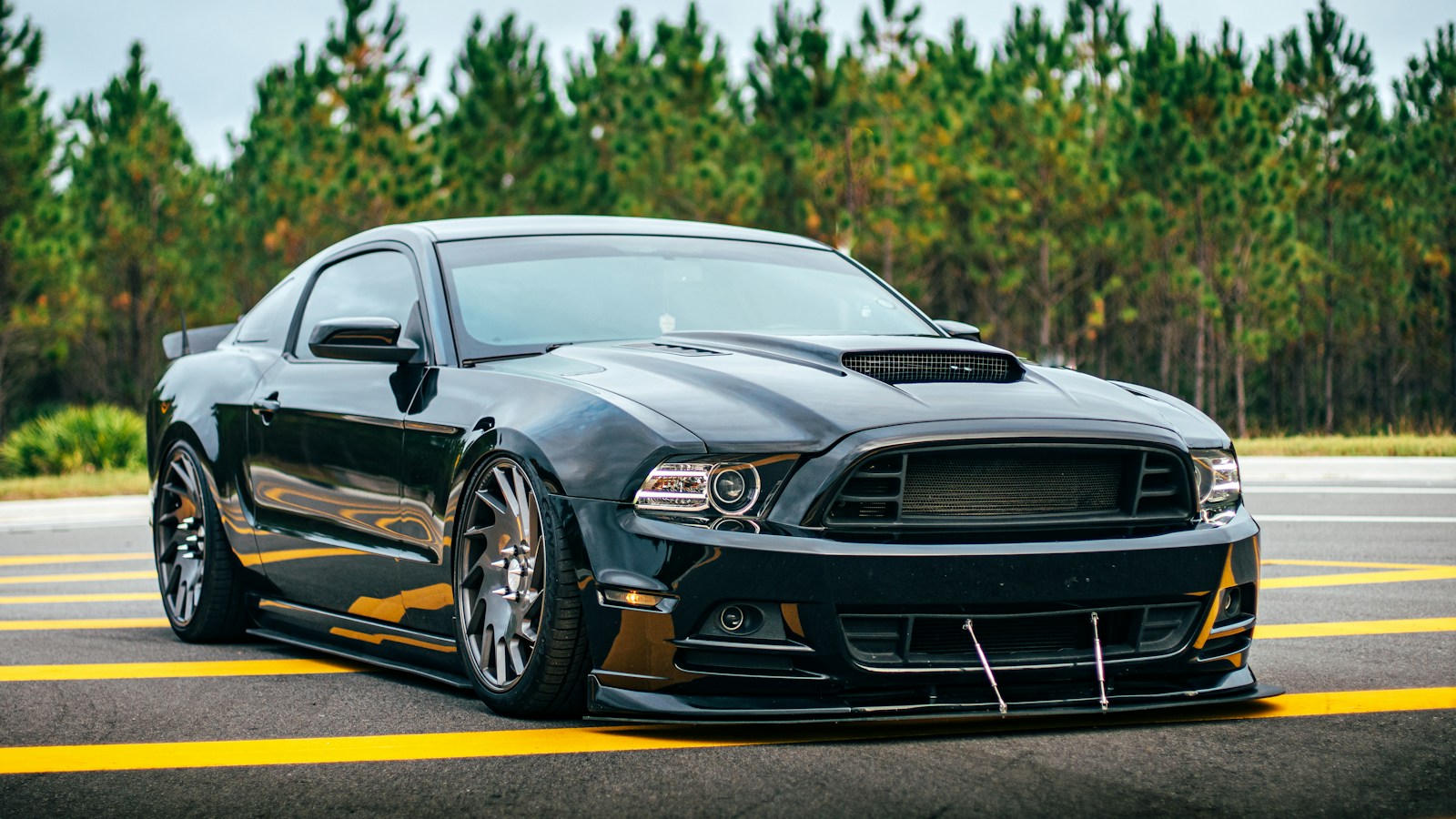

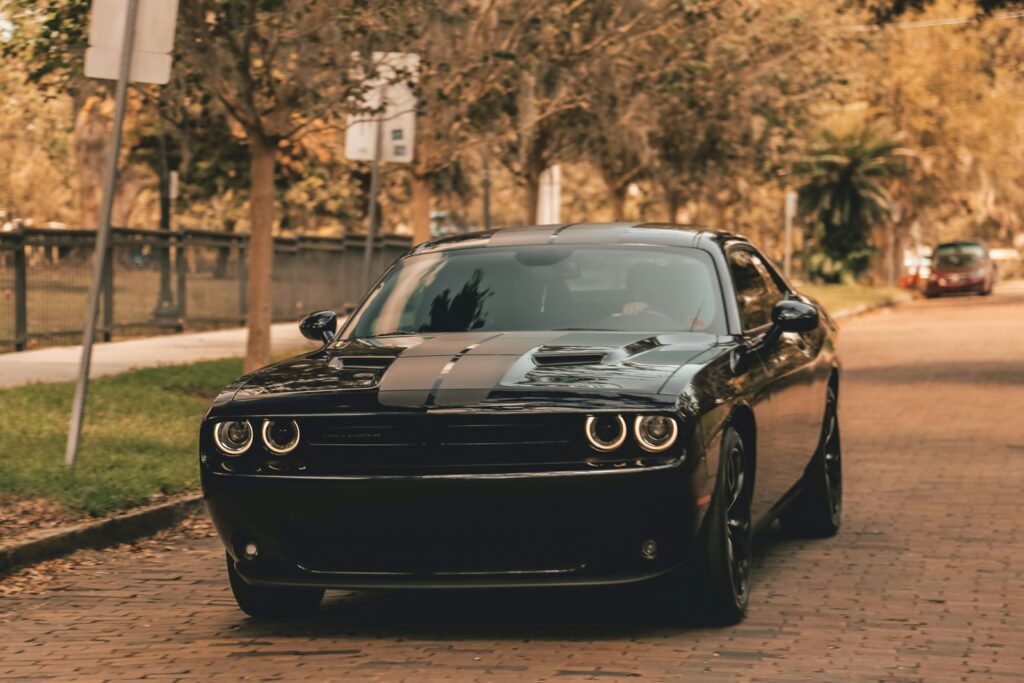
On paper, this was not supposed to be close. The Dodge Charger Sixpack brings a twin-turbo inline-six making 550 horsepower and 531 lb-ft of torque to a fight against a Ford Mustang GT running a naturally aspirated 5.0-liter V8 putting out a comparatively modest 480 horsepower and 415 lb-ft. Run the numbers and the Charger should win going away. Then you actually put both cars on a track at the same time, and the story stops being about horsepower at all.
The Straight-Line Numbers Favored the Charger
In Edmunds’ own instrumented testing, the Charger Sixpack backed up its power advantage in a straight line, if only barely. It ran 0-60 mph in 4.2 seconds against the Mustang GT’s 4.3, and covered the quarter mile in 12.2 seconds at 115.0 mph compared to the Mustang’s 12.5 seconds at 113.1 mph.
Everything Else Went the Other Way
Straight-line speed turned out to be the only category the Charger actually won. Edmunds’ testing showed the Mustang GT stopping from 60 mph in 100 feet, a full 22 feet shorter than the Charger’s 122-foot result. On the skidpad, the Mustang pulled 0.98g of lateral grip against the Charger’s 0.90g. Edmunds described the Charger as suffering from “excessive body roll” and “understeer,” calling it “sloppy and ungainly in comparison” to the Mustang, which exhibited sharp turn-in and predictable rotation through the same sequence of turns.
Why the Result Still Matters
Muscle car buyers have spent decades treating horsepower and quarter-mile times as the entire argument. What this test makes clear is how much that framework leaves out. The Charger Sixpack represents a genuine engineering gamble for Dodge, trading the traditional V8 for a twin-turbo six in the name of both performance and emissions compliance, and it delivers on the numbers that gamble was designed to hit. But Ford spent the current-generation Mustang GT’s development cycle sorting out chassis balance and brake performance in ways that do not show up on a spec sheet.
That is the part of this comparison worth sitting with if you are cross-shopping either car. A spec sheet tells you what a car can theoretically do in a straight line. A track test with real lap times and real stopping distances tells you what happens when you actually ask a car to change direction while doing it.
Track tests like this one carry weight with cross-shopping buyers precisely because dealership test drives rarely involve hard braking, skidpad work or repeated high-speed corners, the exact conditions where the Mustang’s chassis advantage actually showed up. A buyer relying only on a spec sheet and a 15-minute test drive around city blocks would have no way to discover the Charger’s understeer or the Mustang’s braking edge, since neither surfaces in the kind of driving most showroom visits actually involve. That gap between what a spec sheet promises and what a track actually reveals is exactly why independent instrumented testing remains one of the few genuinely useful tools a shopper has before signing on a six-figure performance purchase.
Independent instrumented testing like Edmunds’ comparison has become increasingly influential precisely because it strips away the marketing language both manufacturers lean on when introducing a new performance model. Dodge has positioned the Sixpack’s turbocharged six as proof that a muscle car can go electrified-adjacent without sacrificing character, while Ford has quietly let the current Mustang GT’s chassis engineering speak for itself rather than leading with a specific number. A side-by-side test with consistent conditions, the same driver, and the same measurement equipment cuts through both narratives and gives shoppers something closer to an apples-to-apples comparison than either company’s own marketing materials would ever provide on their own.
Neither automaker has publicly responded to Edmunds’ specific test results, though both continue marketing their respective cars around the strengths their own engineering teams chose to prioritize.
For shoppers who can only choose one, the test suggests the decision should hinge on how the car will actually be driven day to day rather than which number looks better on a spec sheet in a showroom brochure.
The results also reinforce a broader lesson that applies well beyond these two specific cars: raw output rarely tells the whole story.
Sometimes the car with less on paper is simply the better-engineered machine.