
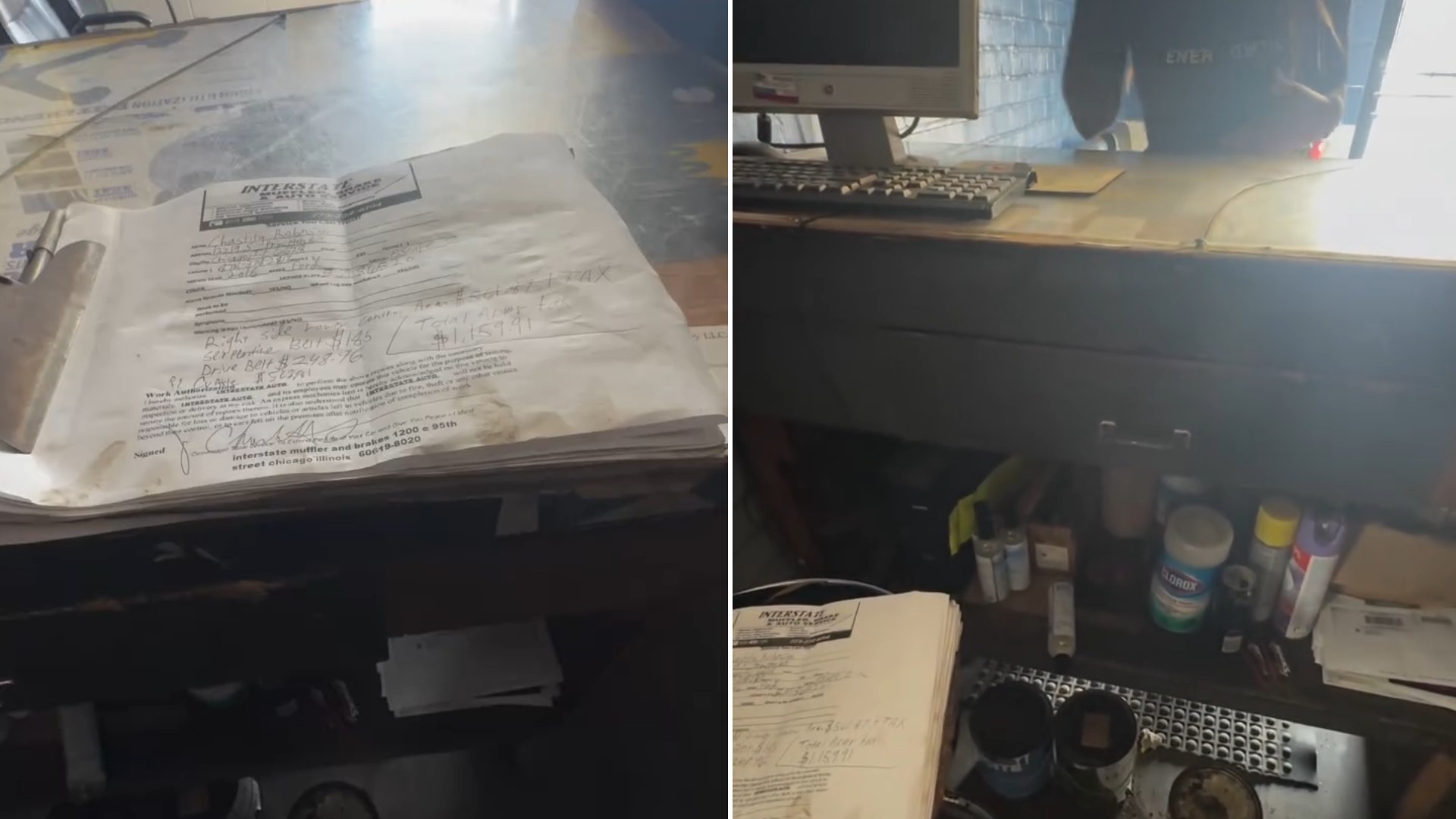

A signed estimate is supposed to settle things. Once a customer approves every line item on a repair order, the shop has a green light to do the work and the customer knows what they owe when it’s done. That’s not quite how it played out at a repair shop, where a customer who had already approved and signed off on every single line of her estimate still ended up in a shouting match over the final bill. The shop’s own Instagram account, @interstateautorepair, filmed the confrontation and posted it.
The Estimate Was Never the Problem
Every legitimate repair shop is supposed to hand over a written estimate before touching a customer’s car, one that lists the parts needed and the anticipated labor cost, and get a signature before work begins, according to the Federal Trade Commission’s own consumer guidance on auto repair. That process appears to have happened here. The customer in the reel had signed off on the estimate in full, which is exactly why the shouting match that followed is worth paying attention to.
Where the Numbers Usually Drift
Even a fully signed estimate can go sideways by the time a car is ready for pickup. A part ordered at one price can arrive at a different one if a supplier’s pricing shifted between the quote and the order. A shop might discover additional damage once a bay is opened up that wasn’t visible during the initial inspection, requiring a supplemental estimate the customer may not fully absorb before picking up the car. According to the FTC, state law in many places requires a shop to get separate approval before exceeding the estimate by a specified amount, and to disclose upfront if non-original parts will be used instead of OEM ones.
A Business Filming Its Own Confrontation
What makes this particular clip unusual isn’t the dispute itself, it’s who’s holding the camera. Most viral repair-shop billing fights get filmed by an angry customer looking to publicly shame a business. Here, the shop filmed itself, choosing to post the confrontation rather than handle it quietly and hope it never resurfaced.
Why the Camera Changes the Argument
The FTC’s own advice for a billing dispute is almost procedural by comparison: document every transaction with dates and names, talk to the shop manager directly, and escalate to a state attorney general’s office or small claims court if that conversation goes nowhere, per the agency’s guidance. None of that happens in real time, and none of it captures tone, which is often what a dispute actually hinges on once the numbers themselves are settled.
What Actually Gets Settled on Camera
Whatever the exact source of the disagreement in this particular case, the reel captures something familiar to anyone who has ever picked up a car and found the total higher than expected despite having signed off on paper first. An approved estimate protects a customer from surprise charges in theory. In practice, it only works if every line item on the final invoice maps cleanly back to what was actually approved.
Repair shop billing disputes like this one rarely make it to small claims court, mostly because the dollar amounts involved, while frustrating, are often too small to justify the time and filing fees required to pursue a formal case. That gap between what’s legally actionable and what’s actually worth fighting over is part of why social media has become such a common venue for these disputes. A viral video doesn’t require a judge or a filing fee, and for a shop that gets the story right, it can settle the matter in the court of public opinion faster than any formal process would.
For shop owners, the calculation around posting a video like this one is not simple. A clip that shows a business handling an upset customer fairly can build trust with future customers who see it. But the same footage, if it captures the shop in a bad light or reveals a genuine billing error, can do lasting damage that a quiet resolution behind closed doors never would have caused. That risk hasn’t stopped a growing number of repair shops, tow companies and dealerships from choosing transparency anyway, betting that showing their side of a dispute builds more credibility over time than staying silent and letting a customer’s one-sided account stand unanswered.