
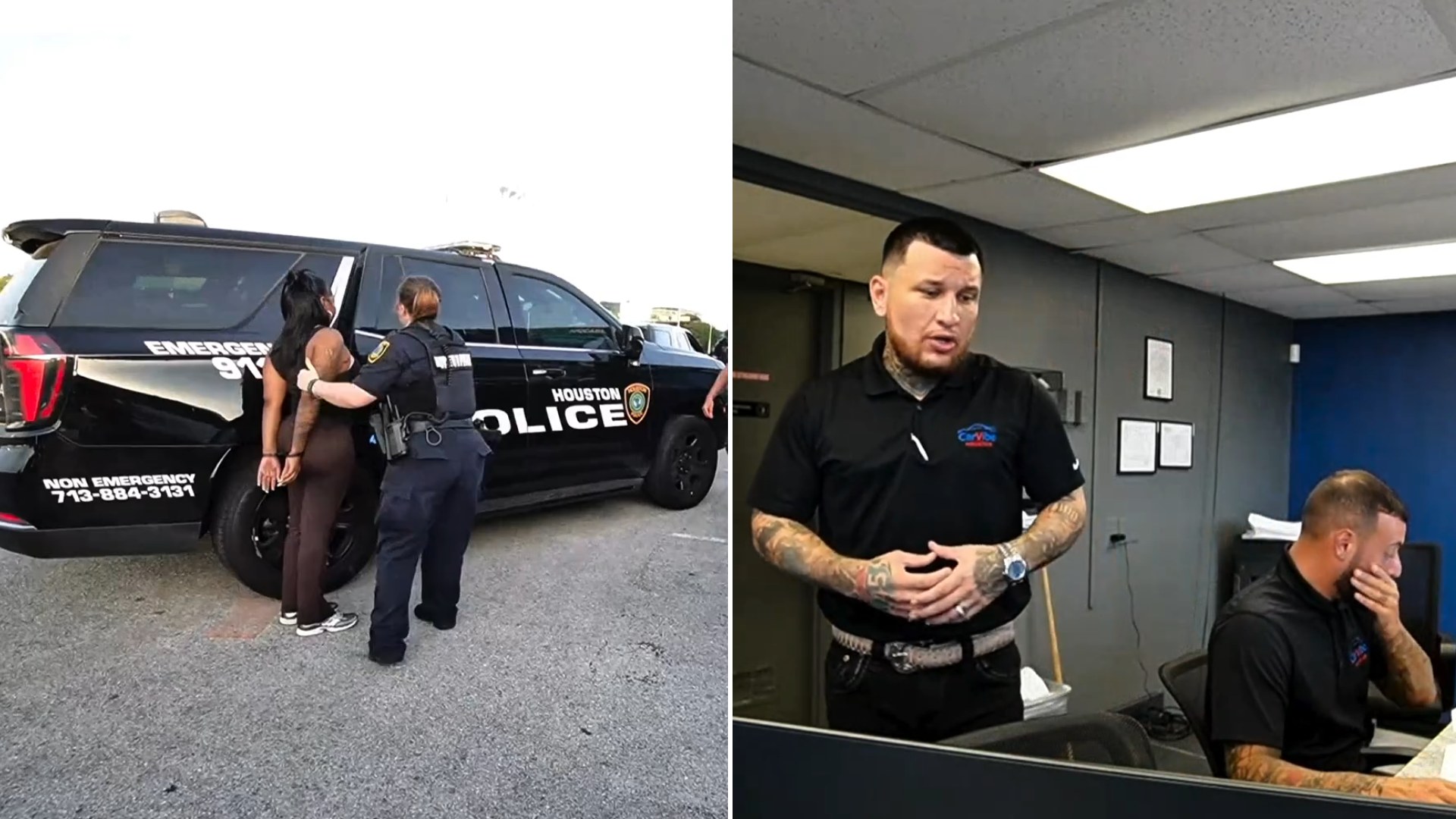

A brand new car, a buyer’s name that didn’t match a stolen identity behind it, and a dealership’s own security cameras catching the entire thing on tape. That’s the setup behind a reel from Instagram creator @stevoogotmerollin, a dealership employee known for posting viral footage from the sales floor, that has racked up 5.2 million views. In it, he narrates his own dealership’s security footage of two people trying to drive off in a new vehicle using someone else’s stolen identity, ending with police present and an arrest shown on camera.
What the Security Footage Shows
The reel is built around the dealership’s own camera system, with @stevoogotmerollin narrating over the footage as it plays. It shows two people going through what looks, on the surface, like a completely normal vehicle purchase: picking out a car, sitting down with finance paperwork, moving through the steps that lead to driving a new vehicle off the lot. The footage and narration make clear that somewhere in that process, staff identified that the identity being used to finance the purchase wasn’t the buyer’s own.
What a CPN Actually Is
Identity fraud at a dealership finance desk frequently runs through something called a CPN, or credit privacy number, a nine-digit number sometimes marketed online as a legal way to start a fresh credit file. It isn’t. A CPN is either a stolen Social Security number or one that was never legitimately issued, and using one to apply for financing is a form of identity fraud regardless of how it’s marketed to the person using it. Dealership finance offices are trained to watch for mismatches, and those mismatches are usually what tips off a sale before it closes.
A Fraud Category That’s Getting Worse, Not Better
What’s shown in the reel lines up with a broader trend regulators have been flagging. The National Insurance Crime Bureau projected a 49% rise in insurance fraud linked to identity theft, according to the organization’s own news release, and found that nearly 25% of identity theft-related insurance claims it reviewed involved synthetically generated identities. “Identity theft and the use of synthetic identities are the foundation for life insurance, medical-related fraud and cargo theft,” NICB President and CEO David J. Glawe said in the release.
Why Dealerships Are Filming Their Own Catches
Posting a video like this one does something a quiet internal report never could. It shows other dealership staff, in specific and visual terms, what the mismatch actually looks like in practice. It also puts other would-be buyers on notice that a given dealership is actively checking, not just accepting whatever paperwork lands on the desk.
What Happens After the Cameras Stop Rolling
An arrest on a dealership lot is rarely the end of the story. For the person whose identity was actually used, without their knowledge or consent, the fallout can include a fraudulent loan showing up on their credit report months later. The footage @stevoogotmerollin posted captures the moment fraud gets stopped. What it doesn’t show is the identity theft victim somewhere else entirely, who may not even know yet that their name almost drove a car off the lot in someone else’s hands.
Dealerships that catch and report identity fraud attempts are also doing work that benefits the broader financial system, not just their own bottom line. Every fraudulent auto loan that gets stopped before funding is one less bad debt sitting on a lender’s books and one less fraudulent account that could otherwise sit undetected for months. Finance managers who spot the warning signs, whether it’s a mismatched address history or a credit file that looks too thin for the applicant’s stated background, are effectively serving as the first line of defense in a fraud category regulators say is only getting more sophisticated.
Dealerships across the country have increasingly begun training finance staff specifically to recognize the subtle signs of identity-based fraud, since a determined scammer with a convincing enough set of documents can often get further into a transaction than most salespeople expect. Industry groups have pushed for more standardized identity verification tools at the point of sale, arguing that a national database cross-referencing applicant information in real time would catch far more attempts than individual dealerships relying on instinct and manual document review ever could on their own.