

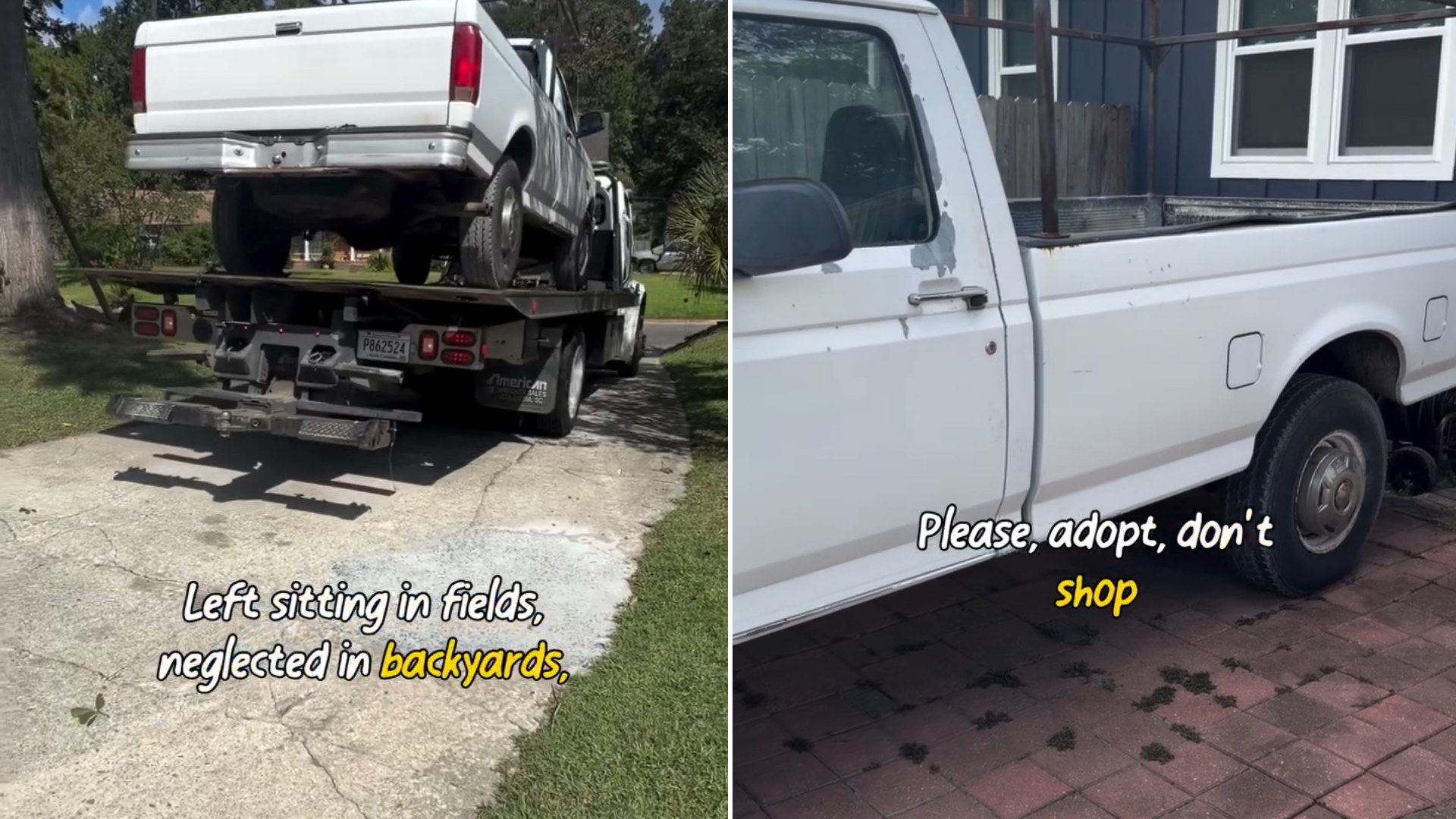
The “adopt, don’t shop” slogan has long been associated with rescuing dogs and cats from shelters rather than buying from breeders. An Instagram creator behind @full_steam_designs has borrowed the phrase for an entirely different kind of rescue: an old, beat-up truck, purchased and treated with the same tongue-in-cheek reverence usually reserved for a shelter animal finding its forever home.
“We got a new rescue!” the caption announces, tagged with hashtags including “rescuedontbuy,” “mechanic,” and “projectcar.” The framing is playful throughout, humorously treating the purchase of a rough, neglected truck as though it were an act of genuine charity toward a suffering creature rather than simply a transaction with a private seller or dealer. It’s a joke, but like a lot of good jokes about car culture, it lands because there’s a real kernel of truth underneath it.
Old, beat-up trucks that end up as project vehicles genuinely do share something with shelter animals passed over again and again: they’re often overlooked precisely because they don’t look their best. A truck with faded paint, dents, rust, and years of visible neglect sits on a lot or in a driveway far longer than a clean, shiny counterpart, regardless of how sound the mechanicals underneath might actually be. Buyers scrolling through listings tend to filter out anything that looks like it needs work before they even consider the price or the specs, the same way shelter dogs that are older or less conventionally photogenic tend to get passed over by people scrolling adoption listings.
That’s precisely the gap that project car and truck buyers step into. For a mechanic or DIY enthusiast with the skills to look past cosmetic damage and rust, a beat-up truck represents an opportunity most other buyers are actively avoiding — lower purchase prices, less competition, and the satisfaction of bringing something back from a condition most people had already written off. The “rescue” framing captures that dynamic surprisingly well: nobody else wanted this truck in its current state, but somebody saw past the surface-level damage to what it could become with the right attention.
There’s also something to be said for the emotional register the joke establishes right from the start. Framing a rough project truck as a rescue rather than just a fixer-upper purchase sets an affectionate tone for whatever work lies ahead, the kind of tone that tends to carry a builder through the inevitable frustrations of restoring a neglected vehicle. It’s considerably easier to stay motivated through a long, messy project when you’ve already decided, even jokingly, that the truck deserved to be saved.
Whatever specific condition the truck was in when it came home, the hashtags accompanying the post — pointing toward mechanic work and a project car in progress — suggest this is only the beginning of its story, with plenty of hands-on repair work presumably still ahead before the “rescue” fully earns its happy ending.
Takeaway: Buying an Overlooked Project Vehicle
If you’re considering buying a rough, overlooked vehicle rather than a clean, ready-to-drive one, do an honest assessment of both your budget and your skills before committing — cosmetic damage is usually cheaper to fix than hidden mechanical or structural problems, so a thorough inspection matters more than the sale price alone. Factor in the cost of parts, tools, and your own time realistically, since project vehicles almost always take longer and cost more than initial estimates suggest. But there’s real value beyond the math, too: giving a neglected vehicle a second life, much like adopting an overlooked shelter animal, tends to produce a level of pride and attachment that buying something already polished and finished rarely matches.