

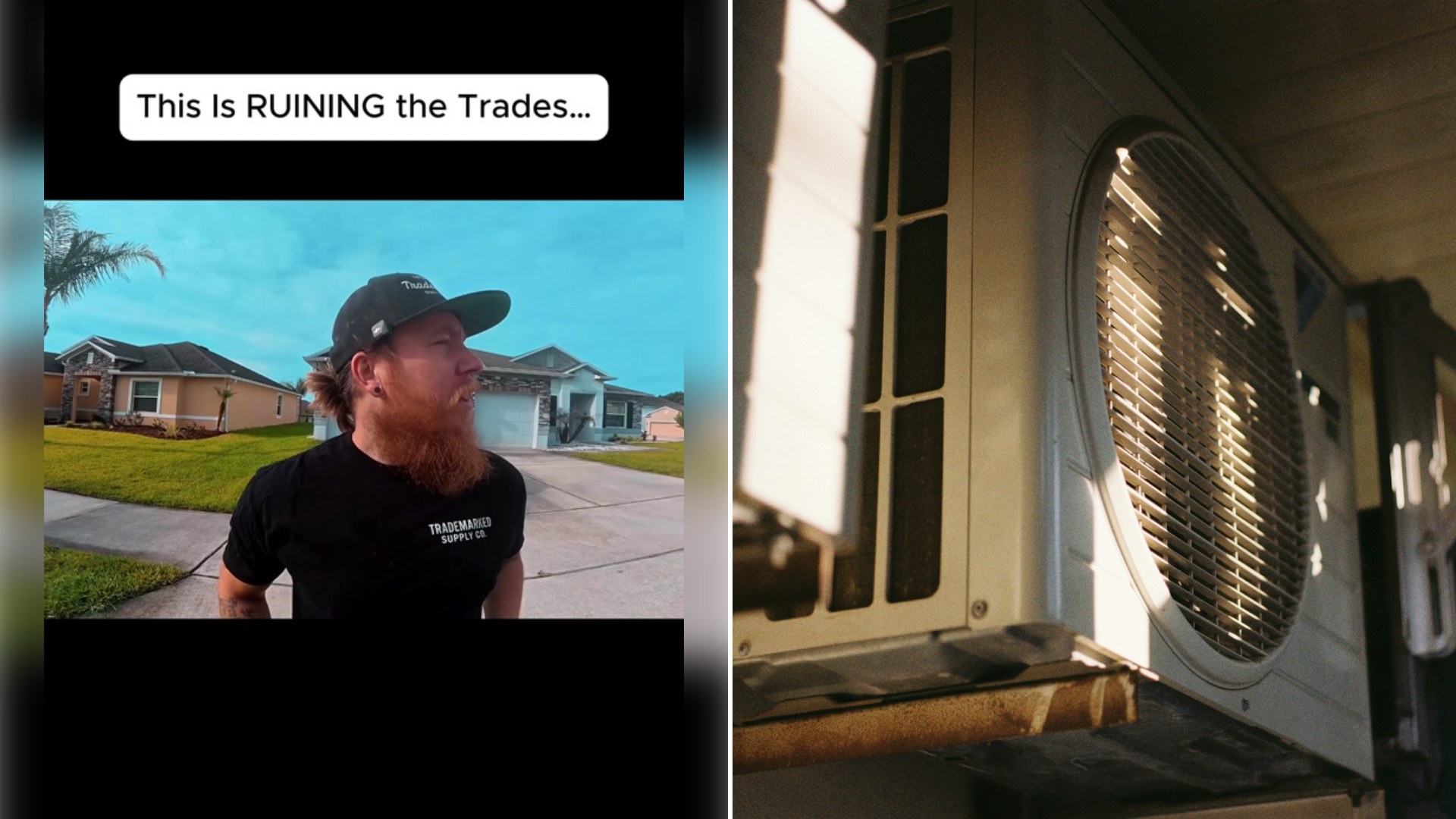
A blank thermostat screen sent one homeowner down a path toward what she was told would be a full system replacement. According to the TikTok creator and HVAC technician behind @noahkoh6, an older customer had been steered toward replacing her system entirely after her thermostat went dark — before he says he found the actual cause: a triggered float switch, cleared by simply unclogging the condensate drain line.
“This Is RUINING the Trades…” the caption reads, a pointed statement that frames the video as part of a broader critique the technician is making about practices he believes are common in the industry, rather than a documented complaint against any specific named company. It’s important to be clear about what can and can’t be confirmed here: the account of what the previous provider told the customer, and the characterization of that advice as a push toward unnecessary replacement, comes from the technician’s own narration and retelling of the visit. No response from whatever company or technician originally advised the customer has been part of the record made public, and the story as presented should be understood as one tradesperson’s account of a service call, not an independently verified finding against a specific business.
What the video does document more directly is the technical diagnosis and fix itself. A float switch is a small but critical safety component in most modern HVAC systems, designed specifically to shut the system down when it detects that the condensate drain line — the tube that carries away the water produced as the system dehumidifies air — has become clogged and water is backing up. When that switch trips, it can cause exactly the kind of symptom described here: a thermostat that goes blank, because the system has cut power to protect itself from a backup that could otherwise cause water damage inside the home.
According to the technician, clearing the clog and resetting the float switch resolved the issue, restoring the thermostat and, presumably, the system’s normal function without requiring any major parts replacement, let alone a full system overhaul. If accurate, that would represent a significant gap between the scope of repair actually needed and the scope of repair the customer says she was initially told was necessary — the difference between a routine maintenance fix, typically inexpensive, and the cost of replacing an entire HVAC system, which can run into the thousands of dollars.
The technician’s framing of the incident as symptomatic of something larger — practices he suggests are common enough to be “ruining the trades” — taps into a broader and genuinely documented concern within home service industries generally, where large companies with aggressive sales incentives have, in various publicized cases over the years, faced scrutiny for recommending costly replacements over simpler repairs. Whether that broader pattern applies to this specific customer’s prior experience is something this video alone doesn’t establish; it reflects the technician’s professional judgment and account of what he found, delivered with evident frustration on behalf of a customer he describes as older and, by implication, potentially more vulnerable to being oversold.
What is clear is that the fix he describes — clearing a triggered float switch and drain line — is a well-established, low-cost HVAC repair, and if it did resolve this particular customer’s issue, it offers a useful reminder of how a comparatively minor mechanical problem can sometimes present symptoms alarming enough to make a much larger repair sound necessary.
Takeaway: Getting a Second Opinion on a Major Home Repair
Before agreeing to a costly repair or full replacement of any major home system, especially one recommended after a sudden, unexplained malfunction, consider getting a second opinion from an independent technician, particularly for older adults or anyone unfamiliar with the technical details involved. A blank thermostat or a system that shuts down unexpectedly doesn’t necessarily mean catastrophic failure; it can also indicate a safety feature doing exactly what it’s designed to do. Ask for a clear explanation of the specific diagnosis, and don’t hesitate to request to see the failed component before authorizing major work. A reputable technician should be able to explain the problem in plain terms and welcome a second opinion rather than pressure a quick decision.