

Reputation is a strange currency in the car world. Sometimes it’s earned fair and square through years of consistent quality, and sometimes it’s forged in a single bad headline that outlives every subsequent improvement a manufacturer makes. Once a car gets tagged as the punchline in a joke or the answer to a “worst cars ever” list, that label tends to stick regardless of what the spec sheet says.
What’s interesting is how rarely these cars were uniformly terrible from bumper to bumper. Most had at least one redeeming quality buried under the baggage — decent fuel economy, an interesting design idea, a genuinely competitive price. None of it mattered once the reputation calcified. Here are eight cars that never got the chance to outrun their own bad press.
Ford Pinto
The Pinto sold well initially as an affordable, practical subcompact during a period when American buyers were newly hungry for smaller cars amid rising gas prices. Its reputation collapsed almost entirely around its fuel tank design, which multiple lawsuits and investigative reports argued was vulnerable to rupture and fire in certain rear-end collisions. Ford recalled roughly 1.5 million Pintos and Mercury Bobcats in 1978 to modify the fuel system, but by then the car’s name had already become shorthand for corporate cost-cutting at the expense of safety. Internal Ford memos that surfaced during litigation, appearing to weigh recall costs against potential settlement costs, did lasting damage to the company’s public image well beyond the car itself. Decades later, “Pinto” still gets used as a punchline in conversations that have nothing to do with the actual car, which is a remarkable, if unfortunate, kind of cultural staying power.
Yugo
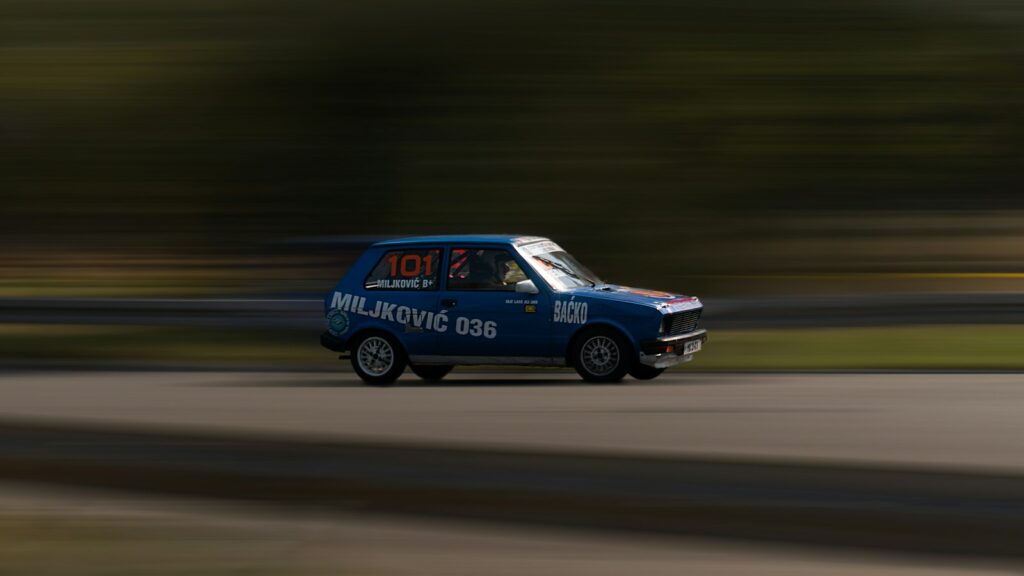
Imported to the United States by veteran entrepreneur Malcolm Bricklin as a shockingly cheap new car option, the Yugo GV briefly generated real buzz simply by existing at its price point in the mid-1980s. Reliability problems surfaced almost immediately, ranging from electrical gremlins to build-quality issues that stemmed from the manufacturing standards at its Eastern European factory, and American road testers were rarely kind to it even when new. Political upheaval and the outbreak of war in the country where the cars were built eventually cut off the supply chain entirely, ending U.S. sales within just a few years of the car’s debut. By the time it disappeared from dealer lots, “Yugo” had already cemented itself in American pop culture as the default reference point for a cheaply made car. It’s one of the fastest reputation collapses in automotive history, arguably finished before the car even had a chance to prove itself over the long haul.
Chevrolet Vega
GM’s compact answer to imported small cars won early praise for its packaging and styling, even picking up industry recognition shortly after launch. That goodwill evaporated as owners discovered the aluminum-block engine’s tendency toward premature wear and the body’s alarming susceptibility to rust, sometimes visible within the first couple of years of ownership in salt-belt states. GM addressed some of the underlying issues over the car’s production run, including engine and rust-proofing revisions, but the early problems had already defined the model in the public imagination. Owners who bought early examples often found themselves dealing with engine rebuilds and bodywork well before the car had any business needing them. The Vega remains one of the most frequently cited examples of a genuinely promising design undone by rushed engineering and inadequate corrosion protection.
Cadillac Cimarron
Built to give Cadillac an entry-level model that could compete with smaller European luxury sedans, the Cimarron was based heavily on GM’s compact J-body platform, shared with far less expensive Chevrolet and Pontiac models of the same era. Buyers and critics noticed the resemblance almost immediately, and the car’s premium price tag relative to its mechanical underpinnings became a lasting point of ridicule. Cadillac made real improvements over the car’s production run, adding a V6 engine option and other refinements, but none of it changed the fundamental perception that had already taken hold. The Cimarron is now widely cited within the industry itself as a cautionary tale about badge engineering done without enough differentiation to justify the price gap. Cadillac’s own executives have referenced it over the years as a lesson in what happens when a luxury brand tries to cut corners on an entry-level product.
AMC Pacer
The Pacer’s rounded, fishbowl-like greenhouse and unusually wide stance made it one of the most distinctive silhouettes of the 1970s, originally conceived around a rotary engine that never actually made it into production. AMC had to hastily redesign the engine bay to fit a conventional inline-six when the rotary program fell through, resulting in a car that was heavier and less efficient than originally planned. Buyers and reviewers were divided on the styling from the start, and the car quickly became a favorite target for comedians and cartoonists poking fun at its unusual proportions. Despite genuinely spacious interior packaging for its footprint, the Pacer never shook its reputation as an oddball, a label that followed it right up through its cancellation. Decades later, it’s become a beloved cult classic precisely because of the weirdness that doomed it commercially in the first place.
Pontiac Aztek
Pontiac’s crossover arrived with genuinely useful packaging ideas — a tent attachment, a built-in cooler console, flexible cargo configurations — that previewed features crossovers would eventually adopt industry-wide. None of that mattered once the styling landed, with a busy, angular face and cladding-heavy body that drew immediate and near-universal criticism from reviewers and buyers alike when it debuted in the early 2000s. Sales badly underperformed expectations, and the Aztek quickly became one of the most reliable punchlines in automotive journalism for years afterward. Pontiac tried mild styling revisions in later model years, but the initial impression had already done irreversible damage to the model’s prospects. Its reputation has softened somewhat in recent years as a slice of pop culture nostalgia, but it remains the textbook example of genuinely useful engineering buried under styling nobody could get past.
Suzuki Samurai
A small, affordable, genuinely capable off-roader, the Samurai found a real audience among budget-conscious buyers who wanted something that could handle a trail on the weekend and a commute during the week. Its reputation took a serious hit after a high-profile consumer safety publication raised rollover concerns following its own testing, a controversy that generated significant news coverage and a legal dispute between the manufacturer and the publication that dragged on for years. Sales fell sharply in the aftermath, and the Samurai never fully recovered its market position in the United States regardless of how the underlying dispute was eventually resolved. Off-road enthusiasts have long argued the vehicle’s capability and light weight were unfairly overshadowed by testing methodology that became a point of contention itself. It remains a frequently cited example of how quickly a single controversy can reshape a vehicle’s market fate, independent of how the argument ultimately settles.
Chevrolet Citation
GM’s front-wheel-drive compact arrived to strong initial sales and a Motor Trend Car of the Year award, positioning it as a genuine leap forward for the company’s small-car lineup in the early 1980s. Owners quickly ran into a litany of quality problems, including brake issues serious enough to prompt a major recall, along with engine and transmission complaints that piled up faster than GM could address them. Word of mouth turned sharply negative within just a couple of model years, and sales collapsed from their initial highs even as GM worked to fix the underlying problems. The Citation’s fall from grace became a widely cited example of a manufacturer prioritizing a rushed launch timeline over the quality control a genuinely new platform required. It’s rarely mentioned today except as a cautionary tale, despite representing real engineering ambition when it was still fresh off the design table.