

NASCAR has never been shy about changing the formula, and that’s exactly what keeps message boards and tailgate arguments alive decades after the fact. Every generation of fans falls in love with a particular version of the sport, and every time the sanctioning body tinkers with the rulebook, somebody’s favorite era gets declared officially over.
Some of these changes were safety-driven and genuinely necessary, even if they cost the racing a little of its raw edge. Others were pure business decisions dressed up as competitive improvements, and fans have never fully let NASCAR forget it. Here are six changes that still get relitigated every time two longtime fans end up talking racing.
The Introduction of the Chase (2004)
For decades, the Cup Series champion was simply whoever accumulated the most points over a full season, rewarding the driver and team who performed best on the whole, week in and week out. NASCAR replaced that format in 2004 with the Chase for the Championship, resetting points among the top drivers for a final stretch of races specifically to keep the title fight alive deeper into the season. Traditionalists argued the change punished the driver who’d been the most consistent all year in favor of manufacturing artificial late-season drama. Supporters countered that it fixed a real problem, since some championships had been mathematically decided with races still left on the calendar, draining interest from the season’s final months. Both sides have never fully backed down, and the format has been tweaked repeatedly in the years since, which tells you something about how unsettled the debate still is.
Restrictor Plates at Daytona and Talladega (1988)
Speeds at NASCAR’s biggest superspeedways climbed to a point in the late 1980s where cars were becoming airborne in wrecks, a danger underscored dramatically when Bobby Allison’s car went airborne and tore through the catch fence at Talladega in 1987, injuring spectators. NASCAR responded by mandating restrictor plates at Daytona and Talladega to cap horsepower and slow the pack down, a rule that remained in place for decades afterward. The tradeoff was a completely different style of racing at those two tracks, with cars bunched together in tight, unpredictable packs rather than spread out by raw power. Fans have debated the safety benefit versus the entertainment cost ever since, since pack racing produces both some of the sport’s most thrilling finishes and some of its scariest multi-car crashes. Even after NASCAR moved to tapered spacers and other methods to manage speed, the restrictor-plate era’s legacy still shapes how fans talk about racing at those two tracks specifically.
The Car of Tomorrow (2007)
NASCAR rolled out a boxier, more standardized car design in 2007, built with a bigger emphasis on driver safety features like a larger crush zone and a centered cockpit, following years in which several drivers had been seriously injured or killed in crashes. Fans and even some drivers found the new car visually generic compared to the manufacturer-specific silhouettes it replaced, complaining it made a Chevrolet, Ford, and Dodge look nearly identical on track. The car’s handling characteristics also changed the racing itself, and opinions split hard between fans who valued the safety improvements and those who felt something essential about stock car identity had been sacrificed to get there. NASCAR eventually moved on to newer car designs in the years that followed, but the Car of Tomorrow remains a lightning rod whenever the conversation turns to safety-versus-spectacle tradeoffs. It’s one of the clearer examples of a change nobody could really argue against on safety grounds, yet plenty of fans still resented anyway.
The Charter System (2016)
NASCAR introduced a charter system in 2016 that functions similarly to a franchise model, guaranteeing a fixed number of teams a starting spot in every points race and a bigger, more predictable share of the sport’s revenue. Supporters argued it gave team owners the financial stability to invest in multi-year sponsorship deals and long-term planning, something the old open-entry system made much harder to secure. Critics countered that it moved NASCAR away from its scrappy, open-competition roots, where any properly qualified team could theoretically make a race regardless of size or connections. The relationship between the charter teams and NASCAR itself has remained contentious in the years since, occasionally spilling into public disputes over revenue sharing and the value of the charters themselves. It’s a structural change that fans without a business background sometimes overlook, but it fundamentally reshaped who gets to compete and how the sport’s money actually flows.
Stage Racing (2017)
Starting in 2017, NASCAR broke every points race into three stages, awarding bonus points and a mandatory caution at the end of each of the first two segments rather than letting the race run as one continuous, uninterrupted event. The stated goal was to manufacture more moments of drama and strategic decision-making throughout the race, rather than concentrating all the intensity into the final handful of laps. Longtime fans pushed back hard, arguing it artificially interrupted green-flag racing rhythm and rewarded manufactured cautions over the organic ebb and flow that had defined stock car racing for generations. Others appreciated that it gave teams more strategic variables to play with and made the middle portions of long races more consequential than they used to be. Nearly a decade later, stage racing is simply how the sport works now, but you’ll still find plenty of fans who’ll tell you they preferred it when a race was just, well, one race.
The Next Gen Car (2022)
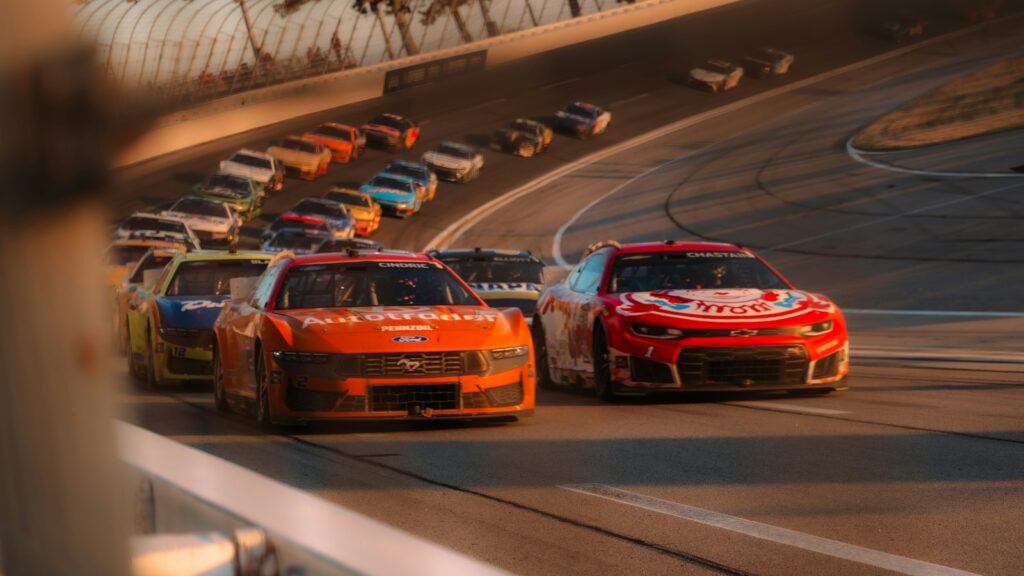
NASCAR overhauled its Cup Series car again in 2022, introducing a chassis built around widely sourced, standardized parts along with an independent rear suspension, a first for the series after decades of solid rear axles. The new car was designed partly to cut costs for teams by centralizing parts supply and reducing the custom fabrication that had ballooned budgets for years, while also modernizing the car’s underlying engineering to feel more relevant to what manufacturers actually build for the street. Fans and drivers alike raised concerns about durability, parts availability after crashes causing longer caution periods, and whether the racing product itself had genuinely improved or just gotten more expensive and more identical car to car. Some drivers publicly criticized the car’s handling and repairability in its early seasons, generating real friction between the garage and NASCAR leadership. It’s the most recent entry on this list, which means the argument over whether it was the right call is still very much in progress rather than settled by hindsight.