

The fuel additive aisle has always been fertile ground for bold promises: better mileage, cleaner injectors, smoother idle, even measurable horsepower gains, all from a small bottle poured into a full tank. Some additives genuinely do useful, narrow jobs, like cleaning fouled injectors on a car that’s been running poor-quality gas. Others have made claims that regulators and independent testers have directly challenged.
Here are nine examples of additive marketing that critics, forums, and in some cases federal regulators have pushed back on, along with what’s actually verifiable behind the promises.
Slick 50’s Wear-Reduction Claims
Slick 50 is the textbook case in this category. The Federal Trade Commission announced in 1996 that it had charged Quaker State’s ads for Slick 50 as false and misleading, specifically challenging claims about the PTFE additive’s ability to reduce engine wear and friction. The case was formally resolved with a 1997 settlement. It remains one of the most cited examples in automotive circles of a federal agency directly disputing an additive’s marketing claims, decades before today’s crowded aftermarket even existed. Modern PTFE-based products aren’t necessarily making the same claims, but the case is a useful historical benchmark for how skeptical to be of any additive promising dramatic, easily measured engine improvements from a single bottle.
Dura Lube’s Marketing History
Dura Lube built a business around similar engine-treatment claims during the same era as Slick 50, and its history includes its own regulatory scrutiny over advertising, as documented in general industry retrospectives on the period’s engine-treatment marketing boom. The company’s story is a useful reminder that an entire product category can develop a marketing playbook built on dramatic before-and-after claims that outpace what any single additive can realistically deliver. Products marketed this way often lean heavily on testimonials and demonstration videos rather than independent third-party lab results, which is a pattern worth watching for in any additive marketing today, not just decades-old examples.
Marvel Mystery Oil’s Broad Claims
Marvel Mystery Oil has been sold for close to a century, and its packaging has historically made broad claims about lubricating, cleaning, and protecting multiple engine systems simultaneously, as detailed in the product’s own long documented history. Longtime users are often devoted to the product, and it has a genuine following in classic car and small-engine communities. Critics, however, note that a single additive claiming to meaningfully improve fuel system cleaning, upper cylinder lubrication, and carburetor performance all at once is making a lot of simultaneous promises for one small bottle. It’s a case where the product may do something useful without necessarily doing everything its marketing implies.
Products Claiming Measurable Horsepower Gains
Any fuel additive marketed with a specific horsepower gain number on the bottle deserves a skeptical read, since that kind of claim typically requires dynamometer testing under controlled conditions to substantiate, and most consumer-facing additive marketing doesn’t publish that data. Enthusiast forums, including threads on BobIsTheOilGuy discussing additive claims generally, regularly point out that a fuel additive’s actual effect on horsepower in a well-maintained engine is usually negligible to unmeasurable in real-world driving. That doesn’t mean every additive claiming a performance benefit is fraudulent, but a specific numerical horsepower claim without published third-party testing is a reasonable place to apply extra scrutiny before buying.
Octane Boosters Marketed for Standard Engines
Octane booster additives are genuinely useful for a narrow set of applications, mainly high-compression or forced-induction engines that specifically require higher-octane fuel than what’s available locally. Marketing these products broadly to owners of standard, naturally aspirated daily drivers, implying a general performance or efficiency benefit, oversells what the product actually does for an engine that isn’t knock-limited in the first place. Independent automotive publications have long noted that most standard engines see no measurable benefit from an octane booster beyond what the correctly rated pump fuel already provides, making the broad marketing pitch a mismatch for most buyers.
Fuel-Economy Additives With No Independent Testing Data
Additives marketed primarily around improved fuel economy are a perennial category, and the Environmental Protection Agency has historically evaluated and published findings on numerous gas-saving devices and additives over the years, generally finding little to no measurable benefit for most tested products. Any additive making a fuel-economy claim without pointing to independent, replicable testing data is following the same pattern that has repeatedly failed to hold up under EPA-style scrutiny. A genuinely effective product in this category would have an incentive to publish that data prominently rather than relying on marketing language alone.
“Complete Fuel System Cleaner” Claims on Every Tank
Some additives are marketed for use in every single tank of gas as ongoing maintenance, rather than as a periodic treatment for a specific, diagnosed problem like injector fouling. Independent mechanics and forum discussions on sites like BobIsTheOilGuy generally note that modern gasoline already contains detergent additives meeting EPA minimum requirements, and TOP TIER certified fuel goes further still, meaning an every-tank additive is often solving a problem that a driver’s regular fuel purchase has already addressed. That’s not true for every vehicle or every fuel source, but it’s worth checking whether you’re already buying TOP TIER gasoline before paying for an additive marketed to do a similar job.
Diesel Additives Marketed With Vague “Power Restoration” Language
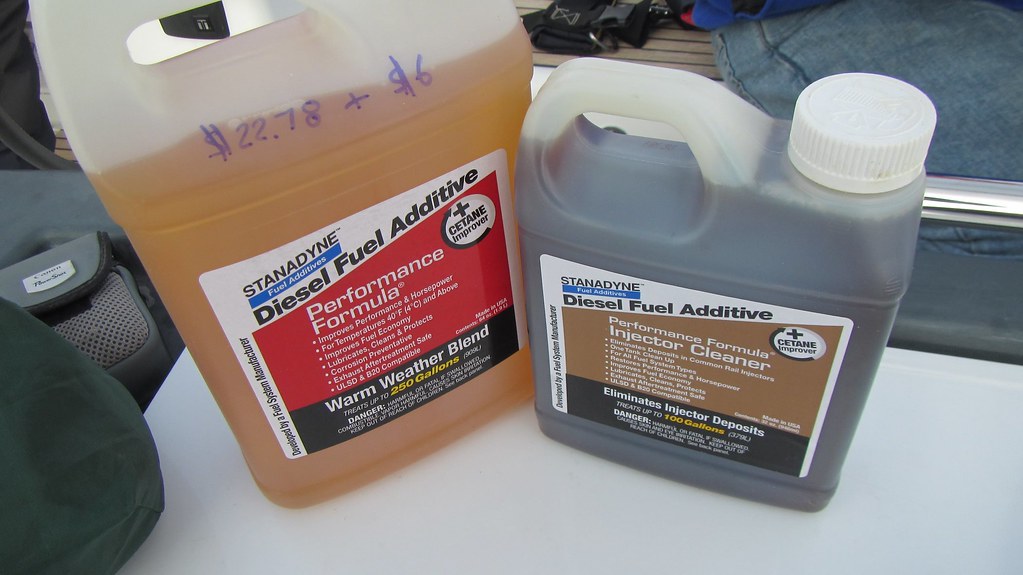
Diesel-specific additives often use language like “restores lost power” or “like a tune-up in a bottle,” phrasing that implies a dramatic and generalized fix without specifying what mechanical issue is actually being addressed. Genuine diesel injector cleaning additives can help with a specific, identifiable problem, like carbon buildup from poor-quality fuel, but a vague power-restoration claim with no explanation of the underlying mechanism is harder to independently verify. Diesel mechanics and forum discussions, including threads on sites like TractorByNet, generally recommend diagnosing the actual issue before reaching for a general-purpose additive marketed with imprecise language.
Additives Bundled With Aggressive Multi-Tank Subscription Pricing
A newer marketing pattern involves fuel additives sold through subscription models requiring regular repeat purchases for a claimed cumulative benefit, rather than a single treatment addressing a specific issue. This structure creates an incentive for marketing to emphasize ongoing necessity rather than a one-time, verifiable fix, which can make it harder for a buyer to judge whether the product is actually doing anything measurable between purchases. Consumer advocates generally recommend treating any subscription-based automotive additive with the same skepticism applied to a one-time purchase, since a recurring billing model doesn’t add scientific validation to the underlying claim.