

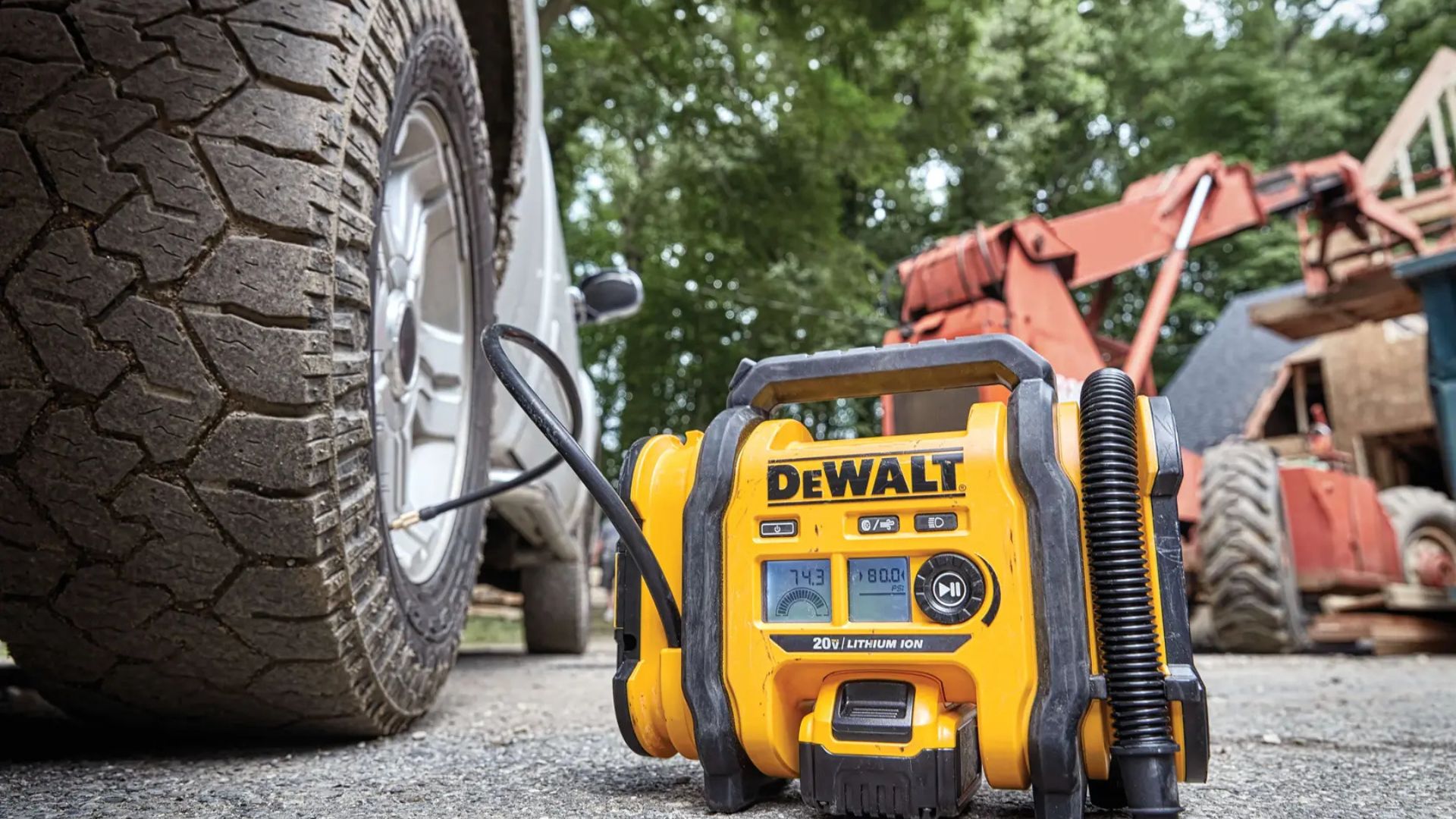
A portable tire inflator earns its keep the first time a low-pressure warning light comes on far from a gas station. The difference between a good one and a mediocre one usually comes down to how fast it fills a tire and how closely its built-in gauge agrees with a separate pressure gauge.
These six brands are worth comparing for trunk duty, whether you’re topping off tires before a road trip or dealing with a slow leak on the way to the shop.
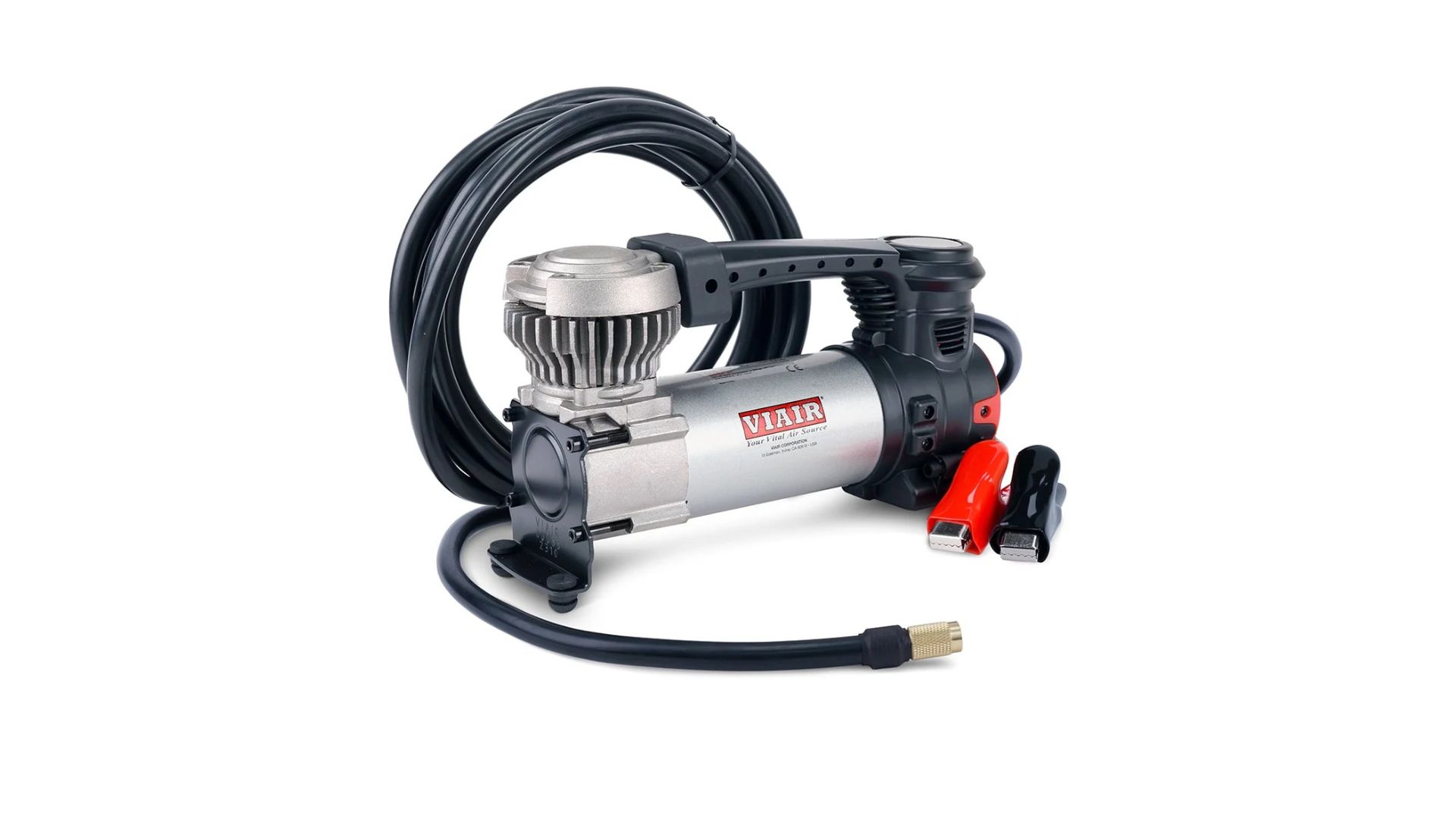
VIAIR
VIAIR built its reputation in the off-road and overlanding community, where its compressors handle everything from topping off street pressure to airing back up after a trail run. Its portable units sit at the heavy-duty end of the category and clamp directly to the vehicle battery instead of plugging into a 12-volt outlet. The VIAIR 88P, one of the brand’s smaller portables, is listed at 120 psi maximum pressure with a 12-foot air hose and a rating for tires up to 33 inches, so bigger tires call for a bigger model. The trade-off is convenience. You have to open the hood, attach the clamps and run the engine while it works, and the listed duty cycle calls for rest periods between long fills. For drivers who change tire pressure for different terrain, that extra capacity justifies a price above a basic 12-volt inflator. For an occasional top-off in a parking lot, it may be more compressor than you need.
DeWalt
DeWalt’s inflator runs on the brand’s 20V MAX batteries, so the same packs that power a drill or saw can fill a tire with no separate power source. That is a real practical advantage for anyone who already has DeWalt batteries and chargers in the garage, since it means one less proprietary battery to keep charged. The DCC020IB also accepts 12V DC and 110V AC power, according to DeWalt. That matters on a road trip, because a flat tool battery doesn’t leave you stuck when the included 12-volt cord can run the inflator from the car. The unit has a digital gauge for setting a target pressure, automatic shutoff in high-pressure mode, a threaded chuck that stays on the valve stem and an LED light for nighttime use. A separate high-volume hose handles air mattresses and pool floats. This model is sold as a bare tool, so budget for a battery and charger if you don’t own them.
Milwaukee
Milwaukee takes the same battery-ecosystem approach as DeWalt, with an inflator that runs on the M18 packs many tradespeople already own. The brand has a strong reputation in the professional trades for battery performance and tool durability, and the inflator is built to match. Milwaukee says the M18 Inflator is rated to 150 psi and tops off a 33-inch light truck tire in under a minute. Its TrueFill feature shuts off at the selected pressure, then rechecks to confirm the target was reached. Four memory slots store the pressures you use most, which is handy if your truck and trailer run different numbers. The 36-inch hose has an all-brass Schrader chuck and stores on the tool. Model 2848-20 is a bare tool, so the value depends on whether you already own M18 batteries. If you do, it is a logical addition to the kit and not another single-purpose device with its own charger.
AstroAI
AstroAI has built a strong presence in the 12-volt tire inflator category, and its digital inflators are a common sight in online marketplaces as an accessible, reasonably priced option for basic tire maintenance. They typically plug into a vehicle’s 12-volt outlet and have no rechargeable battery. That means nothing to keep charged, but you need the engine running or the key in the accessory position to use one. Before you buy, check that the power cord and air hose together reach the rear tires on your vehicle, and confirm the unit has an automatic shutoff so you can set a target and step back. A compact inflator like this suits the monthly check that NHTSA recommends: every tire, including the spare, measured cold and filled to the pressure on the driver’s door label, not the number molded into the tire. For a small tool at a budget price, AstroAI is a reasonable place to start.
Avid Power
Avid Power has carved out a niche in cordless, battery-powered inflators sold as standalone units, with no need to own a tool battery platform like DeWalt’s or Milwaukee’s. That makes it a reasonable choice for someone who doesn’t own cordless tools and doesn’t want to buy into a system just to fill tires. The brand’s inflators include a built-in digital gauge and a preset pressure shutoff, which stops inflation automatically once the target is reached and reduces the risk of overinflating a tire while you’re distracted. The catch with any self-contained cordless inflator is that it only helps if the battery has a charge. Top it up before a long trip and every couple of months in between, since a pack that sits in a trunk slowly loses charge. Check whether the kit you’re considering also includes a 12-volt cord as a backup. It is also worth comparing the display against a separate gauge the first time you use it.
Makita
Makita’s cordless inflator, like DeWalt’s and Milwaukee’s, is built around the brand’s own battery platform and aimed at tool owners who want to add an inflator without bringing a new charging system into the garage. Makita has a strong reputation in the power tool industry for battery efficiency and tool longevity. The DMP180ZX weighs 2.3 pounds without a battery, and Makita lists a motor capable of up to 120 psi, a 25-1/2-inch hose and an auto-stop function that ends inflation at the preset pressure. A Presta valve adapter, sports ball needle and tapered adapter come with it. Makita describes the tool as one that “tops off” car and light truck tires, which is a fair guide to its role: a compact unit for routine pressure checks and small corrections. It works with 18V LXT batteries that carry the Star symbol, and this version is sold tool only.