

Once an engine crosses somewhere around 75,000 miles, seals and gaskets have typically hardened enough that a small amount of oil consumption or minor seepage becomes more common, which is exactly the gap high-mileage motor oil formulas are built to address. These oils generally include seal conditioners and slightly different viscosity modifiers aimed at aging engines rather than a fresh factory seal.
These eight brands make a real case for switching before your next oil change, especially if you’ve noticed a slow oil level drop between changes.
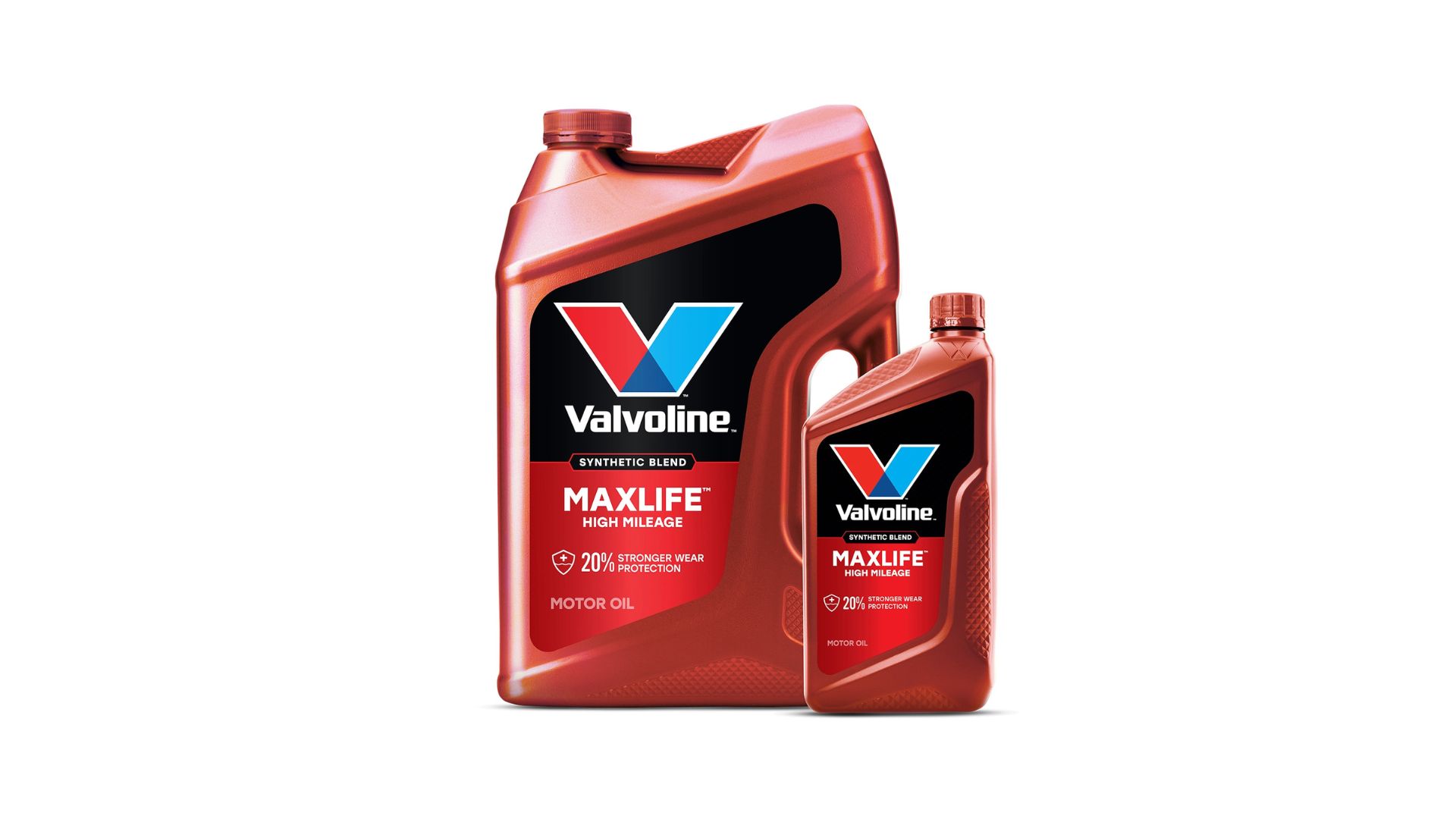
Valvoline MaxLife
Valvoline’s MaxLife is one of the most recognized names in high-mileage oil, backed by the company’s decades of motor oil manufacturing. Valvoline describes its MaxLife High Mileage synthetic blend as designed for vehicles with more than 75,000 miles. The formula is built around seal conditioners intended to rejuvenate aging rubber seals and gaskets, addressing the small leaks and oil consumption that become more common as an engine accumulates miles. Its wide availability at big-box and auto parts retailers makes it one of the easier high-mileage oils to find without special ordering.
Buy it in the viscosity grade printed in your owner’s manual or on the oil filler cap. A high-mileage label does not change the grade your engine needs. After the switch, check the dipstick every few fill-ups and write down where the level sits. That record is the only way to know whether the new oil is slowing consumption or whether the engine is using oil at the same rate as before.
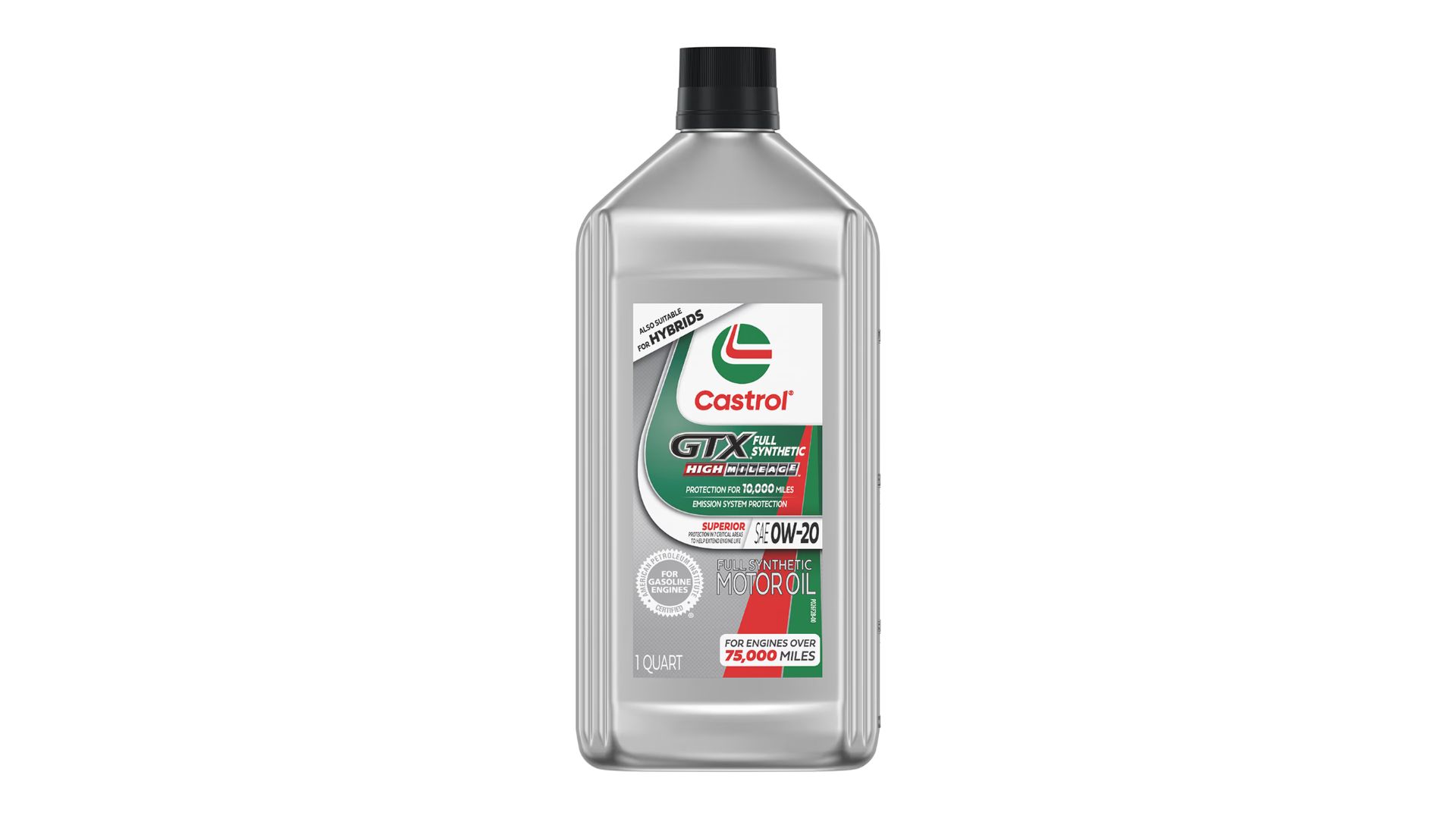
Castrol GTX High Mileage
Castrol extends its long-running GTX brand into this category with a formula that includes seal conditioners, aimed at the aging-seal and minor-leak issues common in older engines. Castrol describes GTX High Mileage as a synthetic blend for vehicles with more than 75,000 miles. For owners already loyal to GTX, moving to the High Mileage version as the odometer climbs is a simple same-brand step.
What sets it apart is the attention to the exhaust side. Castrol says its Phosphorus Replacement Technology reduces the level of phosphorus in the oil to protect the catalytic converter and help preserve the emission system. That matters on an older engine that burns a little oil, because whatever is in the oil ends up passing through the converter. Castrol lists the oil in 5W-20, 5W-30, 10W-30, 10W-40, and 20W-50, so it covers both newer engines that call for thin oil and older ones that specify a heavier grade.
Mobil 1 High Mileage
Mobil 1’s High Mileage formula pairs the brand’s full-synthetic base with additives for older engines, aimed at drivers who want the longer change intervals of a full synthetic along with help on leaks. Because Mobil 1 sits at the premium end of the market, expect to pay more than you would for a synthetic-blend high-mileage oil like MaxLife. For owners who have run standard Mobil 1 for years, it is a natural next step that does not mean giving up full synthetic.
Mobil says Mobil 1 High Mileage is for vehicles with over 75,000 miles, uses a higher base oil viscosity to help reduce leaks, and protects for 15,000 miles or one year, whichever comes first. Treat that figure as the oil’s limit, not your schedule. Follow the interval in your owner’s manual or oil-life monitor, and check the level between changes, since an engine that uses oil can run low well before a long interval is up.
Pennzoil High Mileage
Pennzoil, owned by Shell, has the refining scale of a major oil company behind it, and its High Mileage oil targets the same aging-engine concerns as the rest of this category. Pennzoil describes Pennzoil High Mileage as a synthetic blend that helps stop seal leaks and reduce oil consumption in worn engines. For owners who already run Pennzoil and want a high-mileage formula as the vehicle ages, staying in the same brand family keeps the switch simple.
Check the grade before you buy. Pennzoil lists this blend in 5W-20, 5W-30, 10W-30, and 10W-40. If your engine calls for 0W-20, as many newer cars do, it is not offered in that grade and you will need a different product. Read the front of the jug carefully too. Brands in this category often sell a synthetic blend and a full synthetic under similar high-mileage names at different prices, and the two are easy to mix up on a crowded shelf.
Quaker State High Mileage
Quaker State’s High Mileage oil carries the brand’s value-oriented positioning into this category, offering the seal-conditioning approach of pricier competitors from a name usually found toward the lower end of the shelf. For budget-conscious owners of higher-mileage vehicles who want a dedicated high-mileage formula without paying premium pricing, it is a sensible place to start.
With a value oil, the label check matters more than the brand. Turn the bottle around and look for the API service symbol, the round “donut” on the back, and confirm that the viscosity grade and service category match what your owner’s manual calls for. Compare prices by the quart, since a five-quart jug is usually cheaper per quart than single bottles and covers most four-cylinder oil changes in one purchase. Then put the savings toward changing the oil on time. An inexpensive oil changed on schedule does more for an old engine than an expensive one left in too long.
Lucas Oil High Mileage
Lucas Oil’s High Mileage synthetic blend brings the brand’s reputation for straightforward automotive fluids into this category, with a formula built around the same seal-conditioning concept as the rest of the segment. Lucas has earned trust among DIY mechanics through its fuel treatments and other lubricant products, and that loyalty often carries over to its motor oil. For owners who already use Lucas products, its High Mileage oil is a logical one to consider as the odometer climbs.
Keep expectations realistic with this or any high-mileage oil. Seal conditioners can help a seal that has hardened and started to weep. They will not fix a torn gasket, a leaking oil pan, or worn piston rings. If you see fresh drips under the car or you are adding oil between every fill-up, have the leak diagnosed before spending more on oil. A high-mileage oil also carries its own additive package, so run it alone for a couple of changes and judge the results before adding anything else to the crankcase.
Havoline High Mileage
Havoline’s High Mileage formula is backed by Chevron’s base oil refining and additive blending, which gives it the same kind of manufacturing scale as its Pennzoil and Mobil counterparts. It is widely sold at big-box retailers, making it an accessible option for cost-conscious owners who want a dedicated high-mileage oil instead of staying with a standard oil as the vehicle ages.
Chevron describes Havoline High Mileage SynBlend as a synthetic blend for engines with 75,000 miles or more, with additives that help maintain seals and gaskets to control oil consumption. It is listed in 0W-20, 5W-20, 5W-30, and 10W-30, so it covers newer engines that need 0W-20. Chevron also says the oil helps guard against low-speed pre-ignition in turbocharged direct-injection engines, which is worth knowing if your high-mileage car is a small turbo. The company’s protection claim covers 5,000 miles or one year, whichever comes first, so plan changes around that.
Motorcraft High Mileage
Motorcraft is Ford’s own parts and fluids brand, and its High Mileage oil is aimed at Ford and Lincoln owners who want a factory-aligned oil instead of a third-party brand. Because Motorcraft oil is made to match Ford’s specifications, the High Mileage version lets Ford owners address aging-seal concerns while staying with the brand the vehicle was originally serviced with.
The thing to check is the Ford specification, not just the name on the bottle. Your owner’s manual lists a spec number beginning with WSS along with the viscosity grade, and any oil you buy should show that number on the back label. Other brands meet these specs as well. Castrol, for example, lists Ford specifications WSS-M2C945-B1 and WSS-M2C960-A1 for its 5W-20 GTX High Mileage. If you keep maintenance records for resale or warranty purposes, save the receipt and note the date, mileage, and oil used at each change. That paper trail matters more than which approved brand went in.