

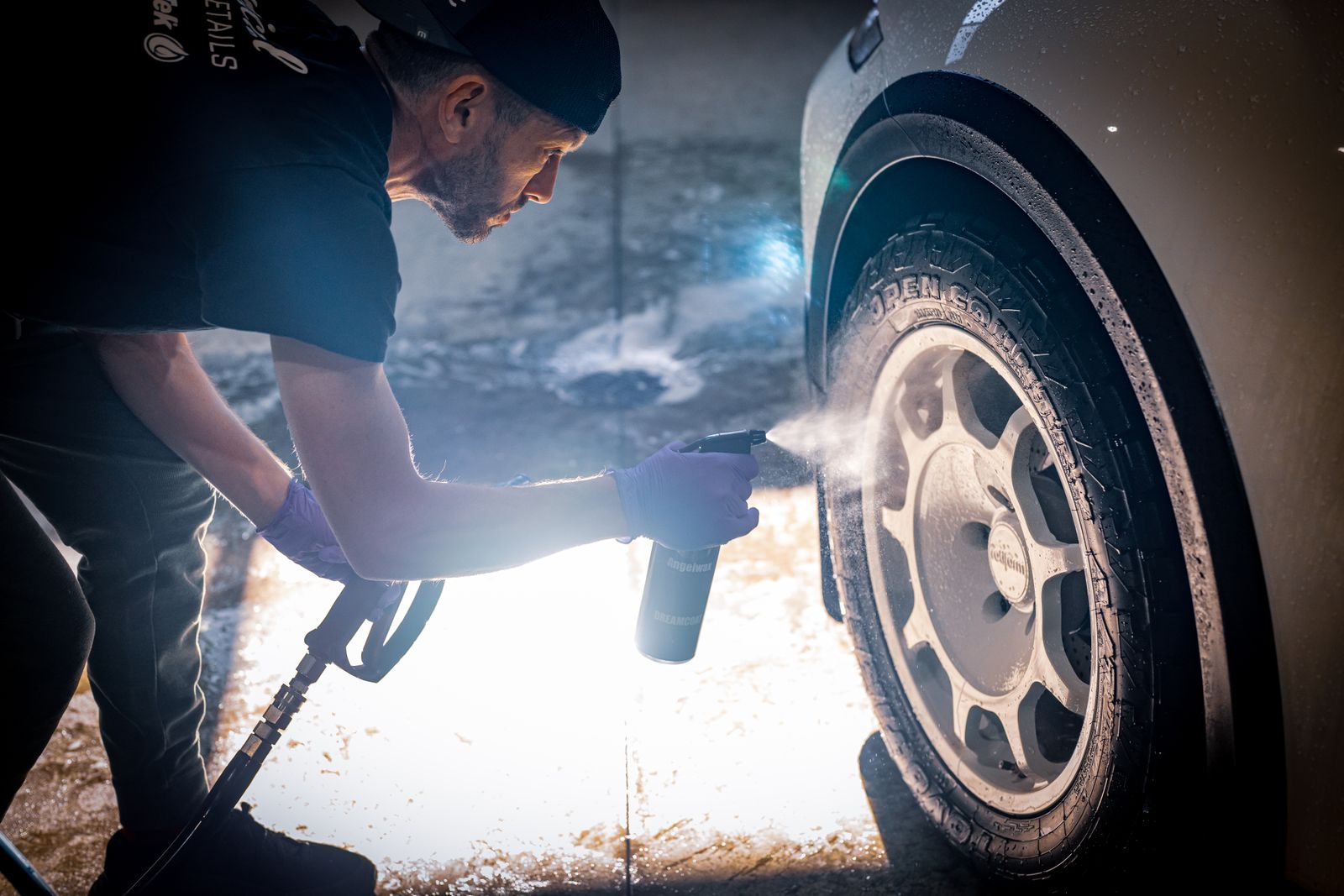
Tire shine promises a rich, deep black finish that makes a whole car look freshly detailed, and when it works, it genuinely does. When it doesn’t, the results range from a greasy sling pattern flung across your fenders and wheel wells to a tire that actually attracts more dust than it did before you touched it. The category has a real formulation split between silicone-based and water-based products, and that split explains most of the common complaints.
Here are eight tire shine problems worth understanding before your next application.
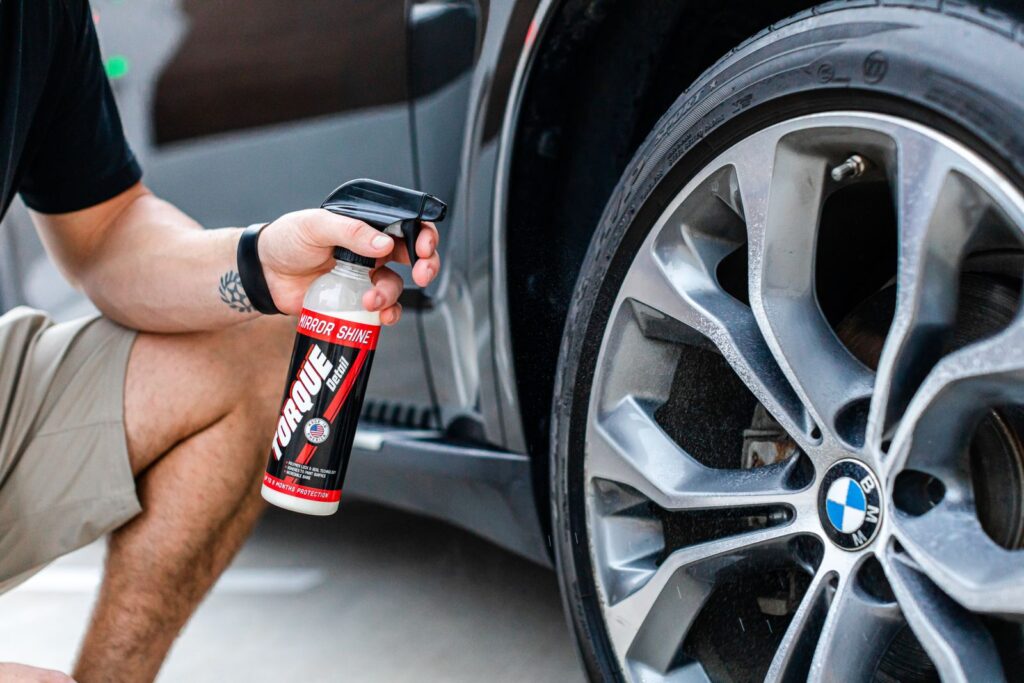
High-Gloss Silicone Sprays That Sling Onto Paint and Wheels
Silicone-based tire shines deliver the deepest, wettest-looking gloss, and tire retailer Les Schwab notes that silicone-based sprays last longer and produce a better shine than water-based ones. The same oily base is prone to slinging off the tire once you start driving, leaving dark spots on wheel wells, rocker panels and lower doors. Over-application, more than the formula itself, is the biggest contributor, since a thin, evenly wiped coat slings far less than a heavy, dripping one straight from the nozzle. Spray the product onto an applicator pad instead of the tire, spread it thin, and wipe the sidewall with a dry towel after a few minutes to pick up what hasn’t soaked in. Then give it time. Dressing a tire and driving off immediately is the surest way to sling it, so let it dry for as long as the label directs, or do the tires first and the rest of the detail afterward. Keep it on the sidewall and off the tread.
Products That Attract Dust Faster Than an Untreated Tire
Some tire shines leave a tacky film that grabs airborne dust and road grime faster than a clean, bare tire would, so the tire looks worse a day or two later than it did before treatment. Greasy dressings that never dry to the touch are the usual culprits. You can check in the driveway: ten or fifteen minutes after application, press a clean finger to the sidewall. If it comes away shiny and slick, there is too much product on the tire, or it is a formula that stays wet. Wipe the excess off with a dry microfiber towel until the surface feels dry, which also knocks the gloss down to a more natural satin. Preparation matters as much as the product. Dressing applied over old dressing and brake dust turns into a brown paste, so scrub the sidewall with a tire cleaner and a stiff brush until the foam runs white, rinse, and let the rubber dry completely before applying anything.
Water-Based Sprays With Shorter-Than-Advertised Durability
Water-based tire shines are popular as a milder, less sling-prone alternative to silicone formulas, but they generally don’t last as long between applications, and some durability claims don’t survive a single rainstorm or car wash. Before trusting a claim of weeks of shine, compare it with how you actually use the car. A commuter washed every weekend will need a fresh coat each time regardless of the label, while a garage-kept weekend car may go much longer. Work out the cost per application rather than the cost per bottle: a cheaper product that needs redoing after every wash can cost more over a year than a pricier one that lasts through three. Thin coats help here too. Two light layers, with drying time in between, tend to hold up better than one heavy one, and layering lets you adjust the finish from matte to glossy. If you only want a clean, dark look, a single thin coat is enough.
Gel-Based Products That Leave Visible Streaking on Textured Sidewalls
Gel tire shines go on with an applicator pad instead of a spray, which gives more control over how much you use, but an uneven pass over a heavily textured sidewall can leave streaks or patchy coverage that stands out more than uneven spray would. Thick gel tends to bridge across raised lettering, ribs and other molded markings, leaving shiny high spots and dull valleys. Use less than you think you need. Put a small amount on a contoured foam applicator, work it around the tire in overlapping passes, and go back over the lettering and grooves with a small soft brush so the gel reaches the low spots. Aggressive all-terrain tires with deep side lugs are the hardest to do well, and a brush is close to mandatory there. Finish with a light wipe from a clean towel to level the coat and remove any globs sitting in the texture, since those are what sling onto the paint later. Check the result in daylight, not garage lighting.
Aerosol Sprays With Overspray Reaching Painted Surfaces
Aerosol tire shines throw a fine mist that drifts past the tire onto the wheel, fender lip and nearby paint, especially in a garage or other enclosed space with little airflow. Left in place, that overspray dries to a hazy, greasy film that smears when you try to wipe it and collects dust. It also settles on the garage floor, where an oily film is a slipping hazard. Hold a piece of cardboard behind the tire or drape a towel over the wheel, spray in short bursts from close range, and work outdoors when you can. Keep the mist away from the brake rotors and the tread. Better yet, spray the product onto an applicator and wipe it on, or switch to a pump spray or gel, which put the product where you aim it. If overspray does reach the paint or wheels, remove it soon with car wash soap and a clean wash mitt rather than dry-wiping it, which only spreads the film around.
Products Marketed as “UV Protectant” Without Disclosed Active Ingredients
Many tire shines advertise UV protection against the sidewall cracking that comes with long sun exposure, but few disclose the UV-blocking ingredient or its concentration, which makes the claim hard to verify or compare. The underlying concern is real. Tire Rack explains that surface cracking is accelerated by heat, vehicle exhaust, ozone and sunlight, and that the anti-aging chemicals built into the rubber work best when the tire is driven regularly. It also cautions that excessive use of tire cleaners and dressings can remove some of that built-in protection. Tire makers are lukewarm on the products as well: those interviewed by Consumer Reports said aftermarket products are not needed to preserve tires and that the shine is purely cosmetic. So buy a dressing for how it looks, not as insurance. For a vehicle that sits outside, tire covers, shade and regular driving do more for the rubber than any spray, and cracks that keep growing call for a tire shop’s inspection.
Sprays That Discolor or Yellow White Lettering Over Time
Raised white lettering is common on truck and SUV tires, and it shows every flaw. Some tire shines, particularly heavy, oily ones, can leave white letters looking yellowed or brownish after repeated coats, partly because the film holds road grime and brake dust against the white rubber. Products labeled as safe for white-letter tires are the lower-risk choice, but technique matters more. Clean the letters first with a tire cleaner and a stiff nylon brush, then rinse well, because dressing sprayed over dirty letters seals the stain in. Apply the dressing with a small applicator to the black rubber only, working around the letters instead of spraying the whole sidewall, and wipe any that lands on the white straight away. If the letters have already turned, go back to cleaning before blaming the tire: several rounds of scrubbing often bring the white back. Skip gloss on the letters themselves, and check the tire maker’s care advice before reaching for harsh solvents.
Foam Applicators That Degrade and Shed Fibers Into the Product
The foam or sponge applicators bundled with tire shine kits often break down faster than the bottle empties, shedding crumbs of foam that get smeared onto the tire along with the product. It is a minor cosmetic problem, but those bits dry into visible specks on a freshly dressed sidewall and are annoying to pick off. Rough, heavily lettered sidewalls tear soft foam quickly, and an applicator left soaked in dressing between uses deteriorates faster still. Inspect the pad before each use and replace it once the surface starts to pill or tear. A dedicated tire applicator with a dense, contoured foam face and a plastic grip lasts longer and keeps product off your hands, and a short-bristled dressing brush works better on aggressive sidewalls. After each use, wash the applicator with dish soap and warm water, squeeze it out and let it dry, then store it in a sealed bag so it does not pick up grit before the next application.