

Windshield washer fluid seems like the last thing worth researching, until the cheap jug you bought freezes solid in the reservoir on the first cold morning of the season. Freeze-point rating and actual cleaning strength against bug residue and road grime vary more between brands than most drivers expect from a product that’s mostly water and a little blue dye.
These eight brands are worth buying specifically for winter driving, when a frozen reservoir or a smeared windshield at the worst moment actually matters.
Rain-X De-Icer Washer Fluid
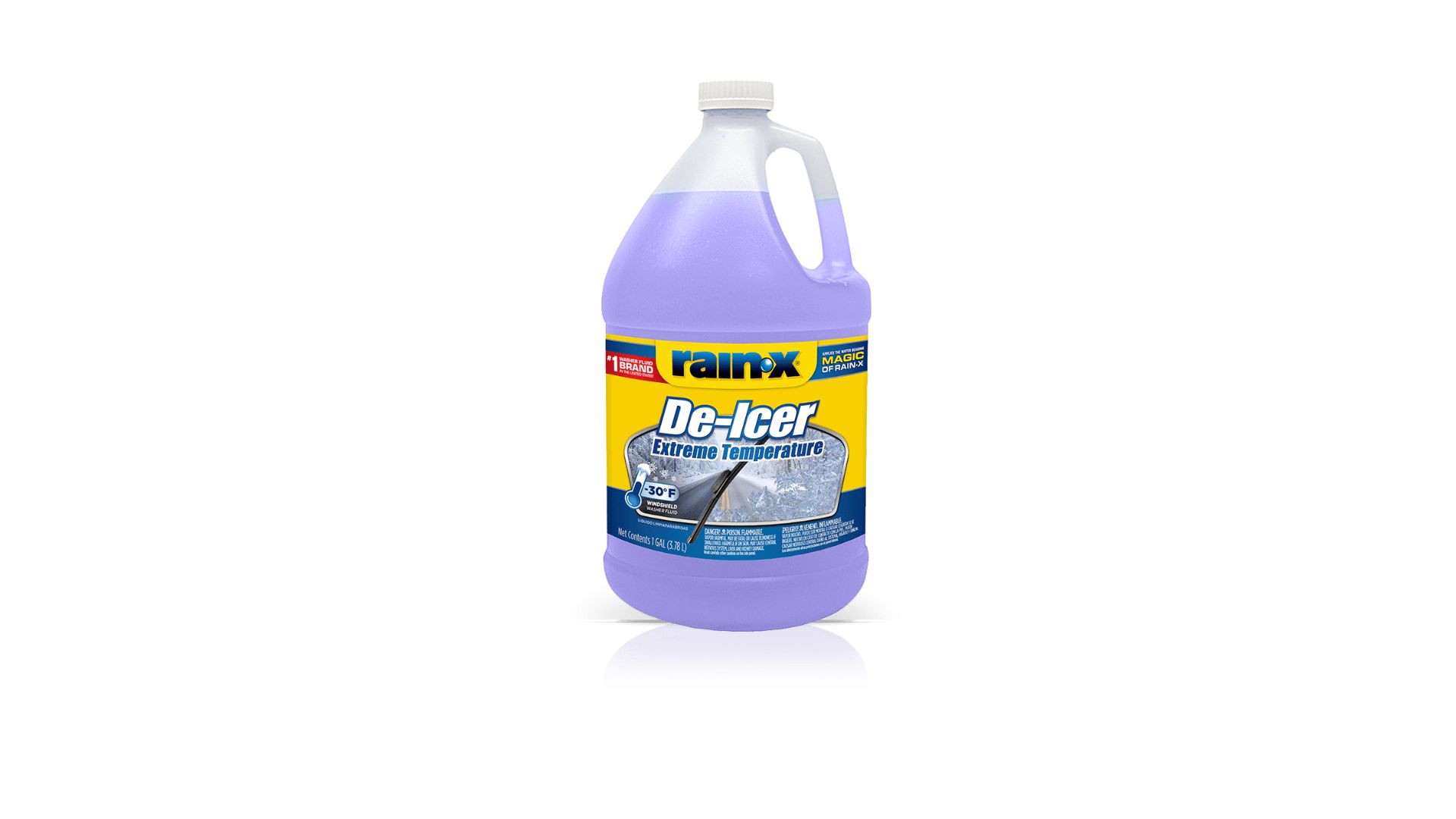
Rain-X sells more than one winter formula, so read the jug before you grab it. The company’s washer fluid lineup lists a -25°F Heavy Duty De-Icer and a -30°F Extreme Temperature De-Icer, alongside an All-Season fluid rated only to 0°F that looks similar on the shelf. The de-icer formulas are built to melt light frost and thin ice on contact instead of only cleaning glass that is already clear, and the -30°F version adds the water-beading treatment the brand is known for. That matters most on mornings when the windshield has a skin of frost and the defroster has not caught up yet. Do not expect any washer fluid to cut through a thick layer of ice. Scrape first, then use the fluid to clear what is left. If your washer lines have frozen before with a generic all-season fluid, moving to one of the two de-icer ratings is the simple fix. Pick the -30°F jug if your area regularly drops below zero.
Prestone Deluxe 2-in-1 Windshield Washer Fluid
Prestone is best known for antifreeze and coolant, and its washer fluid follows the same idea: print the freeze rating on the jug and build the formula around it. The company now lists this product simply as Prestone 2-in-1, with freeze protection to -27°F, a cleaner aimed at bugs, salt and road grime, and a rain-beading additive. Prestone also says it is safe for rain-sensing wipers, which is worth knowing if your car has them. The appeal is that one jug covers the whole year. You do not have to use up a summer bug wash in October and switch to a winter fluid. The catch is that -27°F is a limit, not a comfort zone. In places that see colder nights than that, a dedicated de-icer with a lower rating is the safer pick. Prestone is stocked at most big-box and auto parts stores, so it is easy to find before a cold snap. One note: Prestone says the 2-in-1 is not sold in California.
Splash Windshield Washer Fluid
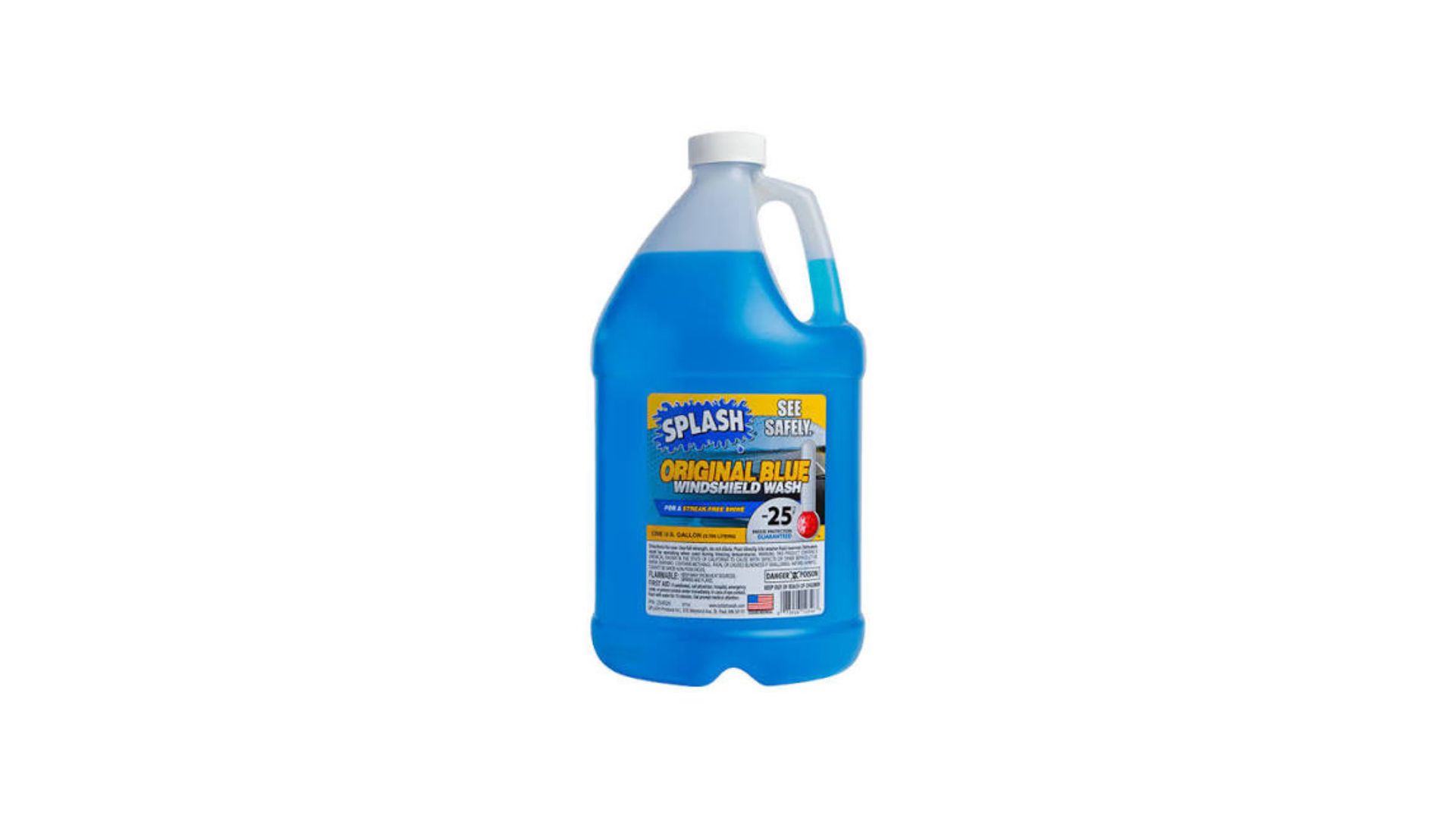
Splash is the brand that shows why you have to read the number and not the color. Its Original Blue fluid is sold in five versions, rated at +32°F, +22°F, 0°F, -20°F and -25°F. The +32°F jug is a warm-weather product with no freeze protection at all. The -20°F jug is the one most winter drivers want, and the -25°F version comes as a 16-ounce concentrate you mix with water. That range is useful, because you can match the fluid to your climate instead of paying for protection you do not need. It is also a trap for anyone who buys by price in August and forgets about it. Check the rating printed on the label, and check it again when a store runs a sale, since the discounted stack may be the warm-weather version. Splash is widely sold at big-box and home improvement stores and tends to be priced competitively, which makes it a good value when you buy the right rating.
Peak Windshield Washer Fluid
Peak has a long history in antifreeze and coolant, and it carries that background into washer fluid with de-icer formulas aimed at cold climates. Buyers who already trust the brand for coolant tend to trust it here, for the same reason they trust Prestone. Peak is commonly stocked at auto parts stores and big-box retailers, and the freeze rating is printed on the front of the jug. Whatever rating you buy, the fluid only protects you if it is the fluid actually in the system. If the reservoir still holds summer fluid, run it low before the first freeze, fill it with the winter formula, and then spray for several seconds so the new fluid reaches the pump, the lines and the nozzles. Summer fluid left in the lines can freeze there even when the tank is full of de-icer. Do the same for a rear washer, which has its own long line running to the back of the vehicle.
Prime Guard Windshield Washer Fluid
Prime Guard is a value brand sold through auto parts and hardware stores, usually for less than the heavily advertised national names. Its winter fluid carries a printed freeze rating just like the bigger brands, so the comparison is easy: line up the number on the Prime Guard jug against the number on the jug next to it. If the rating fits your climate and you have no strong brand preference, there is little reason to pay more. The mistake to avoid with any budget fluid is stretching it. Topping off a half-empty reservoir with water, or mixing in leftover summer fluid, raises the freezing point and can leave you with slush in the lines on a cold morning. Pour winter fluid in at full strength. Buy an extra gallon and keep it in the trunk, because washer use climbs fast on salted highways, and running dry in road spray is a bigger problem than any brand choice.
Nextzett Anti-Frost Washer Fluid Concentrate
Nextzett takes a different approach from the gallon jugs on this list. Its Anti-Frost concentrate is ethanol-based and free of methanol and ammonia, and you mix it with tap water to the strength you need. The company’s chart gives protection to -20°F at two parts concentrate to one part water, -6°F at one to one, and 20°F at one part concentrate to three parts water. That lets you run a strong mix in January and a weaker, cheaper one in the milder months. Nextzett also says the formula has no silicone or water-repellent additives, which it says keeps the fluid compatible with camera-based driver-assist systems. The trade-offs are cost and effort. A one-liter bottle makes only about a liter and a half of fluid at the -20°F ratio, and you have to measure. The maker advises against mixing it with other washer fluids because the blend can streak, so run the reservoir low before you switch.
Store-Brand and Regional Winter Washer Fluids
Auto parts chains, big-box stores and regional distributors sell winter washer fluid under their own names, usually for less per gallon than the national brands. Judge these by the printed freeze rating, not the name. The basic chemistry is fairly standard across the industry. Poison Control notes that ready-to-pour washer fluid typically contains 30 to 50 percent methanol, the alcohol that keeps it from freezing, so a store-brand jug rated to -20°F is doing the same job as a name-brand jug with the same number. Where store brands can differ is in the extras, such as bug removers and water-beading additives, which matter less in winter. That same methanol is the reason to handle every brand with care. Poison Control warns that even small amounts are poisonous to children, adults and pets. Keep the fluid in its original container, never pour it into a cup or drink bottle, and store it where kids and animals cannot reach it.
Zecol Windshield Washer Fluid
Zecol is a value brand found at home improvement stores, grocery chains and auto parts counters. Like the other budget options here, its winter fluid has a freeze rating printed on the label, and that number is what you are paying for. At the same rating, a low-cost methanol-based fluid protects the washer system as well as a pricier one. That makes Zecol a practical choice for households filling several vehicles through a long winter. To get the most from any fluid, look after the hardware around it. Clear snow and ice off the washer nozzles before you drive, and free the wiper blades from the glass by hand, because running wipers that are frozen down can tear the rubber or strain the motor. Replace blades that streak, since no fluid cleans well through a worn edge. If nothing sprays on a cold morning, let the engine bay warm up before you assume the pump has failed. The usual cause is ice in the lines, not a dead pump.