

“I’ve lost track of where I am in this build,” the caption reads. “All I know is I’m trying to go to Barber Vintage Fest on this.” The hashtags name the bike, a Ducati 900SS, and the 44 second reel from @prometheanliver shows how far from a rideable motorcycle it still is.
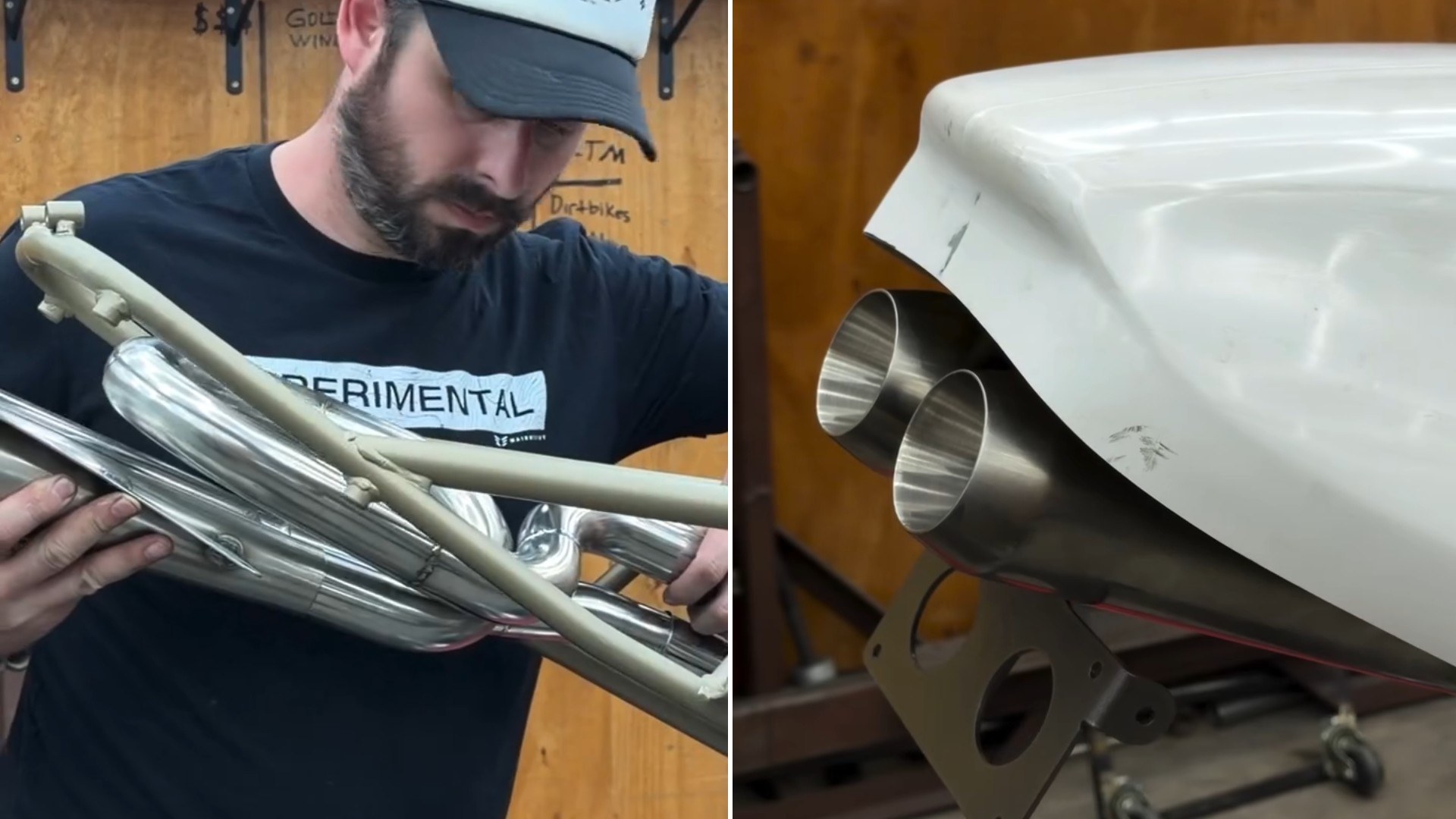
There is no voiceover and no text on screen. The reel is a string of short shots from a workshop with pegboard walls and hexagon shaped lights on the ceiling. The first one is a hand gripping a bare tube frame in a flat tan finish, with the engine’s toothed cam belts and pulleys in plain view behind it. Next comes the builder himself, a bearded man in a trucker cap and a black T-shirt, feeding a set of polished exhaust pipes through the middle of that frame.
View this post on Instagram
From there the work comes in pieces. A close shot shows one pipe passing between two frame tubes with very little room to spare. On a bench covered in wrenches, bolts and small parts, with the engine sitting on a stand behind it, his hands put together a small metal bracket with a bolt and a spacer. At 14 seconds a blue and white welding helmet drops into the frame and an arc lights up over the top of the frame rails, right above the pipes.
The middle of the reel is pipe work. A short length of tube sits clamped with its freshly cut end toward the camera. A curved section rests across his knee while he runs a cordless tool along it, and then an air tool goes into the open end of the same piece. Back at the bike, two pipes now run side by side under the frame, and his hands are on a clamp that ties them together and hangs them from a tab on the tubing. The next shot is that clamp on its own, finished.
Then the back of the bike starts to look like a motorcycle. He holds up a bent piece of gray sheet metal above the rear of the frame. A white tail section goes on over it, a smooth single seat hump, and his hands come in with a small fastener and a tool to fix it in place. One shot from this part of the reel catches a framed sign on the workshop wall that reads “BREAKING: I DON’T KNOW WHAT I’M DOING,” which sits well next to the caption.
The last shots are the payoff. From the rear corner, the bike has its red fuel tank and white tail in place over the tan frame, and two exhaust outlets poke out from under the tail, side by side. The final close up stays on those two outlets, angle cut and brushed, tucked under the white bodywork with a drilled support plate beneath them.
What the reel does not show is a running bike. In the shots where the whole machine is visible, it is on a stand in the shop, and the footage ends there. Barber Vintage Fest is held each fall at Barber Motorsports Park in Alabama, and the caption says the plan is to go “on this,” which means riding it. The video gives no date and no word on whether he made it.
For anyone with a project of their own and an event on the calendar, the order of work in this reel is worth a second look.
The exhaust is built on the bike. Every pipe shot has the frame in it, because a custom system has to be fitted around the frame tubes and the engine as they actually sit, not measured and built on a bench. Pieces are cut, cleaned up at the ends, fitted, checked, and only then welded. Cleaning the cut end of a tube before it is joined is what lets two pieces sit flush and weld cleanly.
The mounts get as much attention as the pipes. The small bracket on the bench and the clamp between the two pipes are the least exciting parts in the video, and they are the ones that keep an exhaust from cracking. A pipe that hangs from its own welds will shake itself apart. One that hangs from a proper mount on the frame will not.
The bodywork goes on after the exhaust, not before. An under tail system puts hot pipes directly beneath the seat and the tail section. Fitting the tail over the finished pipes is the only way to see how much air there is between them. Anyone copying this layout should plan for heat shielding under the tail and should check the gap again once the bike has been run up to full temperature.
The hardest advice is about the calendar. A build that is going to be ridden to an event needs miles on it before the trip. New exhaust joints, new mounts and new wiring all show their problems in the first few rides. Set the real deadline a couple of weeks ahead of the event, and decide early which jobs are needed for the bike to be safe and legal on the road and which are finish work that can wait until after. Brakes, tires, lights, charging and fuel come first. Paint can ride along unfinished.
His caption is honest about where he is. A lot of builders lose track at exactly this stage, when the big fabrication is done and the list of small jobs seems to grow every evening. Writing that list down, and crossing things off it, is how a bike on a stand turns into a bike on the road in time.