

There’s a special category of car that exists purely to prove that great design and great ownership experience are two entirely different disciplines. These are the ones that stopped traffic in the showroom, got the poster treatment on bedroom walls, and then spent the next decade humbling their owners with repair bills, parts hunts, and performance that didn’t always match the shape.
None of this is really a knock on ambition — plenty of these cars pushed styling or technology further than their era’s manufacturing quality could support, and that’s a more interesting failure than boring competence. But it’s worth remembering, next time one rolls across an auction stage for six figures, that somebody actually had to live with it. Here are thirteen that looked like a million bucks and asked a lot of the people who owned them.
DeLorean DMC-12
Brushed stainless steel body panels and gullwing doors made the DMC-12 look like nothing else on the road, and thanks to a certain time-traveling movie franchise, it’s arguably the most recognizable car silhouette of the 1980s. The reality behind the wheel was less cinematic: a Peugeot-Renault-Volvo V6 rated at 130 horsepower, a 0 to 60 mph time that Road & Track measured at 10.5 seconds, and early-production cars that needed as much as 200 hours of work at the company’s quality assurance centers before they could be shipped to dealers. John DeLorean’s company collapsed into bankruptcy in 1982 after a very public financial and legal unraveling, and production ended after roughly 9,000 cars were built, leaving owners without a factory behind the car. Owning one meant loving a design icon while quietly hunting down a niche network of specialists just to keep it running. It remains one of the purest examples of a car whose legend outgrew its actual driving experience by an enormous margin.
Jaguar XJS
The XJS replaced the beloved E-Type with a long, low grand-tourer silhouette that still turns heads decades later, wrapped around a smooth V12 that sounded every bit as expensive as the car looked. Jaguar introduced it in September 1975 and kept it in production for 21 years, building more than 115,000. The ownership catch is built into the specification. A V12 has twelve cylinders’ worth of spark plugs, injectors and hoses packed tightly under a long, low hood, so routine jobs take more parts and more labor hours than they would on a six, and the fuel bills run to match. The earlier cars also rely on wiring and connectors that are now forty or more years old, so buyers should budget for electrical and cooling-system work, ask for service records, and have a marque specialist inspect the car. The XJS has aged into a genuinely handsome modern classic, and the people who enjoy one most are those who went in expecting the upkeep.
Pontiac Fiero
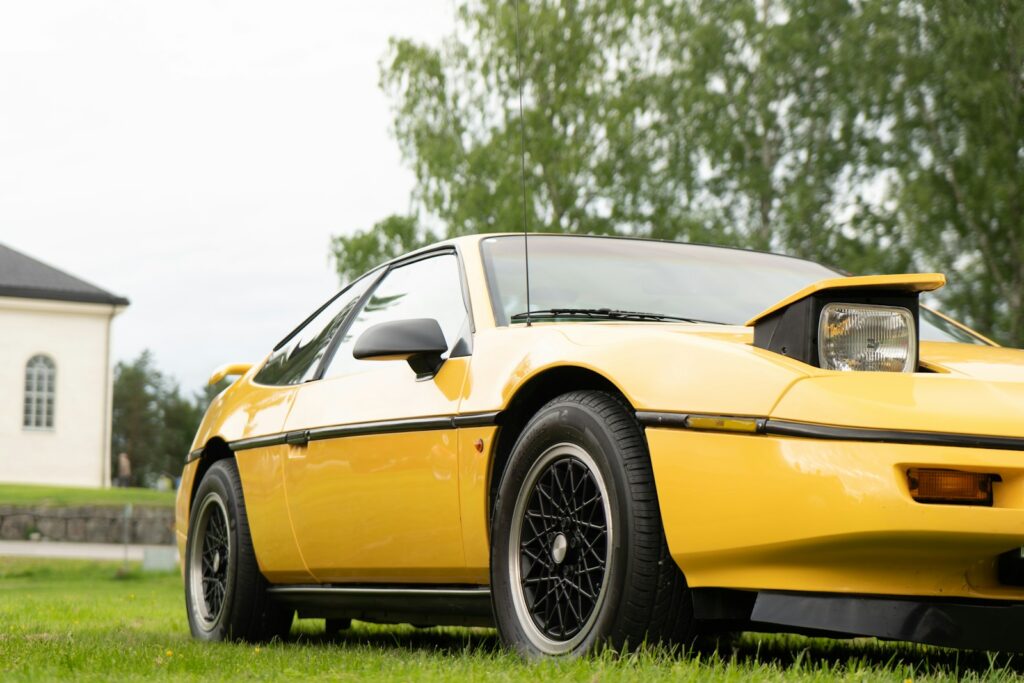
The first mass-produced mid-engine car from an American manufacturer had wedge styling that looked like it belonged in a much more expensive showroom, and for a lot of budget-minded enthusiasts in the 1980s, it was the closest thing to an exotic they could afford. Early Fieros, the 1984 models in particular, became known for engine compartment fires. Low oil levels could cause a connecting rod to break, letting oil escape onto hot engine parts, and Pontiac said it was aware of 260 fires attributable to the condition. Plastic body panels over a steel space frame were genuinely clever engineering, but mild performance and reliability issues were common points of criticism. By the time the 1988 model finally received the suspension Pontiac’s engineers had designed in the beginning, the car had already earned a reputation it couldn’t shake, and GM canceled it after that fifth model year. Fiero owners today will tell you the potential was always there — it just took the factory a few years too long to find it.
Chevrolet Corvette (1975–1979)
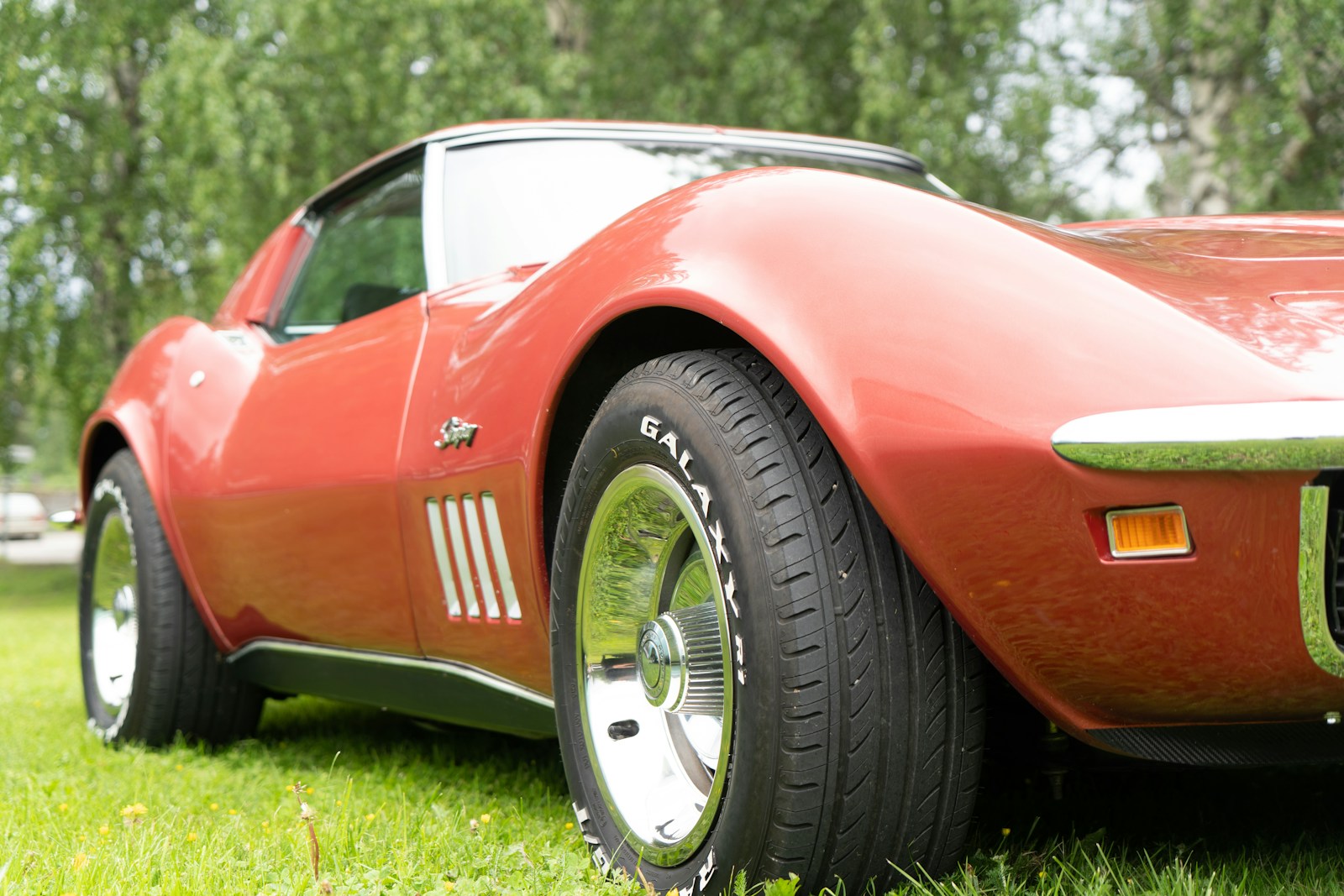
The Corvette’s fiberglass shape stayed genuinely striking through the mid-to-late 1970s, still promising the kind of performance that had made the nameplate famous. Tightening emissions regulations in that period, though, strangled horsepower across the entire industry, and the Corvette wasn’t spared. The 1975 model arrived with a federally mandated catalytic converter and a base engine rated at 165 horsepower, output closer to a family sedan than a sports car, despite the aggressive looks and the price tag to match. The base rating crept up to 195 horsepower by 1979, and the optional L82 engine topped out at 225. Owners paid Corvette money for a car that could no longer back up its own bodywork. Buyers did not stay away, since production hit a record 53,807 in 1979, but anyone shopping one today should check which engine it has before paying for the shape. It’s a useful reminder that even America’s favorite sports car went through a genuinely awkward adolescence before horsepower caught back up with the shape in later decades.
Fiat X1/9
Bertone-designed and mid-engine at a price ordinary enthusiasts could actually afford, the X1/9 looked like a shrunken supercar and handled with genuine poise thanks to its low center of gravity. Its removable targa roof panel stowed in the front trunk, which made open-air driving easy. Rust protection and the electrical system are the areas to watch. When Bertone took over production, the 1984 models were given improved rust protection and a modernized electrical system, so earlier cars deserve a careful look at the rockers and floor pans, especially if they have lived around road salt or coastal air. Support was the other frustration. Fiat ended its U.S. presence in 1982 and handed marketing and support of the car to an independent importer headed by Malcolm Bricklin, which brought in Bertone-built cars until 1987. Enthusiasts who kept an X1/9 running long-term usually did it through sheer stubbornness and a good relationship with an independent Fiat specialist, because the factory dealer network was gone.
Alfa Romeo Spider
Few convertibles of the 1970s and 1980s looked as effortlessly cool as the Alfa Romeo Spider, a shape so enduring it stayed in production from 1966 to 1993 with only gradual changes. That long run is also what makes ownership demanding, because a Spider can have one of several fuel systems. European cars used twin carburetors, North American cars switched to SPICA mechanical fuel injection for 1969, and Bosch electronic injection arrived for 1982. A mechanical injection pump is a specialist item, so find out who has serviced it and whether it has been converted. Any steel-bodied convertible of this age also needs a close inspection for corrosion in the fenders, floors and sills, particularly a car that spent its life in a northern climate, and old wiring deserves the same attention. It’s a car people bought with their hearts and kept running with their patience, and a Spider with a thick folder of service records is a safer buy than a shiny one without.
Maserati Biturbo
The Biturbo’s crisp Italian lines and genuinely novel twin-turbocharged V6 made it look like an attainable slice of exotic-car glamour when it arrived in the 1980s. It was the first production car to use a twin-turbocharged engine, and it sold strongly at first. In practice, the car became something close to a cautionary tale about rushing new technology to market. Sales fell in later years as the Biturbo developed a reputation for poor quality and reliability, and in 2007 Time named it the worst car of 1984. The reputation did real damage to Maserati’s standing in the American market. The Biturbo was sold in the U.S. until 1990, with leftover Spiders sold as 1991 models, and Maserati then stayed away until 2002. Anyone considering one now should look for documented maintenance and a specialist who knows the engine. It’s frequently cited as one of the clearest examples of a car whose showroom presence wildly outran its long-term dependability.
Triumph TR7
The TR7’s wedge shape was genuinely ahead of its time, previewing angular design language that would show up across the industry for the next decade. The trouble was how it was built. Quality problems undermined the car’s image, primarily because of poor relations between management and workforce and frequent strikes at British Leyland’s Speke factory near Liverpool, where industrial action in 1977 and 1978 also limited production. Quality improved when production moved to the Canley plant in Coventry and later to Solihull, but by then the damage to its reputation was largely done, and buyers had plenty of other options. For anyone shopping one today, that history makes the build location worth knowing, since the later Canley and Solihull cars are the ones that benefited from the improvement. The TR7 remains a favorite example of a good design idea undermined by an era of British manufacturing that simply couldn’t execute it consistently.
Cadillac Allanté
Designed and bodied in Italy by Pininfarina, the Allanté looked like nothing else in Cadillac’s lineup — a genuinely elegant Italian-bodied roadster wearing an American badge. Getting it built required an almost absurd logistical process: specially equipped Boeing 747s flew the bodies from Turin to Detroit 56 at a time for final assembly, an arrangement known as the Allanté Air Bridge and an expensive way to build a car. Buyers found a front-wheel-drive layout that sat oddly with the sporting intent its shape promised, and Cadillac redesigned the top stowage cover mechanism for 1991 to address customer complaints. Cadillac eventually improved the car significantly with a 295-horsepower Northstar V8 for 1993, but the fix arrived in the final model year, and production ended that July after 21,430 cars. It stands as one of the more expensive lessons in how much harder it is to import styling than substance.
Bricklin SV-1
Malcolm Bricklin’s safety-focused sports car had dramatic gullwing doors, integrated bumpers, and a fiberglass-over-acrylic body that made it look like the future of automotive safety wrapped in a wedge. The reality involved ongoing quality control problems, 90-pound doors raised by hydraulic cylinders that took up to 12 seconds to open, depended on the condition of the battery and were prone to breakdown, and an acrylic body material that gave the factory trouble from the start, with much of the early output lost to bonding failures. Bricklin’s operation, financed in part by the New Brunswick government, ran out of money and collapsed within just a few years of launching, with just under 3,000 cars built and no meaningful factory support ever again. Owners today treat surviving examples as fascinating artifacts of a genuinely ambitious idea that the company simply couldn’t execute reliably. It’s a spiritual cousin to the DeLorean in almost every way — visionary design, gullwing doors, and a business plan that couldn’t keep pace with either.
TVR Chimaera
British boutique maker TVR built the Chimaera with swooping, muscular curves and a Rover V8 that gave it genuinely serious performance for the money, all wrapped in a shape that looked far more expensive than its price tag suggested. Engines ranged from 4.0 to 5.0 liters and from 240 to 340 horsepower. The catch is the scale of the operation. TVR built 5,256 Chimaeras between 1992 and 2003, a tiny number by mainstream standards, and it was still making running changes along the way, fitting a new alternator, power steering and a single drive belt in 1994 to improve reliability. A hand-built car made in those numbers does not come with the parts supply or dealer coverage of a mainstream sports car, so buyers should find a marque specialist before they find a car, and ask which updates a given example has. Owners take on that extra work in exchange for a thrilling and distinctive driving experience unlike anything from a larger manufacturer.
Lotus Esprit
Giorgetto Giugiaro’s folded-paper wedge design made the Esprit an instant icon, cemented further by a memorable submarine-car turn in the 1977 James Bond film The Spy Who Loved Me. Lotus built the car in small volumes, 10,675 over a run that lasted from 1976 to 2004, and the earliest cars have not survived well: the original S1 is rare today mostly because of drivetrain problems. Because Lotus was a small manufacturer, an Esprit never had the dealer and parts network that buyers of Ferraris or Porsches could expect, which can turn routine maintenance into a bigger project than it should be. Anyone shopping one should check the service history closely and budget for specialist labor. The turbocharged models that arrived from 1980 delivered genuinely exotic performance, which is exactly why enthusiasts tolerated the headaches for as long as they did. Decades later, the Esprit’s shape still looks like it drove straight out of a concept-car sketch, even if the ownership experience rarely matched that fantasy.
Chevrolet SSR
Part retro pickup, part hot rod, part convertible, the SSR’s chopped, bulbous styling looked like a custom show car that had somehow talked its way into regular production, complete with a power-retractable hardtop that turned heads at every stoplight. Underneath the drama sat a platform GM adapted from its existing GMT360 architecture and, at first, a 5.3-liter V8 making 300 horsepower, good for 0 to 60 mph in 7.7 seconds. That was not the performance the silhouette promised, and at a price of $41,370 the first model year sold below expectations, with under 9,000 sales. A 6.0-liter LS2 V8 arrived for 2005 and cut the 0 to 60 time to about 5.3 seconds — by which point plenty of early buyers already owned the slower version. GM built roughly 24,000 in total and ended production in March 2006. The SSR remains a favorite example of a design so bold that it got greenlit before anyone fully worked out what the car underneath it should actually be.