

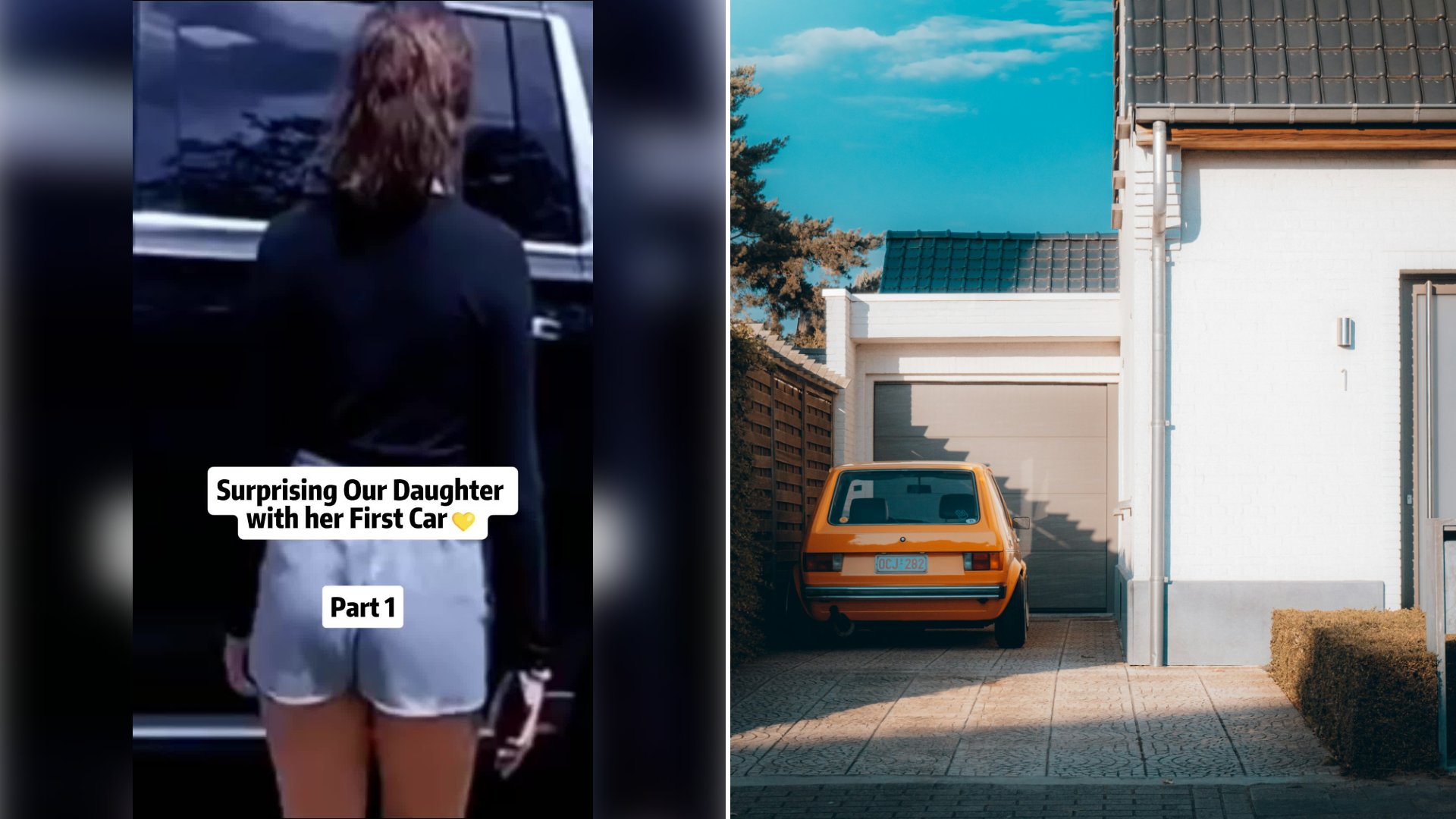
“We’re not going in that car,” her parent calls out from behind the camera as a teenage girl walks toward a dark SUV in the driveway. “We’re going in your car.” She turns around, laughs and says, “I don’t have a car.”
That exchange is the heart of a short TikTok posted by @edithsantiago632. The text over the video reads “Surprising Our Daughter with her First Car,” with a “Part 1” label underneath, and the caption simply calls it her daughter’s “First Car.”
The clip opens with the girl reaching for the door of the dark SUV. The voice behind the phone stops her, and the rest of the video is her trying to work out whether she is being teased. “Are you sure about that?” the parent asks when she insists she has no car. She tips her head back, puts a hand to her forehead and says, “I’m confused.” The answer does not change: “We’re going in your car.”
“What are you talking about?” she asks, grinning now. The instruction that comes back is the whole reveal plan in two lines: “Mash the button. See where your car is.” She asks, “Which one?” and then looks down at her hands, smiling. The clip ends as she lifts her head and looks off to the side. The car itself is not shown in this part.
The Key Fob Reveal, Done Right
Handing over the key and letting a new driver find the car by its lights and horn is a simple, cheap way to stage a first car surprise, and this video shows the one moment it can stall: “Which one?” Before you film it, know which button on that specific fob flashes the lights or sounds the horn, park the car within range and in line of sight, and be ready to tell your new driver which button to press so the reveal does not turn into a search.
What the First Six Months Look Like
The surprise is the easy part. According to the National Highway Traffic Safety Administration, novice teen drivers have the highest crash rates during the first six months of unsupervised driving after they become fully licensed, and they are twice as likely as adult drivers to be in a fatal crash. NHTSA counts 2,320 people killed in crashes involving a teen driver aged 15 to 18 in 2024.
The same page lists the habits behind those numbers. In 2024, 51 percent of teen passenger vehicle drivers who died were unbuckled, speeding was a factor for 33 percent of teen drivers in fatal crashes, and teens were two and a half times more likely to take risks with one teen passenger in the car and three times more likely with several.
Every state and the District of Columbia uses a three stage graduated licensing system, which NHTSA says can reduce teen crash risk by as much as 50 percent. In the model it describes, the intermediate stage brings a nighttime limit from 10 p.m. to 5 a.m. and no more than one teen passenger for the first 12 months. Your own state’s rules decide what applies, so check them before the first solo drive.
Before You Hand Over the Fob
- Write down the house rules. NHTSA’s parent guidance comes down to no phones, no passengers, no speeding, no alcohol, no driving tired and always buckling up, and it points families to a written parent and teen driving agreement.
- If the first car is used, run its VIN through the NHTSA recall lookup and get any open recall fixed before the reveal.
- Add the new driver to your insurance before the first drive, not after.
- Ride along for the first trips in the new car, even after the license is in hand.
More from Steel Horse Rides
- Daughter Claps Both Hands Over Her Mouth as an Old Black Ford Pickup Rolls Up the Gravel Drive and Her Parent Jokes They Are Just Thankful Her Dream Car Wasn’t a Ferrari
- Parents Bring Their Almost 16 Year Old Daughter to the Dealership Without Telling Her Why, Then Surprise Her With a White 2026 Kia Sorento With 10,000 Miles and a Green Bow on the Hood
- Dad Films a Secret Message to His Daughter Beside a Red 2003 Beetle Turbo S He Says Was the Only One for Sale in America and Promises Her Pastel Pink Paint and Underglow