

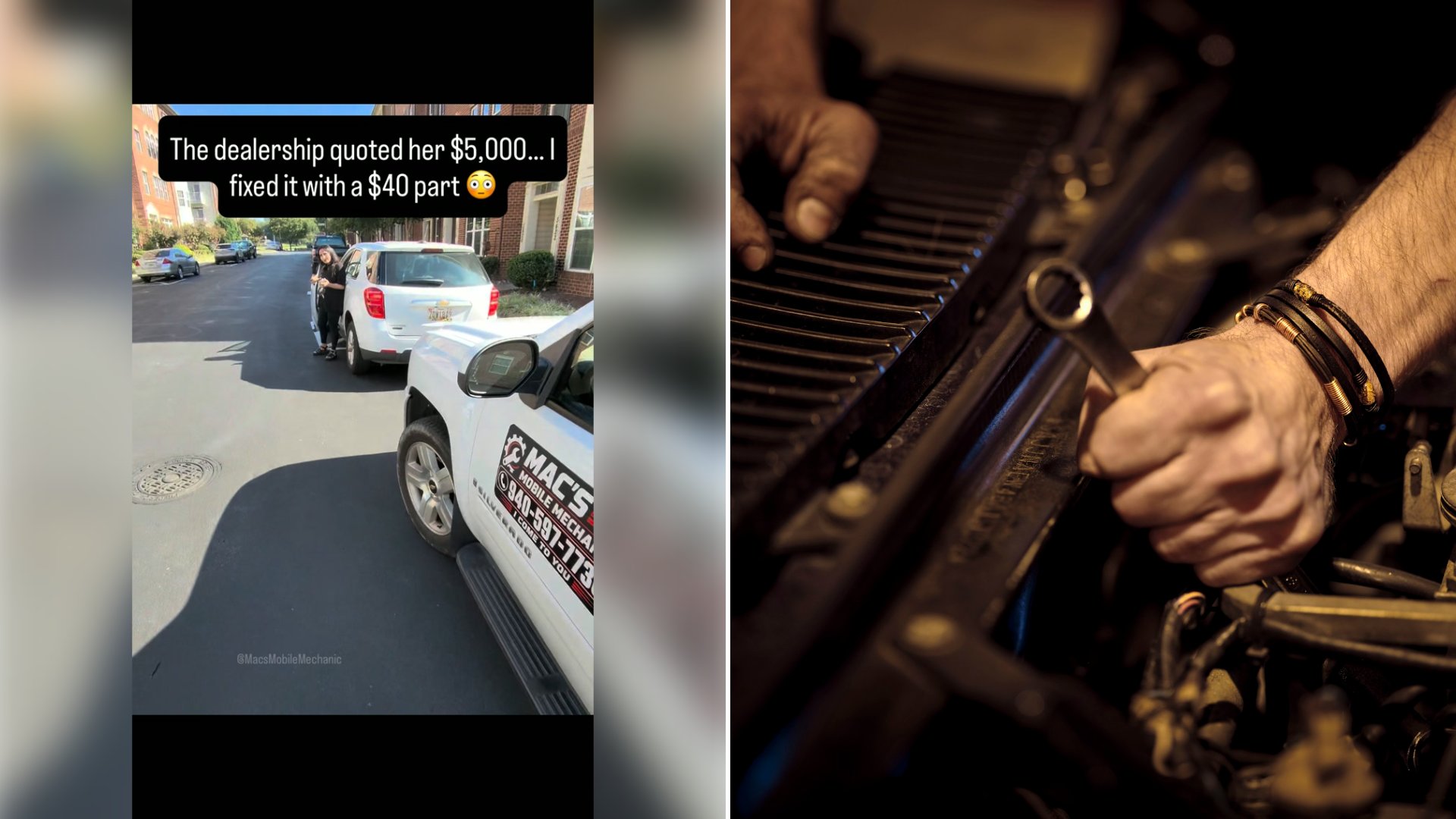
The text over the first seconds of a reel from @macsmobilemechanic sets up the whole job: “The dealership diagnosed it as a timing chain, up to $5,000 to fix.” The caption puts the other number next to it: “The Dealership Wanted $5,000… I Fixed It for $50.” The video follows the mobile mechanic as he goes to the car in a parking lot and starts from what the engine is actually doing instead of what the estimate says.
His first on screen note is that the engine starts up perfectly normal with no noises or knock. A second note says it sounds healthy to him. Both come before he picks up a tool. He then connects a scan tablet and reads the codes, and the text says the car has camshaft position codes. In the live data, he points out, the variable valve timing is not working.
He does not stop at the code. He changes the oil, and a box of oil sits on the pavement next to the car. Then he pulls the engine cover and the air intake tube out of the way, and on the Ecotec engine he works his way down to the valve timing solenoid. When it comes out, the on screen text reads “Old VVT solenoid” and he reacts with “Holy clog.” The replacement he holds up is labeled “GM genuine” and the text says “GM genuine VVT.”
After the new solenoid goes in, he reconnects the scanner. The text says “Camshaft position codes, all gone,” and a drive follows with the note that it “runs and drives perfectly fine with no noises.” As the Chevrolet pulls away he adds that “this thing does not need a timing” chain. The reel closes on an older man at a front door getting his keys, saying “It drives good,” and the final text reads “Another customer saved from the dealership.”
The reel is a mobile mechanic’s account of one car, and it leaves some things out. It does not say what the dealership’s written estimate actually listed, how many miles were on the engine, or what the $50 covered beyond the part. It does not show a before and after oil condition either, so there is no way to say from the video how much the oil change had to do with the result. What it does show clearly is the order of the work: check how the engine sounds, read the codes, look at the live valve timing data, then replace the one part the data points to.
The same order is useful when a shop quotes a big repair. The Federal Trade Commission’s auto repair guide tells owners to ask for a written estimate that identifies the condition to be repaired, the parts needed and the expected labor charge, and to get a signed copy. It says to consider a second opinion if repairs are expensive or complicated, and to ask first whether you will owe a diagnostic charge if you take the work elsewhere. It also notes that diagnostic only shops that do not sell parts or repairs may give a more objective view of which repairs are necessary.
California’s Bureau of Automotive Repair adds specific rules for that state. Its consumer guide says a shop must give a written estimate before doing any work, that the estimate must itemize parts and describe the repair method, and that a signature authorizes work only up to the stated amount, so a blank work order should never be signed. If the job will cost more than the estimate, the shop has to contact the owner, describe the added work and cost, and get permission first. The guide also says you may take the car to another shop for a second opinion once you hold the written estimate, and that you must ask for your old parts back when you sign the work order, because the shop is only required to return them if you ask before the work is done.
For a driver holding a scary number, the practical steps follow from the video. Ask what code or measurement the quote is based on, and ask to see it. If the car starts and runs without noise, ask how a failed timing chain was confirmed. Ask for the old part back, as the solenoid in this reel was shown to the camera. And get the second opinion before the first shop starts taking the engine apart.
More from Steel Horse Rides
- Mobile Mechanic Walks Up to a Blue Dodge Pickup That Dies the Second It Starts, Cleans One Valve, Watches the Idle Shoot to 2000 RPM and Comes Back With a New Part to Fix It
- Honda Dealership Mechanic Says He Would Not Pay to Fix a Tire Pressure Sensor Light, a Minor Oil Leak or an Old Car Repair That Costs More Than the Car Is Worth
- Mobile Mechanic Finds a Steady Coolant Drip Under a Red Car at a Gas Station After a Driver Asks for Money, Then Offers to Fix It in the Morning