

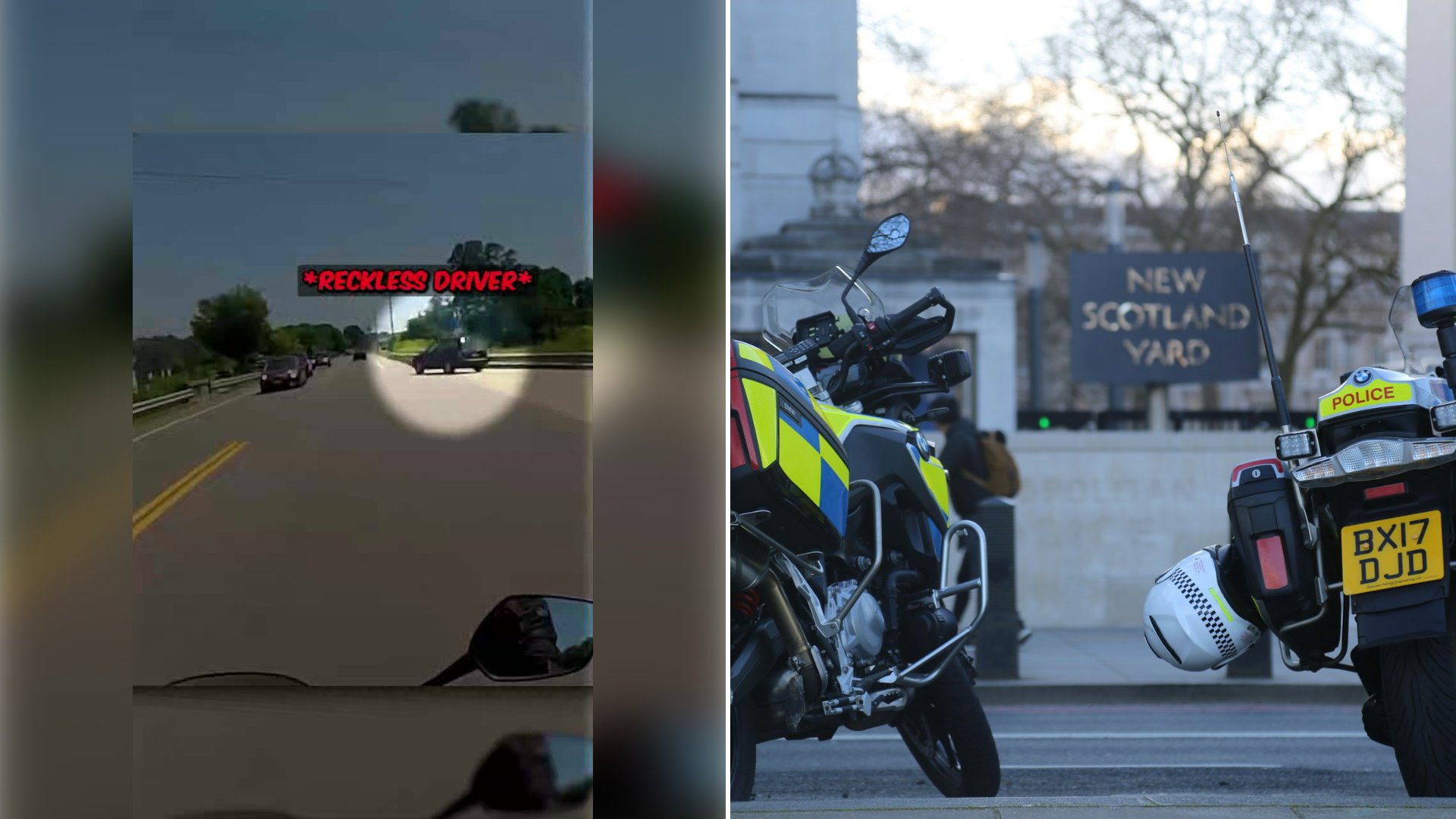
A near miss and a traffic stop happened back to back in a clip from TikTok rider @coptwist0, and the sequencing is what makes it worth watching. The footage opens with a car cutting across the rider’s lane with no signal and barely any space to spare, forcing a sudden swerve to avoid getting hit. Seconds later, a police officer pulls the rider over, not the car that caused the problem, and what follows is not the tense confrontation viewers might brace for. The officer and the rider end up in an easygoing, almost friendly conversation, a tonal whiplash that is exactly why the clip spread.
Comment sections under videos like this one tend to split along a predictable line, with some viewers frustrated that the rider got pulled over at all right after being the one nearly hit, and others pointing out that officers often cannot act on a near miss they did not personally witness in the act, only on whatever they can observe once they catch up. That tension between what clearly happened on camera and what a cop is legally able to act on is worth unpacking, because it comes up constantly in rider versus driver footage.
@coptwist0
Motorcycles have the same right of way as any other vehicle on the road, and lane-change laws in every US state require drivers to signal and confirm a lane is clear before moving into it, regardless of what is occupying that lane. The trouble is that a motorcycle’s narrow profile makes it far easier to miss in a mirror or a blind spot check than a car or truck, and federal crash data has repeatedly shown that a large share of motorcycle and car collisions happen specifically because a driver reported never seeing the rider at all. The National Highway Traffic Safety Administration has tracked this pattern for years: drivers tend to scan for the shape and size of another car, and a motorcycle simply does not register the same way, especially at an angle or in traffic.
That visibility gap is also why so many near misses like the one in this video happen during ordinary lane changes rather than aggressive maneuvers. The driver who cut off the rider may not have been driving recklessly on purpose; a failure to properly check a mirror or blind spot before changing lanes is one of the most common causes of car versus motorcycle near misses, according to transportation safety research, right alongside drivers misjudging a motorcycle’s closing speed because it looks farther away than it is. None of that excuses cutting off another vehicle without warning, but it explains why these incidents keep happening even to riders who are doing everything right.
As for the traffic stop itself, officers generally need either a direct violation they personally witness or a specific, actionable reason to pull a vehicle over, and a near miss that happened moments earlier and out of their direct line of sight often does not meet that bar on its own. What usually gets a rider or driver stopped right after a near miss is some other observed issue, like speed, lane position, or equipment, rather than the near miss itself. The friendly tone of this particular stop suggests the officer recognized the rider had just been through something stressful, which may explain why the interaction stayed calm instead of adversarial. It is a small moment, but it is the kind of footage that keeps earning views precisely because it does not go the way viewers expect.
More from Steel Horse Rides
- Rider Shows What Countersteering Feels Like From the Seat of a Motorcycle and Explains Why Pushing the Right Bar Actually Turns the Bike Right
- Motorcyclist Explains How Inductive Traffic Sensors at Stoplights Work and Why Some Bikes Never Trigger a Green Light and What Riders Can Do
- Rider Brings a Bouquet of Red Roses to a Franklin Police Cruiser Turned Memorial for a Young Officer and Calls It the Side of Riding Bikes We Don’t Talk About Often