

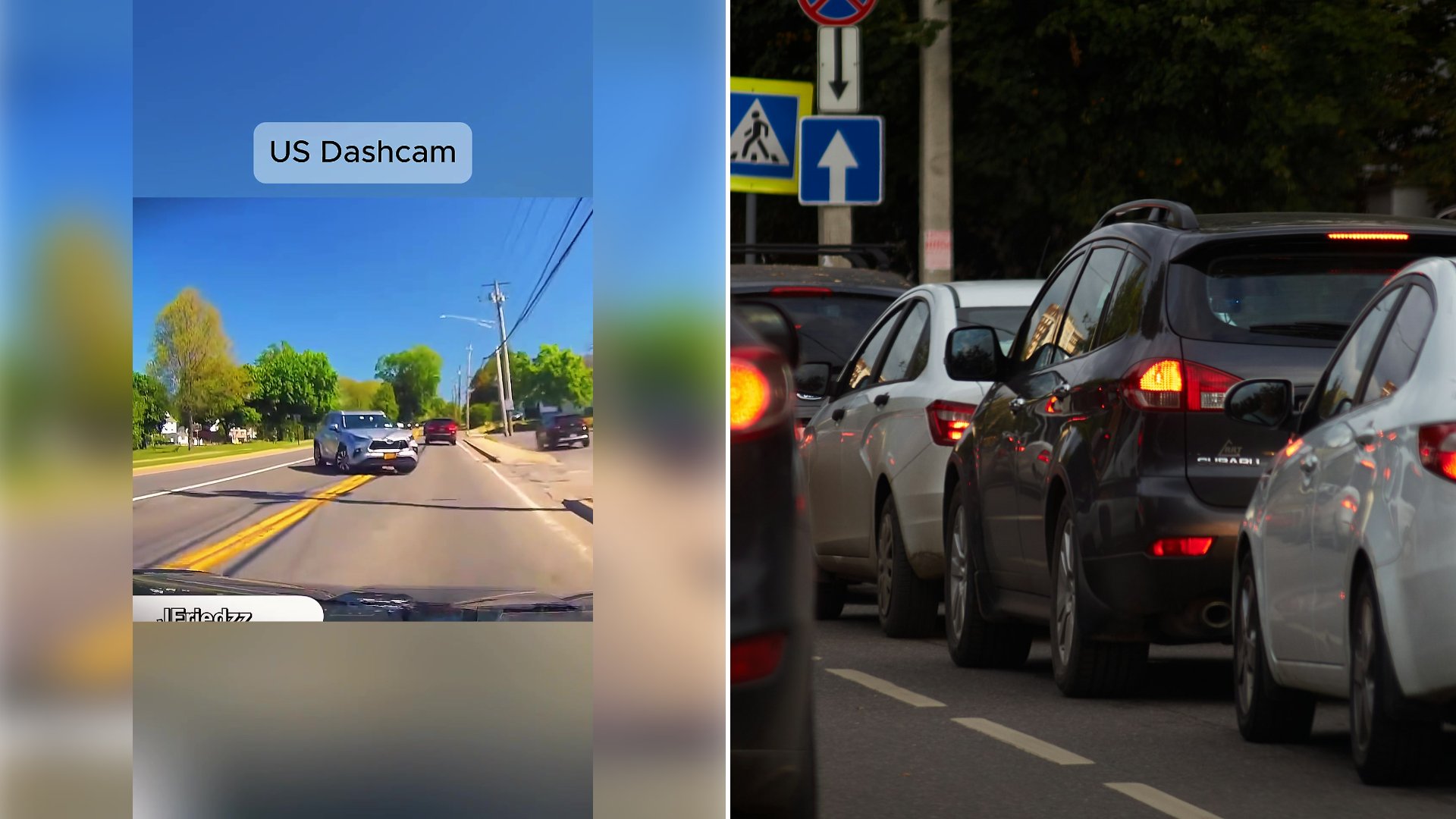
A compilation stitches together dashcam clips submitted by everyday commuters from across the United States, and watching them back to back is a reminder of how often ordinary roads produce genuinely dangerous moments. There is no single dramatic highlight here, just clip after clip of sudden lane changes, blown stop signs, and split second swerves that could have each been a serious accident.
The compilation from @alexander_kd42 pulls together footage from everyday commuters rather than a single dramatic incident, which is exactly what makes it land. These are not professional stunt drivers or racetrack footage, they are regular people on regular commutes, and the sheer volume of close calls in one short video drives home how routine near misses actually are on American roads.
@alexander_kd42
The scale of near miss driving in the United States is genuinely large once it is measured. Federal transportation researchers have long noted that reported crashes represent only a fraction of all dangerous driving incidents, since a near miss where both vehicles avoid contact never generates a police report or an insurance claim and simply disappears unless someone happens to be recording it. That is part of why dashcam compilation content performs so well, it is effectively surfacing a category of everyday danger that official statistics mostly miss.
The growth of dashcam ownership itself tells part of the story. Aftermarket dashcam sales in the United States have climbed steadily over the past decade as prices have dropped and features like automatic cloud backup and collision detection have become standard on even budget models. Insurance companies have taken notice too, with a number of major carriers now offering usage based discounts for drivers who install dash cameras or telematics devices, partly because the footage reduces disputed fault claims and partly because dashcam owning drivers tend to self select toward more cautious habits once they know they are being recorded.
Traffic safety researchers consistently point to the same handful of root causes behind most near miss incidents: distracted driving from phone use, following distances that are too short to react in time, and drivers failing to fully stop or check blind spots at intersections. None of these require bad weather or unusual circumstances, which is exactly why compilations built from random commuter footage rather than dramatic storm chasing or off road content resonate so broadly, every viewer has lived through a version of at least one clip in the reel.
For drivers looking to reduce their own odds of becoming the next clip in a compilation like this, the advice from safety researchers rarely changes: keep a following distance of at least three to four seconds behind the car ahead, scan intersections fully even when a light is green, and treat a phone notification as something that can always wait until the car is stopped. None of it is exciting advice, but compilations like this one make a strong visual case for why it matters anyway.
More from Steel Horse Rides
- Driver Asks Did I Overreact Over Dashcam Footage of an Oncoming Silver Car Coming at Him Near the Center Line, Then Shows His Face Barely Moving the Entire Time
- Car Expert Explains California’s New CARS Act Requiring Dealerships To Disclose Full Vehicle Prices Upfront and Offer a Three Day Cancellation Window
- Mechanic Opens on a Clean Valvetrain Under the Words 3k Mile Oil Changes Versus 10 to 20k, Then Cuts to a Sludge Caked Engine and Notes This CRV Only Had 80k on It