

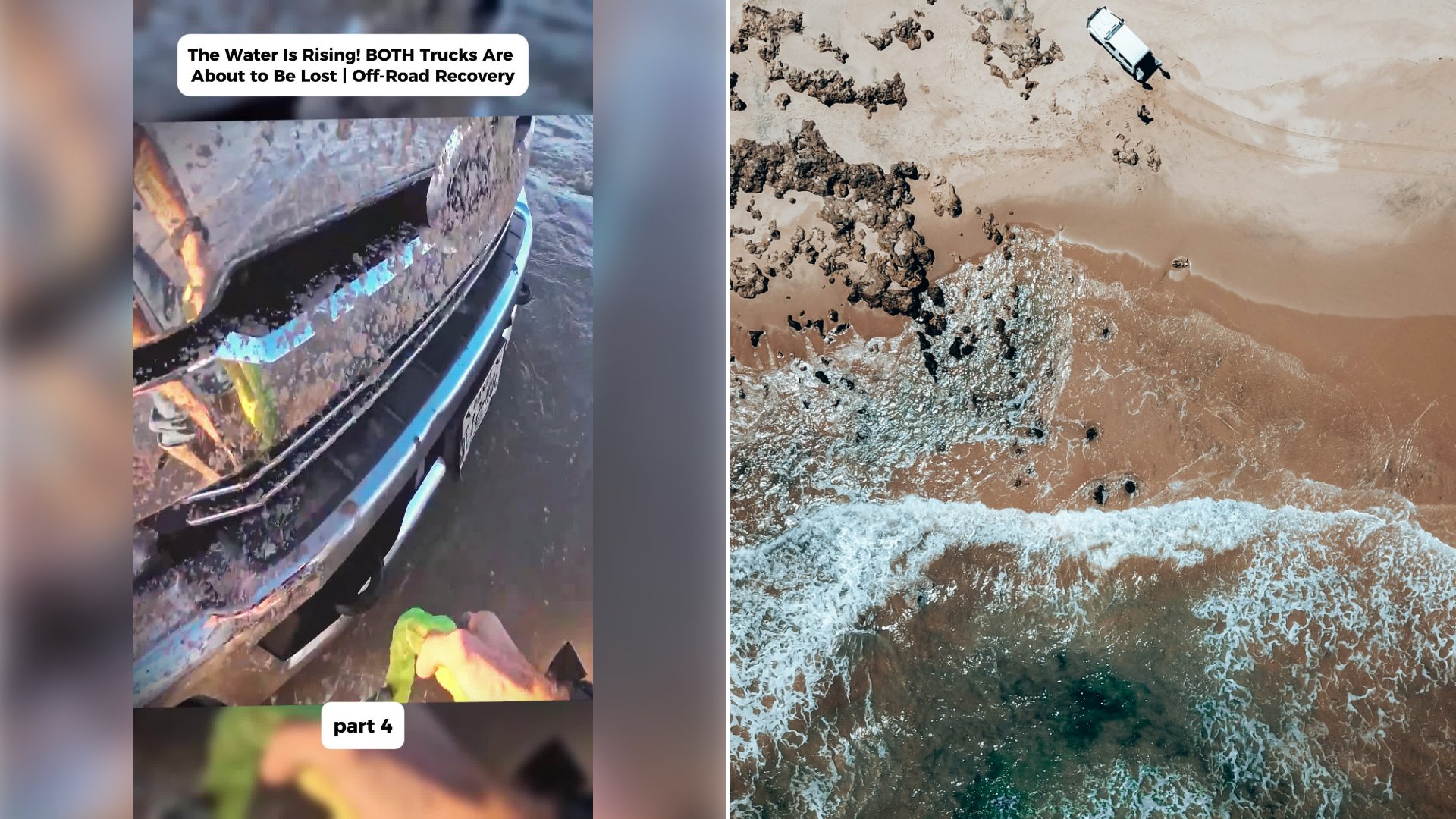
The water is already up around the wheel wells when this first person recovery video from TikTok creator @user6018068hd188 begins, and it only keeps rising. A truck sits stuck in the sand on a beach as the tide comes in, and a second truck sets up a winch line to pull it free before the incoming water can claim both vehicles. The footage is tense in a very specific way, not because of a crash or a confrontation, but because every second spent setting up the winch is a second the tide does not wait for. The water visibly climbs higher between shots.
What makes the footage land is how ordinary the mistake was. Nobody in the video is doing anything reckless; a truck simply got parked or driven a little too close to the water’s edge at a point in the tide cycle when the margin for error was thinner than it looked, and the ocean did the rest.
@user6018068hd188
Tides do not rise at a constant, predictable crawl; the rate of change speeds up and slows down through the cycle, and on a gently sloping beach, a relatively small rise in water height can translate into the shoreline advancing many feet inland in a short span of time. Tide tables, published by agencies like NOAA for US coastlines, list the predicted times and heights of high and low tide for a given location, and experienced beach drivers treat those tables as mandatory reading before ever taking a vehicle onto the sand, specifically to avoid the scenario this video shows. A vehicle that looks safely parked an hour before high tide can end up surrounded by water with very little warning if the driver has not checked when that high tide is actually due.
The recovery itself follows standard winch safety procedure under far from standard time pressure. Safe winching generally calls for a rigger to keep the line under tension gradually rather than snapping it taut, to stay clear of the line’s path in case it fails under load, and to anchor to a structurally sound point on the frame rather than a bumper or body panel that was never designed to take that kind of force. Saltwater adds its own complication, since a winch and its cable are not built to spend extended time submerged, and corrosion from seawater exposure can weaken a cable or drum over time even after it is rinsed and dried. Every minute this recovery crew spent rigging in rising water was a minute working against both the clock and the equipment itself.
Getting a stuck vehicle out before the tide finishes the job is as much about recognizing urgency early as it is about winch technique. Once water reaches the engine bay or electrical components, a vehicle can go from stuck to a total loss, and insurance policies frequently treat saltwater flood damage as a straightforward total loss given how aggressively corrosion sets in afterward. That is the real stakes behind the tension in this clip: not just two trucks stuck in sand, but a short window to save them both before the ocean made the decision for everyone involved.
More from Steel Horse Rides
- Arizona Technician Sorts Nine SUVs and Trucks Into Reliable or Unreliable, Putting the Chevy Equinox 2.4 in Red Over Oil Use and Calling the Ford F150 5.0 a Truck for His Family
- Buyer Films Himself Walking Out of the Dealership to His Black Jeep Trackhawk, Popping the Hood on the Supercharged V8, Then Turning the Drive Mode Dial Before Pulling Out
- Off Roader Peels the Toyota TrueStart Sticker Off a Car Battery and Finds an Interstate Batteries Label Underneath, Then Points at It in a Clip He Calls Rebranded Car Parts