

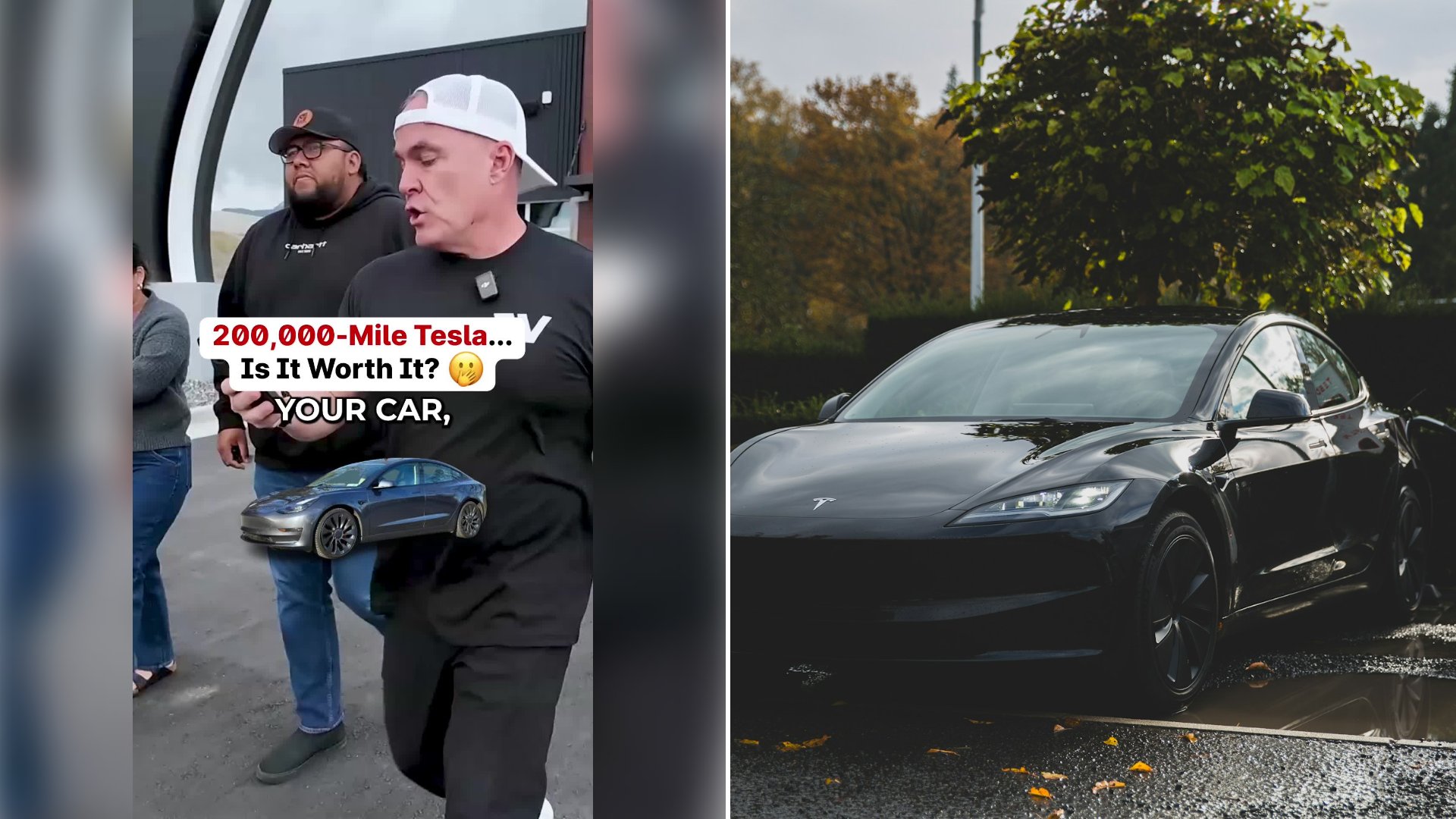
EV dealer @evautoalex walks through a real world test that more and more used car shoppers are going to need to understand. A Tesla Model 3 rolls in with two hundred thousand miles on the odometer, and instead of just eyeballing the paint and interior the way a dealer might with a gas car, he pulls up the battery health diagnostics to see exactly how much range and capacity the pack has actually lost before deciding what the car is worth as a trade in.
The video matters because it answers a question that a growing number of early Tesla adopters are now actually facing. The Model 3 has been on the road long enough for its highest mileage examples to reach this exact point, and dealers need a real framework for pricing a used EV that goes beyond the mileage number a gas car buyer would normally rely on.
@evautoalex
Real world battery degradation data on the Tesla Model 3 has turned out to be considerably better than early EV skeptics predicted. Independent studies tracking large fleets of high mileage Tesla vehicles, including data compiled by Tesloop and aggregated owner reporting through platforms like Recurrent, have generally found that Model 3 packs retain somewhere in the range of eighty five to ninety percent of their original capacity even after two hundred thousand miles of driving, with degradation curves that flatten out significantly after the first forty thousand to fifty thousand miles rather than declining at a steady rate for the life of the car. That pattern is noticeably different from how most buyers assume batteries age, since the steepest capacity loss tends to happen early and then levels off.
For a dealer setting trade in value, the battery health percentage functions as the EV equivalent of a compression test on a gas engine, a direct read on the component that costs the most to replace and determines how much useful life remains. A Model 3 showing strong retained capacity at high mileage can still command a reasonable trade in number despite the odometer reading, because the drivetrain itself, with far fewer moving parts than a combustion engine, tends to need less mechanical work over that same distance. A pack that has degraded well below that typical range, on the other hand, signals either unusually hard use, like frequent fast charging and extreme climate exposure, or a developing fault that should lower the offer regardless of how clean the car looks.
Shoppers looking at any high mileage used EV should ask for this exact diagnostic pull before negotiating a price, not after. Most EV service centers and some independent shops can generate a battery state of health report in minutes, and that single number should weigh more heavily on the final price than the odometer reading ever would on its own. As more Model 3s and other early EVs cross the two hundred thousand mile mark, this kind of battery first inspection is likely to become as standard in used EV shopping as a pre purchase inspection already is for gas powered cars.
More from Steel Horse Rides
- Car Expert Lays Out the Most Reliable Used Cars To Buy at Every Budget From One Thousand Dollars Up To Twenty Five Thousand Dollars and Explains Why
- Buyer Says He Bought a One Hundred Thousand Pound Mercedes GLE That Nobody Could Even Open and Explains What a Salvage Rebuild History Can Hide From New Owners
- Comedian Says Buying a Maserati Six Years Ago Was a Huge Mistake and the Depreciation Data Shows Exactly Why That Regret Makes Financial Sense