

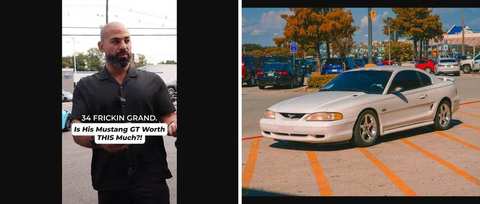
A trade-in negotiation over a modified Ford Mustang GT is drawing attention after car dealer @georgejsaliba filmed himself walking a client through the numbers right in the dealership parking lot. In the clip, Saliba breaks down what he can offer for the Mustang, and the figure he lands on, roughly $34,000, immediately sparks debate among viewers about whether the car is really worth that much once mileage, modifications, and resale risk are factored in.
Saliba frames the appraisal as a straightforward, transparent walk-through rather than a hard sell, pointing out specific details on the car as he explains his reasoning. That kind of behind-the-curtain honesty is part of why the video has resonated: most car shoppers never get to see how a dealer actually arrives at a trade-in number, and watching the math happen in real time turns a routine appraisal into something closer to a mini tutorial.
@georgejsaliba
Trade-in valuation is one of the least understood parts of buying or selling a car, which is exactly why clips like this one travel so far. Dealers typically start with a wholesale baseline pulled from auction data and regional sales trends, then adjust up or down based on the car’s condition, mileage, accident history, and how in-demand that specific model currently is at auction. A clean, unmodified Mustang GT in good shape might land close to that baseline, but once aftermarket parts, upgraded wheels, or a modified exhaust enter the picture, dealers have to make judgment calls, because those changes rarely add dollar-for-dollar value on a trade-in sheet.
That is a big part of why modified muscle cars generate so much disagreement in comment sections. An owner who spent real money on upgrades often feels those investments should be reflected in the offer, while a dealer has to think about resale: a heavily personalized car can actually narrow the pool of buyers on the lot, since not every shopper wants someone else’s customization choices. Some dealers will note modifications as a neutral line item, others treat extensive aftermarket work as a mild negative unless it is from a recognized, in-demand brand.
Mileage and overall condition still carry the most weight in any trade appraisal. A Mustang GT with low miles and a documented maintenance history will almost always command a stronger offer than a higher-mileage example, even if the higher-mileage car looks sharper cosmetically. Dealers also factor in how quickly a given model tends to sell once it hits the lot; pony cars like the Mustang GT can be seasonal, often moving faster in spring and summer than in the colder months, which can nudge offers up or down depending on when the appraisal happens.
For anyone preparing to trade in a car, a few basics can make a real difference in the number a dealer comes back with. Getting the vehicle cleaned and detailed before the appointment, bringing maintenance records, and checking independent valuation tools ahead of time all help sellers walk in with realistic expectations and a stronger negotiating position. It also helps to get more than one appraisal; trade-in offers can vary meaningfully between dealerships depending on what each one already has in inventory and what they expect to move quickly.
It is also worth remembering that a trade-in offer and a private-party sale price are two very different numbers. Dealers need room to resell the car at a profit after reconditioning costs, so a trade-in figure will almost always come in lower than what the same car might fetch sold directly to another enthusiast. That gap is often the biggest source of friction in videos like this one: viewers comparing the dealer’s number to private listings for similar Mustangs, without accounting for the markup a dealership needs to stay in business.
More from Steel Horse Rides
- Buyer Risked Five Hundred Dollars On A Mercedes GL450 Worth Close To Fifteen Thousand Dollars And Is Revealing Every Hidden Mechanical Flaw One By One
- Truck Flipper Was Mid Inspection On A Suspicious Facebook Marketplace Truck When It Suddenly Started Smoking And Leaking Fluid All Over The Parking Lot
- Weekly Bank Repo Auction Just Sold An Entire Running Car For Only Three Hundred And Fifty Dollars And The Crowds Reaction Says Everything About How Shocked They Were