

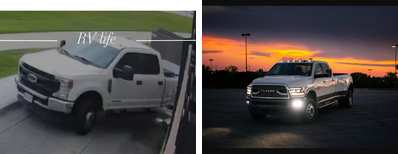
Part six of an ongoing saga from full-time RV couple @simply.scenic has taken a turn that even longtime followers of the series didn’t see coming. The couple’s Ford F350 dually had just come back from the shop after a brutal six-week fuel-system overhaul, the truck was finally running right again, when a dealership employee took it for what should have been a routine drive and instead rear-ended a pole while cutting through an unrelated coffee shop drive-thru.
What makes the story bulletproof rather than he-said-she-said is the coffee shop’s own surveillance footage, which the couple obtained and shared, showing the truck clipping the pole in real time. For an RV-life account built around showing the realities of full-time travel, including the expensive, frustrating logistics of keeping a tow vehicle running, this entry in the series landed as a genuinely wild escalation.
Dually trucks like the F350 are the backbone of the full-time RV lifestyle because of their towing capacity, often rated to haul 15,000 to 20,000 pounds or more depending on configuration, which is essential for pulling a large fifth-wheel or travel trailer safely. That capability comes at a cost: diesel-powered heavy-duty trucks are more complex to service than a standard pickup, and a fuel-system issue, like the one this couple dealt with for six weeks, can be both expensive and slow to diagnose correctly.
A major fuel-system repair on a diesel truck, covering injectors, pumps, and related components, commonly runs anywhere from $1,500 to $5,000 or more depending on what’s actually wrong and whether the engine needs to come apart to access the failed parts. Six weeks in the shop suggests parts availability issues, a tricky diagnosis, or both, any of which can stretch a repair far longer than the labor time alone would suggest.
When a shop or dealership damages a customer’s vehicle during a test drive, a loaner period, or a related service visit, the business is generally liable for repairs, and most reputable shops carry garage-keeper’s liability insurance specifically to cover this kind of incident. Consumer advocates recommend documenting any damage immediately with photos, getting the incident in writing from the business, and keeping independent evidence, like surveillance footage, in case the shop is slow to take responsibility.
For full-time RVers specifically, an unplanned repair delay isn’t just an inconvenience, it can mean missed reservations, extra nights paid at a campground waiting on the tow vehicle, or scrambling for a rental in an area without many options. It’s part of why RV-life creators so often build an emergency fund specifically earmarked for truck and rig repairs, separate from their regular travel budget, since something breaking at the worst possible moment is less a risk than an eventual certainty.
Followers of the series will likely be watching for part seven to see how the dealership responds and whether the damage gets repaired without another lengthy wait, a timeline that, given how this saga has gone so far, is anyone’s guess.
More from Steel Horse Rides
- Creator Shares Garage Camera Footage of a Ford F250 Rolling Away Across a Driveway and Onto the Lawn Under a Caption Saying It Almost Took Out a Third Vehicle in Four Weeks
- Jeep Driver Winches a White Pickup Out of Rising Surf Using a Second Truck as an Anchor in Part Four of a Beach Recovery Series Titled The Water Is Rising
- Truck Flipper Was Mid Inspection On A Suspicious Facebook Marketplace Truck When It Suddenly Started Smoking And Leaking Fluid All Over The Parking Lot