

Two neighbors who had spent hours fighting a single stuck suspension bolt finally got relief when @macsmobilemechanic pulled up, assessed the situation, and had the bolt free in roughly thirty seconds. The clip has pulled in 5.8 million views, largely because almost anyone who has ever attempted a driveway repair has lived through some version of this exact frustration.
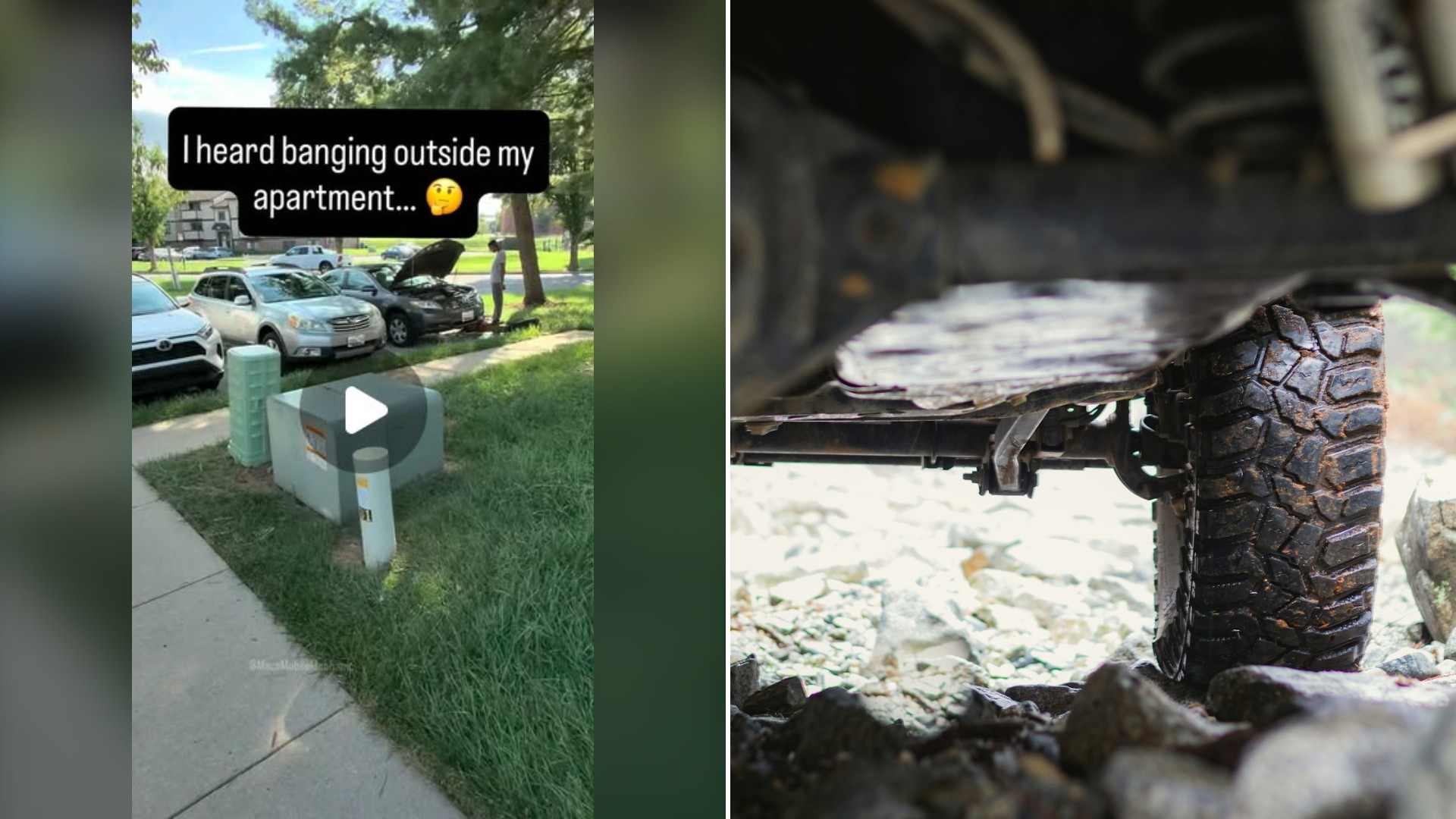
The satisfaction of the video comes from the contrast: hours of visible struggle followed by a problem that, with the right technique and tools, turns out to barely be a problem at all. It’s a reminder that a lot of DIY repair failures come down to approach rather than effort.
Seized suspension bolts are one of the most common reasons a routine brake job or suspension repair turns into an all-day ordeal. Years of exposure to road salt, moisture, and heat cycling causes corrosion to form between a bolt’s threads and the surrounding metal, effectively welding the two together at a microscopic level. Once that happens, brute force alone often isn’t enough — and worse, too much force applied the wrong way is exactly how a bolt snaps off flush with the surrounding metal, turning a stuck-bolt problem into a drilling-and-extraction problem.
Professional mechanics lean on a few tools that rarely show up in a typical home garage. A quality penetrating oil, applied well before any wrenching starts and given real time to soak in, does more of the work than most DIYers expect. Impact wrenches deliver a rapid series of rotational hammer-blows rather than steady pressure, which is often what finally shocks corrosion loose without stressing the bolt evenly enough to shear it. Heat is the other major tool in the kit: a propane or MAP-gas torch applied briefly to the surrounding metal causes it to expand slightly, breaking the corrosion bond and often allowing a bolt to turn that wouldn’t budge cold.
For someone working without an impact wrench or torch, there are still meaningful ways to improve the odds. Letting a penetrating oil sit overnight rather than for five minutes makes a real difference, since the fluid needs time to wick into the threads by capillary action. A six-point socket, rather than a twelve-point one, grips more of a bolt head’s surface and is far less likely to round it off under heavy torque. And breaking a bolt loose with sharp, controlled impacts — tapping a wrench with a hammer rather than leaning on it with steady pressure — mimics some of what an impact wrench accomplishes mechanically.
Knowing when to stop matters just as much as knowing the right technique. A bolt that still won’t move after oil, heat, and careful leverage is a strong signal that continuing to force it risks snapping it off inside the mount, which usually means drilling it out and re-tapping the threads — a repair that can turn a $40 part swap into a multi-hour job requiring specialty tools. That’s often the exact point where calling a mobile mechanic, who shows up already equipped with an impact wrench and torch, ends up cheaper and faster than continuing to fight it solo.
Mobile mechanic services, which travel to a customer’s home or roadside location rather than requiring a shop visit, have grown largely because of moments exactly like this one: a repair that’s conceptually simple but practically blocked by one stubborn component and a missing tool. Rates typically run somewhat higher than a traditional shop’s labor rate to cover travel, but for a job that’s otherwise at a standstill, the convenience and the right equipment showing up on short notice is often worth the premium.
More from Steel Horse Rides
- Mechanic Pours Molten Metal Into a Damaged Spark Plug Hole, Sands It Flat, Drills It Out, Cuts Fresh Threads With a Tap and Screws the Plug Back In Over Three Minutes
- Motorcycle Mechanic Uses a Yellow Zip Tie as a Temporary Third Hand to Line Up a Broken Chain, Then Fits the Master Link Pins, Plate and Spring Clip in a Narrated Clip
- A Buyer Risked Five Hundred Dollars On A Mercedes GL450 Worth Close To Fifteen Thousand Dollars And Is Revealing Every Hidden Mechanical Flaw One By One