

What should have been one of the most routine services in all of auto repair turned into one of the biggest viral moments of the year, thanks to mechanic @te_videos_official. In a first-person, whisper-narrated clip, the creator walked through a standard Honda oil change as though performing it for an audience, turning each step, draining the old oil, swapping the filter, pouring in fresh fluid, into an almost theatrical, ASMR-style ritual. The result wasn’t just popular, it was massive, climbing to 43.6 million views and becoming the single highest-performing post in its batch.
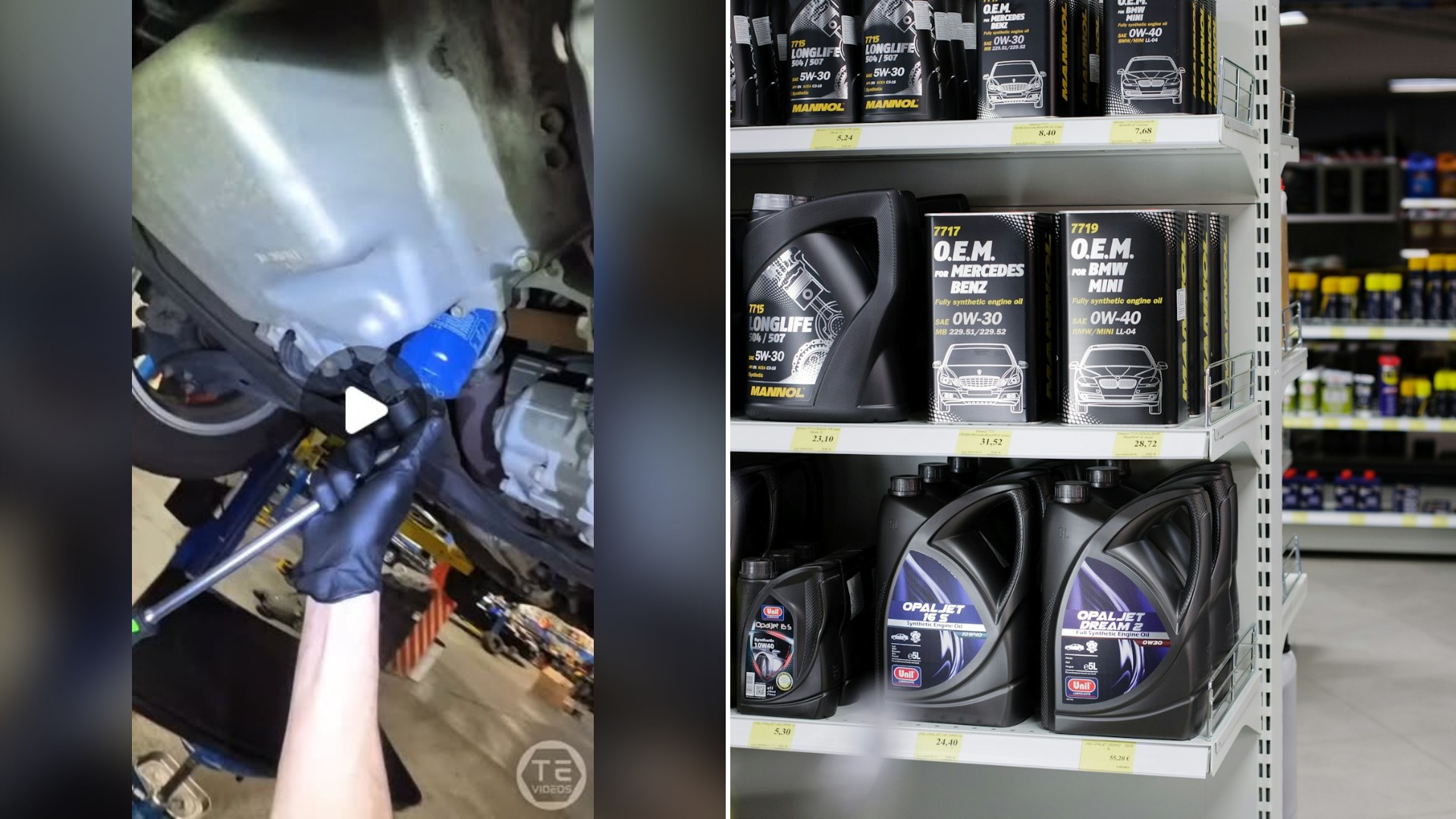
The sheer scale of that number raises an obvious question: why did a process as mundane as an oil change resonate with tens of millions of viewers? The answer lies less in the mechanical work itself and more in the format layered on top of it, a trend that has been reshaping how skilled trades content performs across social platforms over the past several years.
ASMR, short for autonomous sensory meridian response, describes a tingling, relaxing sensation some people experience in response to specific triggers, typically soft sounds like whispering, tapping, or the crinkle of certain materials. What started as a niche corner of the internet focused on whispered role-play videos has, over the past several years, spread into nearly every category of content imaginable, including cooking, cleaning, and now auto repair. Mechanics and other tradespeople have found that pairing genuinely satisfying, methodical work, the kind with crisp, tactile sounds like a filter unscrewing or oil draining into a pan, with a hushed narration style can hook viewers who would otherwise scroll right past a standard how-to video.
Beyond the ASMR framing, the clip benefits from what media researchers often call the satisfaction loop, a short, complete process with a clear beginning, middle, and end that resolves neatly within the span of a single video. An oil change is close to perfect for this format: it has a defined start, a messy middle stage that creates visual and auditory texture, and a clean resolution once the new oil goes in and the engine fires back up. That tidy structure, combined with whispered narration explaining each step in real time, gives viewers both an educational payoff and a sensory one in under a minute.
On the educational side, the clip also functions as a genuinely useful primer for car owners curious about what actually happens during an oil change, a service most drivers pay for without ever watching up close. A typical oil change on a Honda involves warming the engine slightly, draining the old oil through a pan plug, removing and replacing the oil filter, refilling with the manufacturer-specified oil grade and quantity, and resetting the maintenance reminder light on the dashboard. Most manufacturers recommend conventional oil changes every 5,000 to 7,500 miles, while full synthetic oil can often stretch that interval closer to 7,500 to 10,000 miles, though the exact figure always depends on the specific vehicle and driving conditions.
The viral success of ASMR-style trade content has also had a tangible effect on how professionals in skilled trades approach social media. Mechanics, electricians, and HVAC technicians have increasingly leaned into slower, more deliberate filming styles, close-up shots, minimal background noise, and narrated detail, because the format consistently outperforms faster-paced, traditionally produced tutorial videos. For a profession that has historically struggled with public perception and workforce shortages, this kind of content has become an unexpected recruitment tool as well, giving younger viewers an appealing, almost meditative glimpse into a trade they might not have otherwise considered.
Whether or not the format holds its massive numbers long-term, the response to this particular oil change suggests there’s real staying power in pairing skilled, careful trade work with a slower, more intentional presentation. It’s a reminder that even the most routine maintenance task, something millions of drivers have paid for without a second thought, can become must-watch content when it’s filmed and narrated with enough care.
More from Steel Horse Rides
- Motorcycle Mechanic Uses a Yellow Zip Tie as a Temporary Third Hand to Line Up a Broken Chain, Then Fits the Master Link Pins, Plate and Spring Clip in a Narrated Clip
- Mechanic Pours Molten Metal Into a Damaged Spark Plug Hole, Sands It Flat, Drills It Out, Cuts Fresh Threads With a Tap and Screws the Plug Back In Over Three Minutes
- Weekly Bank Repo Auction Just Sold An Entire Running Car For Only Three Hundred And Fifty Dollars And The Crowds Reaction Says Everything About How Shocked They Were