

Not every engine rebuild happens in a clean shop with a lift and a workbench. Sometimes it happens on a gravel driveway, with a hammer, a wooden drift and an engine so heavy it simply cannot be moved any farther.
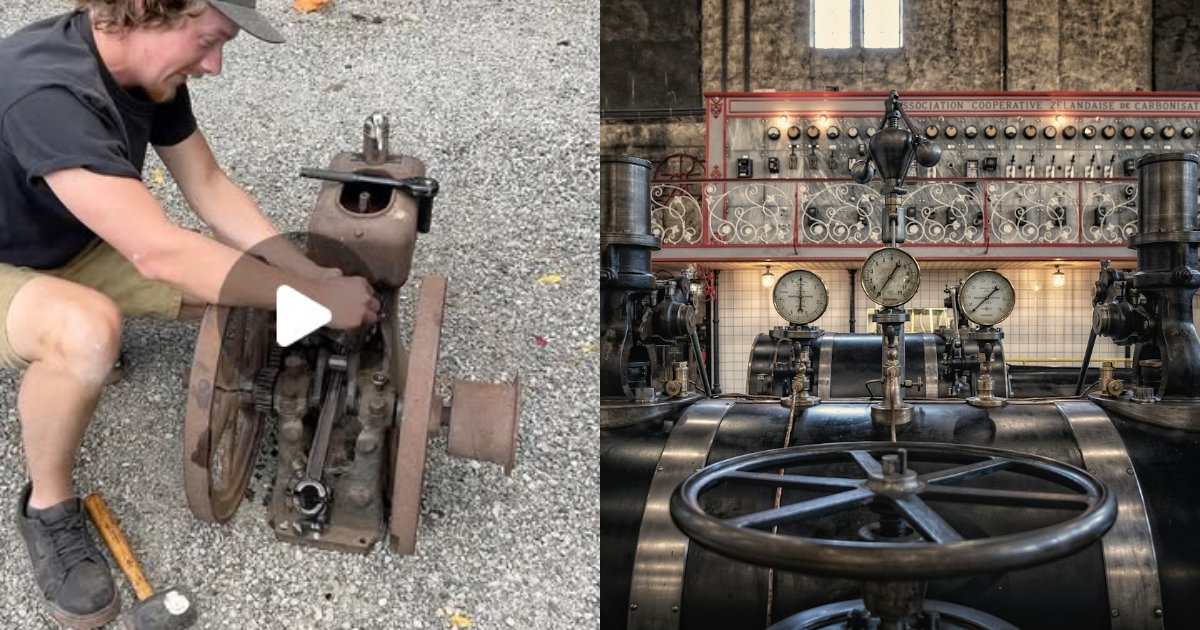
That is the setup for this restoration, where a young mechanic is trying to wake up a cast iron stationary engine that is described as ninety nine years old. Every step comes with honest running commentary about what he is hoping for and what worries him.
The project belongs to @the_barn_brothers, and this chapter picks up with the piston, the rings and the cylinder, which are the parts that decide whether an engine like this can run again.
View on Instagram
Tapping the piston out
He starts on his knees beside the engine, using a hammer and a wooden drift to gently work the connecting rod and piston out of the block. Wood is a smart choice for the job, because it pushes without marring the metal. At first he thinks a piston ring is snapped, then realizes the rings are simply cut at an angle, which is how they were made. The bad news is that every one of them is stuck in its groove.
Once the piston is out, he takes it to a workbench and wipes the grime away. There is some minor scoring, but the rings do not feel terrible, and the top one is already coming free. He puts penetrating oil into the ring grooves and lets it soak, which is a patient approach that tends to work better than forcing things.
Reading the cylinder
Back outside, he checks the cylinder bore with a cloth. His last engine had a crack in the cylinder, so he looks at this one more carefully. He can see where the piston was resting, and he figures the engine was exposed to the elements for a long time, but it seems good enough to continue.
He also addresses the people who would tell him to move it to a bench. The engine is too heavy to lift, he can barely get it to where it sits, and he does not own a bench sturdy enough for it, so the work happens on the ground. Then comes a small win: this engine has a head gasket, which makes reassembly simpler.
Next he uses a cylinder hone on a cordless drill, running it back and forth to smooth the bore. He keeps going because it is working well, and then calls the cylinder good enough for now.
Cleaning the rings and the grease cups
With the bore handled, he scrapes carbon from the piston and warms the piston assembly with a small torch before putting it into an ultrasonic cleaner to free the stuck rings. While that runs, he uses the waiting time to clean out the grease cups and clear oil ports with rags, compressed air, little wooden sticks and cotton swabs. The barn dust comes off, and the old parts clean up better than expected.
Why stuck rings matter on an old engine
Piston rings seal the gap between the piston and the cylinder wall and help control oil. When rings stick in their grooves, usually from old oil, varnish and rust, the engine loses compression and will be hard to start. Freeing them gently is almost always worth trying before replacing anything, especially on a rare engine where parts are hard to find.
Hit and miss style stationary engines were built to be simple, which makes them a popular project. Even so, an engine that sat for decades deserves a full inspection of the bore, the piston, the valves, the lubrication points and the ignition before any attempt at a first run.
Tips for tackling a stuck engine at home
For anyone with a similar project sitting in a barn, a calm checklist helps.
- Soak the cylinder and ring grooves with penetrating oil over several days, and turn the engine by hand gently now and then.
- Use wood or brass tools to tap parts, so the iron is not damaged.
- Take photos and keep parts in labeled containers, because old engines rarely come with manuals.
- Check the bore for cracks and pitting, and measure wear before deciding to hone.
- Clean every oil port and grease cup, since lubrication is what keeps a restored engine alive.
Heavy cast iron engines can pinch fingers and injure backs. Use blocks, a second set of hands or a proper hoist, and if a part is structurally cracked, talk to a qualified machinist before running it.
The patient approach
What stands out in this chapter is the temperament. He admits when something does not go the way he hoped, notices details such as the angled rings, and does not rush. That mix of curiosity and patience is what turns a pile of seized iron back into a running piece of history.
Credit for the original post goes to @the_barn_brothers on Instagram.
More from Steel Horse Rides
- Creator Documented The Tense Final Seconds Of Bidding On A Luxury Rezvani Tank At A High Stakes Auction Before Finally Winning His Dream Off Road Machine
- Towing Company Needed Multiple Off Road Vehicles Just To Pull One Ordinary Sedan Out Of Wet Beach Sand In A Recovery That Took Far Longer Than Expected
- Creator Rescued And Attempted To Start A 1971 Citroen DS21 That Had Been Sitting Completely Untouched Inside A Belgian Barn Since All The Way Back In 2005