

Some trucks wait a long time for their next bath. Detailer @wddetailing recently got his hands on a 1977 Ford F-250 Custom that spent the last 35 years parked in a barn, and by his own account the layer of dirt and dust on it was thicker than anything he had worked on before.
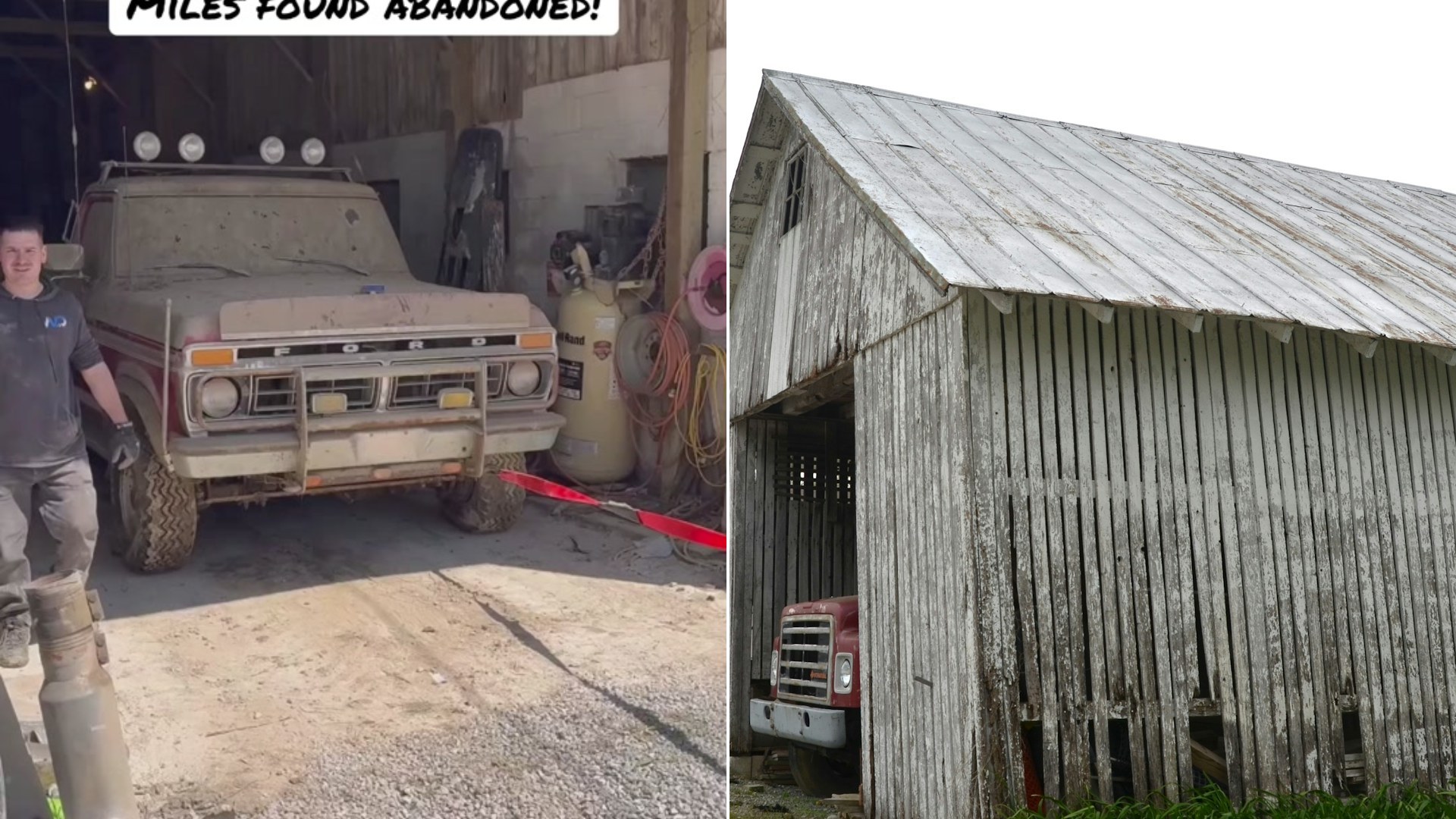
The number that stopped him in his tracks was the odometer. After all those years of sitting, the old Ford showed only about 17,000 miles. He warned that this one was going to make a real mess of the shop, and then he got to work.
@wddetailing
What the detailer said about the truck
According to the detailer, the truck had been sitting in the barn for roughly 35 years, and it carried just 17,000 miles. He described the build-up of dirt and dust as the thickest he had come across, which is a big statement from someone who cleans neglected vehicles for a living. The caption on his post called the truck abandoned and used the same mileage figure.
He did not sugarcoat the interior either. When it came time to move inside the cab, he said the truck was filthy and that he needed to put his mask on before doing anything else. That is a smart move, and we will come back to why in a moment.
The detailer did not say what happened to the owner or why the Ford ended up in the barn, so we will not guess. What we can say is that a truck that old with so few miles on the clock is a rare find, and it suggests the Ford saw very little use during its working life.
A quick look at the 1977 F-250
The 1977 F-250 belongs to the sixth generation of Ford’s F-Series, built for the 1973 through 1979 model years, according to Wikipedia’s overview of that generation. Many folks call these the “dentside” Fords because of the sculpted body sides. The F-250 is a three-quarter-ton truck, and in 1977 it was offered in Custom, Ranger and Ranger XLT trims. Custom was the standard, no-frills choice, which fits a hard-working truck that spent its life as something other than a show piece.
Under the hood, buyers that year could choose from a 300 cubic inch inline six, a 302 small-block V8, the 351M and 400 V8s, or a big 460 V8 on two-wheel-drive trucks. The 1977 model year also holds a bit of history. That was the year the F-Series passed the Chevrolet C/K to become the best-selling truck in America, a title Ford has held ever since.
So even though a plain Custom might not sound glamorous, this is the kind of truck that built a reputation for toughness. Finding one with such low mileage makes it a standout among survivors of its era.
Why the mask matters
When a vehicle sits shut up for decades, the dust is only part of the story. Mice and other small critters often move into stored cars and trucks, and a closed cab can hold old nests and droppings. Classic Motorsports’ guide to reviving a long-stored car specifically tells owners to vacuum the interior and check for rodent nests before anything else. If you ever tackle a barn find yourself, wear a mask, gloves and eye protection, wet down heavy dust rather than blowing it around, and ventilate the space well.
If you find a truck like this, here is the smart order of work
Barn finds are exciting, but the order you do things in can save both money and headaches. The same Classic Motorsports guide lays out a sensible plan, and it starts with cleaning the car inside, outside, in the engine bay and underneath. After that, it recommends working on the systems in this order: brakes, fuel, cooling and electrical.
- Brakes first. Check the fluid level, the lines and hoses, and the master cylinder. Rubber brake hoses on a vehicle this old should be replaced, and the whole system should be refilled and bled before the truck goes anywhere.
- Fuel next. Old gasoline turns to varnish, so it should be drained. Fuel hoses can rot from the inside, and the carburetor usually needs cleaning on a truck from this era.
- Cooling and belts. Replace the old hoses, the thermostat and the belts, and check that the water pump spins freely.
- Electrical. Clean the battery posts, the ground connections and the starter terminal so the truck has a solid path for power.
- Tires. Expect rotted rubber after decades of sitting, and plan to replace the tires before any real driving.
- Oil and first start. Change the old oil, and consider pulling the spark plugs to add a little oil to the cylinders. When it is time for the first start, do it outdoors with a fire extinguisher nearby, and keep the first few drives short.
Why a deep clean comes first
A long wash-down is more than a showy moment. Caked-on dirt hides leaks, rust and damage. Once the grime is gone you can see where oil or fluid has dripped, where the frame has rusted and which rubber parts have cracked. Cleaning the underside and the engine bay first also keeps all that dust and dirt from getting into freshly serviced parts later.
That is why a detailer is often the first stop for a barn find. Even a truck that will eventually be restored properly benefits from the first good scrub, since it turns a mystery into a to-do list. And if the owner decides to keep it as a survivor, a careful wash and an interior clean can protect original paint and upholstery without erasing the history that makes a low-mileage truck so valuable.
A few tips for protecting an original-condition truck
Collectors tend to prize unrestored trucks with low mileage, so it pays to go slowly before changing anything. Take photos before cleaning. Test any cleaner on a hidden spot first. Keep old paperwork, owner’s manuals and original parts, since they add to the story and the value. And if you are not sure what a part is worth, ask an expert before you toss it in the trash.
The detailer did not say what will happen to the Ford next, so it is hard to say whether it will be sold, restored or simply enjoyed as it is. Whatever the plan, one thing is clear from his reaction. Trucks like this do not turn up every day, and a barn sitting for 35 years can hold a lot more than dust.