

A dead car on a hot highway is a miserable place to be, and that was where one driver found himself when a stranger pulled over to help. The man who stopped was @mattthemechanic43, a mobile mechanic who told the stranded driver something he did not expect to hear: the repair would not cost him a dime.
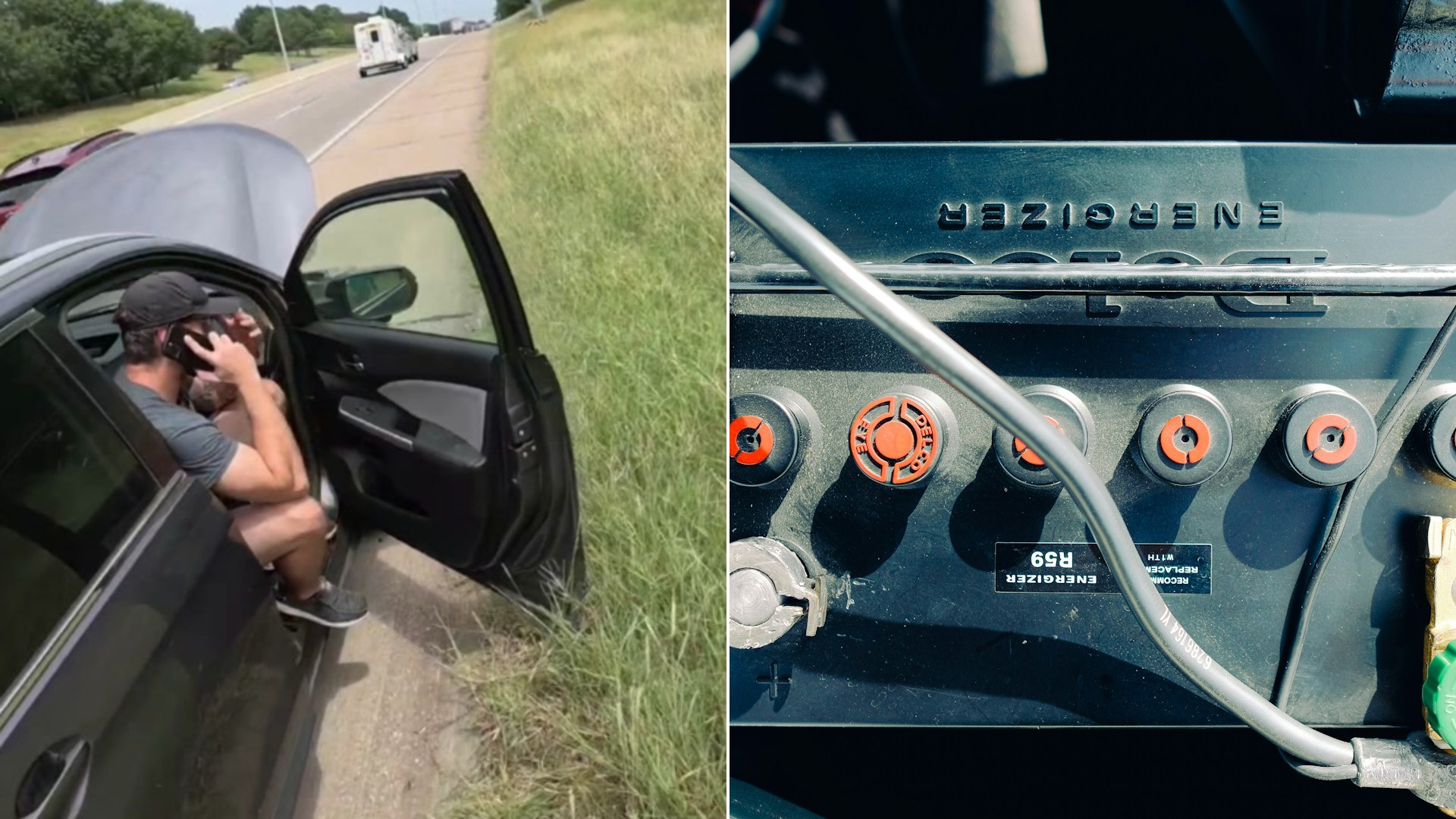
The driver’s 2015 Honda CR-V had no power at all. Matt tested it right there on the roadside, figured out what was wrong, went and bought the part and installed it. Along the way he explained how he pays for it, and the way he described it is a story all its own.
@mattthemechanic43
Testing the car on the side of the road
Matt started by asking whether the car had just died on the driver. He offered to take a look and see what he could fix right there off the side of the road. The driver said he had no power inside the car, nothing at all.
Matt hooked up his jump pack and asked the driver to try cranking the car. His thinking was that it would either be a battery or an alternator problem, and he wanted to test the alternator. The car started for a moment and then died again. Matt guessed it was probably the battery, and he offered to go grab a new one if the driver did not mind hanging out for a few minutes. He told the driver that if he preferred, he could wait for his family instead.
Free repairs, paid for by donations
Then Matt explained the deal. He said the driver probably did not know who he was, but that he does not charge for repairs, and everything is free. He said people donate to his channel, and that money helps cover the cost of fixing cars for other drivers. He also described how he works: he drives around looking for people who are stuck. As it happened, he lived right there and had only just gotten on the highway.
He asked the year of the car, headed to the parts store, and told the clerk he needed a battery for a 2015 Honda CR-V. He also asked whether they carried an alternator, because he was not sure which part had failed. They had only one alternator in stock, so he grabbed it too, crossing his fingers that it would not be needed. In the end he said he had actually bought the alternator just in case, so he could knock out the job if it turned out to be the problem.
Back at the car, Matt installed the new battery and ran a test to see if the alternator was healthy. He asked the driver to turn on the heater, even though it was hot, and then to bring the engine speed up while he checked the readings. Everything passed. The old battery, he said, had a bad cell, and it was completely depleted. The alternator was fine, so he planned to return it.
How the numbers worked out
As the job wrapped up, Matt told the driver that donations to his channel are how people send money, and that his information is in his profile. He then shared a detail that made the whole thing feel almost fated. The day before, he said, someone had donated around $250, and the battery he had just bought cost about $200 to $212. He said it is strange how often a donation lands almost exactly on the cost of the next repair.
The driver was grateful. Matt told him he was glad he got out of the heat, wished him well and sent him on his way with a car that was nice and cold.
Battery or alternator? How to tell
The roadside test Matt used is a classic, and anyone can learn the basics. According to Les Schwab’s guide to starting problems, here is how to sort out which part is failing.
- The jump-start test. If a jump gets the car running, the battery is the likely culprit. If the car dies again soon after, suspect the alternator. The guide puts it simply: if jump-starting works, it is probably your battery.
- Battery signs. Dim dashboard or interior lights, slow windshield wipers, slow power windows, corroded terminals, a swollen battery, sluggish cranking, or no sound or lights when you turn the key.
- Alternator signs. Headlights that dim and brighten, frequent stalling after the engine starts, a squeal that gets louder with the heater or stereo on, a check-engine or battery light, or a car that stops running soon after a jump.
- The radio test. Tune an AM radio to a low frequency and rev the engine. A whine or fuzzy sound can suggest a failing alternator.
The same guide notes that a battery that has been starting your vehicle for more than four years may simply be at the end of its life. And while you can drive a short distance with a failing part, not for long. A bad battery will leave you stranded at the next start, and a bad alternator drains the battery and can stall the engine while you are driving.
What to do if your car dies on the highway
A few safety basics matter even more than the diagnosis. Progressive’s breakdown guide suggests the following.
- Lift off the accelerator and coast gently to the shoulder, away from traffic, then set the parking brake.
- Turn on your hazard lights, and place flares or reflective triangles behind the car if it is safe.
- Stay in the vehicle with your seat belt on on a busy road, since the guide advises against getting out to inspect damage or make repairs there.
- Note your location, such as the nearest exit or mile marker.
- Call your roadside assistance provider, your insurer or a tow service.
Keeping your battery healthy
- Get it tested every year after year three. Many parts stores and shops will test it for free.
- Keep the terminals clean. Corrosion on the posts can mimic a dead battery.
- Take longer drives sometimes. Short trips do not give the alternator time to recharge the battery fully.
- Do not ignore warning signs. Slow cranking or dim lights are your car asking for attention.
- Keep a jump pack in the trunk. A small portable unit can save you a long wait.
It is a heartwarming story that shows how a single act of kindness can grow into a regular habit of helping strangers. For one driver on a hot highway, a bad battery ended up being the beginning of a good day.