

A truck owner came into a Chevy shop last month with a 5.3 that would not start at all. As the mechanic tells it, the man was already pricing a cam actuator job, the kind of repair that runs into the thousands of dollars, and was resigned to it before anyone had asked to look under the hood.
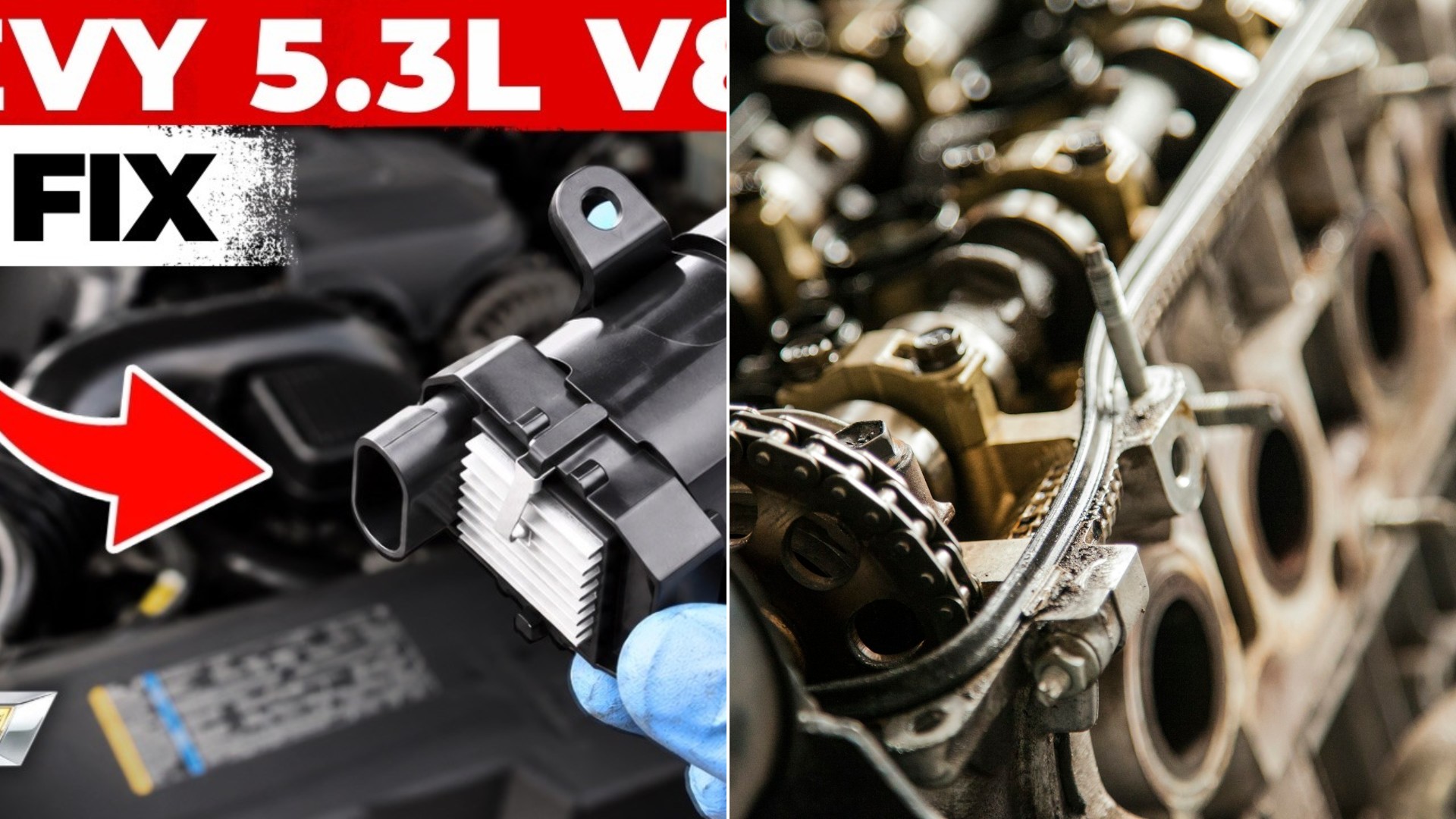
Then, he says, he spent about five minutes actually diagnosing it, cycled one part that cost less than the owner’s last oil change, and the truck fired right up on the first try. The owner sat in the driver’s seat for a second, not quite believing it, and asked if the mechanic was sure that was really it.
The story comes from a mechanic who gives his name as Jerry on the @ChevyMechanic channel. He says that after 30 years working on Chevys he has lost count of how many owners were one signature away from authorizing a repair they never needed. His point is blunt: most expensive 5.3 repairs do not start with a bad mechanic. They start with somebody pricing the worst answer before anyone has ruled out the cheapest one.
Everybody blames the lifters
Jerry says the minute a 5.3 starts acting up, everybody reaches for the same word: lifters. He does not pretend that fear is made up. A collapsed AFM or DFM lifter is, as he puts it, a real documented failure on these trucks. But a misfire code tells you where the problem showed up, not what caused it, and treating the two as the same thing is how a $40 part turns into an unnecessary lifter conversation.
The six checks he runs first
- Cranks but will not start. He says GM documented this scenario on certain 5.3 trucks, and the cause can be a camshaft position actuator solenoid that is stuck or binding. Before anyone opens up the front cover, he cycles the solenoid with a scan tool and tries to start it again. That test costs nothing but scan access, and if the truck still does not fire, he says the solenoid itself runs about $35 to $50. His rule: prove the timing problem before you buy timing parts.
- Oil pressure reading drops on the dash. Before anyone says the word pump, he puts a mechanical gauge on the engine. He says the real pressure is often fine and the sensor, or a small screen under it, is the one lying. He tells of a driver who pulled onto the highway shoulder sure he was about to hear a knock, only for the mechanical gauge to show normal pressure. The truck, he says, went another 80,000 miles after the sensor was sorted out. Sensor and screen run around $20 to $40.
- Flashing check engine light and a shake at idle. He pulls the coil from the misfiring cylinder and swaps it with the one next to it, which he says takes about 90 seconds and no special tools. If the misfire follows the coil, that is a roughly $40 part and not a four figure teardown. If it stays put, he is upfront that the lifter, injector or compression are back on the table.
- A rattle or squeal from the front of the engine. Sound travels strangely through an engine bay, he says, so he isolates it first, sometimes by pulling the accessory belt and sometimes with a mechanic’s stethoscope on each pulley. A worn tensioner or bad idler pulley can sound like something internal. He describes a customer who was convinced his timing chain was going, and the noise was gone the same afternoon after a new tensioner. He puts that part at about $30 to $50.
- Stalls or will not catch, especially when warm. On a lot of these trucks, he says, that points to a crankshaft position sensor, a part he prices at $40 to $75. He admits this one is not a quick swap: the sensor sits behind the starter, and the truck needs a relearn with a scan tool afterward. He checks the wiring first, since a damaged wire can cause the same symptom.
- Hard start or stumble right after fueling. People head straight for the fuel pump, he says, but he points to a purge valve that can let vapor into the engine at the wrong moment. He describes replacing one on a Suburban whose owner had lived with the problem for months, and the very next tank started normally. He puts the part at around $30 and says to make sure someone has checked it before you authorize a fuel pump job or let anyone drop a tank.
He is careful to add that none of this means a 5.3 is fragile or that these trucks are falling apart on people. His own summary is worth remembering: a $50 part is not cheap if you guessed wrong, so test first and let the truck prove what it actually needs.
How to avoid paying for the wrong repair
- Ask what was tested. A good shop can tell you what they measured and what the results showed, not just what they think is wrong.
- Ask for the codes. A code points to a circuit or system, not always to a single bad part.
- Get a second opinion on big jobs. If the quote is in the thousands, another shop looking at the same truck for an hour of labor is cheap insurance.
- Keep the old part. Ask to see what was replaced. An honest shop will not mind.
The owner in this story came in ready to pay for the worst case. By the mechanic’s account, he left with a running truck and a story, and it took five minutes and someone willing to test before pricing the worst answer.
More Stories You May Like
- Car Buying Expert Lists The Sleazy Dealership Tricks That Take Advantage Of Shoppers From Add Ons On The Final Paperwork To Forcing You Into Their Financing
- Roots Grew Under The Wheel Of A Forgotten 1964 Impala SS 409 And Grandpa Got Emotional When It Fired Up Again After Eighteen Years Of Silence
- Barn Find 1967 Shelby GT350 That Sat For More Than 37 Years Sells For $135,000 At A South Dakota Auction, And The Story Behind The Car Is Even Better Than The Price