

Every car owner has a nightmare about handing over the keys, paying a big bill, and driving away with the problem still there. A mechanic named @FordTechMakuloco, working on a 1997 Ford F-150, says he found something worse: a repair that was done wrong in a way that anyone looking closely could have caught.
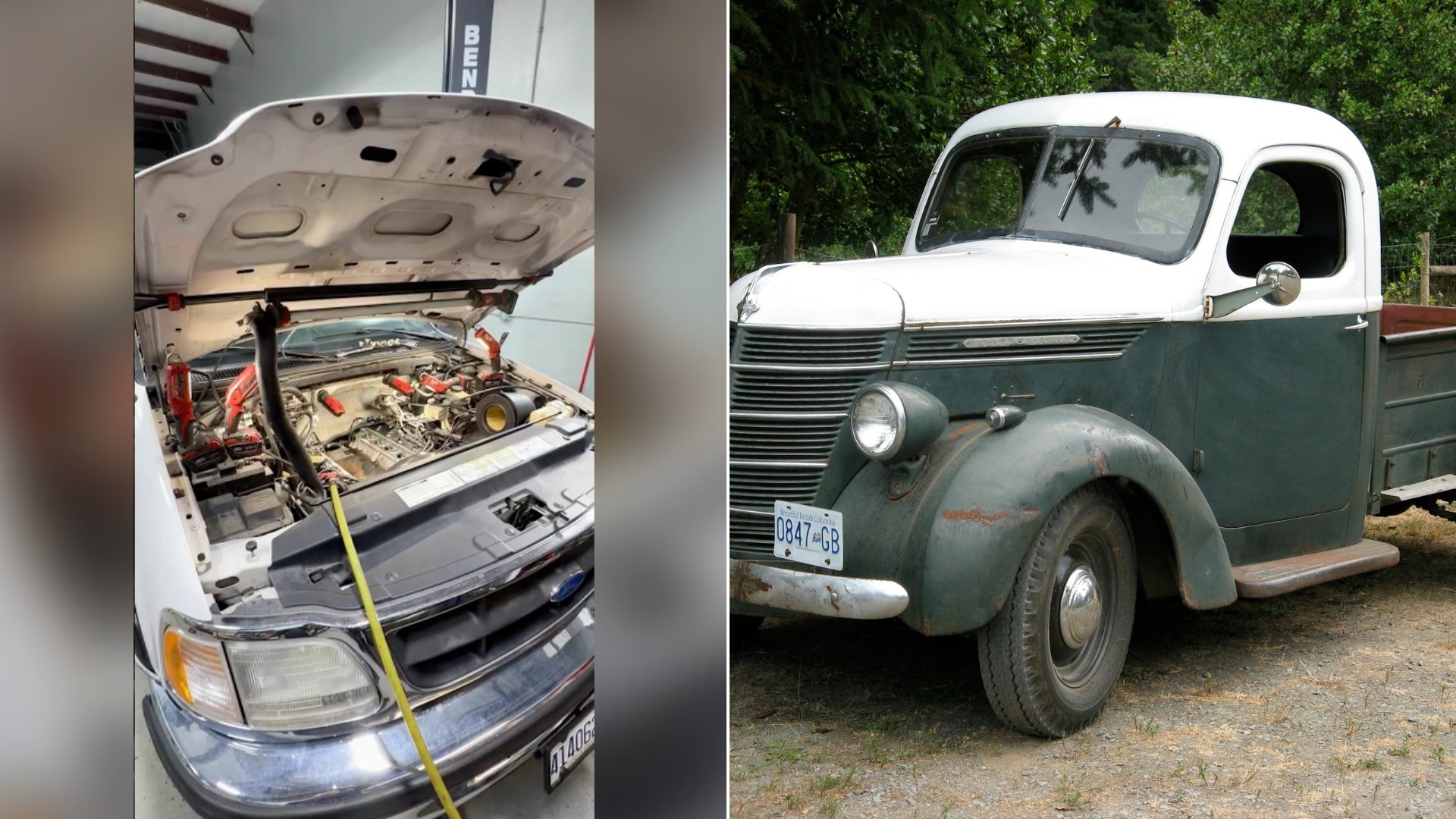
The truck is a 4.6 liter, two valve V8. It came to him with a code for the cylinder head temperature sensor, or CHT. In plain terms, the circuit was reading high, and a high reading means high resistance, which means the circuit is open. Something between the sensor and the computer was not connected the way it should be.
On this engine, he explains in his own walkthrough, the CHT sensor sits right up in the front. There is a little port, a short jumper wire that comes up and around, and that jumper connects into the main harness. With the intake off, the sensor was easy to reach, so he disconnected it and began testing for resistance.
The first thing he noticed was that something looked off. Inside the connector, the two prongs were both sitting on the same side. Yet on the other end, where it plugs in, the two terminals were crisscrossed, set diagonally. They did not match. You could even see the old locations, he says, with holes at the top and bottom where the pins used to be. His first thought was that someone had put in the wrong jumper.
So he pulled the correct part to compare, and that settled it. The right jumper, with the diagonal terminals, fit where it belonged. The one in the truck had been plugged into the wrong part of the harness, so the connections were reversed. He lays it out in a way that is hard to argue with. “See? There you go. You can see them in there. See your diagonal? Told ya.”
His verdict is pointed. This story, he says, is brought to you courtesy of your local Ford dealer, and he believes whoever did the earlier work simply connected it up without knowing where it went and sent the truck down the road. He figures the customer was probably charged a boatload for it. He signs off with a sarcastic line: another quality job by your local Ford dealer.
A fair word about this story
This is one mechanic’s account of one repair, and the claim that a dealer did the earlier work is his. Not every dealer is careless, and plenty of independent shops make mistakes too. What the story does show is something real: a connector that does not match, and a part installed the wrong way, can cost a customer money and time. It is a good reminder of how to protect yourself.
How to protect yourself at the repair counter
- Get it in writing. Ask for a written estimate before work begins and an itemized invoice after, listing parts and labor. If the work needs to be redone, that paper is your proof.
- Ask for your old parts back. It is your right in many places to ask, and it is a simple way to confirm that parts were actually replaced.
- Ask what was tested. A trouble code points to a circuit, not necessarily to one bad part. A good technician will tell you what they measured before replacing anything.
- Check the warranty. Ask how long the repair is covered and whether that includes labor. Get that in writing too.
- Come back right away. If the same warning light returns soon after a repair, go back to the same shop first and give them a chance to make it right. Date every visit.
- Get a second opinion. If the problem returns and you do not trust the first shop, an independent shop can look at it, and your records will help them.
Why a bad connection causes so much trouble
Modern vehicles, even one from the late nineties, depend on small sensors and a computer that trusts what they report. The cylinder head temperature sensor tells the computer how hot the engine is running so it can adjust and protect the engine. If the signal is open or reversed, the computer may set a code, and the vehicle can run poorly. A connection plugged into the wrong spot can look like a failed sensor, which sends owners and shops chasing parts that were never bad. That is why careful technicians test first.
It is also why the small details matter. A wire that looks right at a glance can still be wrong, and the mechanic in this story only caught the mistake because he stopped and noticed that two sides of a connector did not match. That kind of attention is what you are paying for. If a shop cannot explain what they found, show you the old part or the test result, and stand behind the work, keep looking. Good mechanics are out there, and they are glad to be asked questions.
More Stories You May Like
- Car Buying Expert Lists The Sleazy Dealership Tricks That Take Advantage Of Shoppers From Add Ons On The Final Paperwork To Forcing You Into Their Financing
- Honda Owner Went For A Coupon Oil Change And The Dealership Said The Oil Pan Was Leaking Until An Independent Shop Looked And Found No Oil At All
- Family Sold Their Grandmother’s 1971 Plymouth Valiant To A Detailer For Five Hundred Dollars Cash After Twenty Seven Years In A Field And He Made It Shine Again