

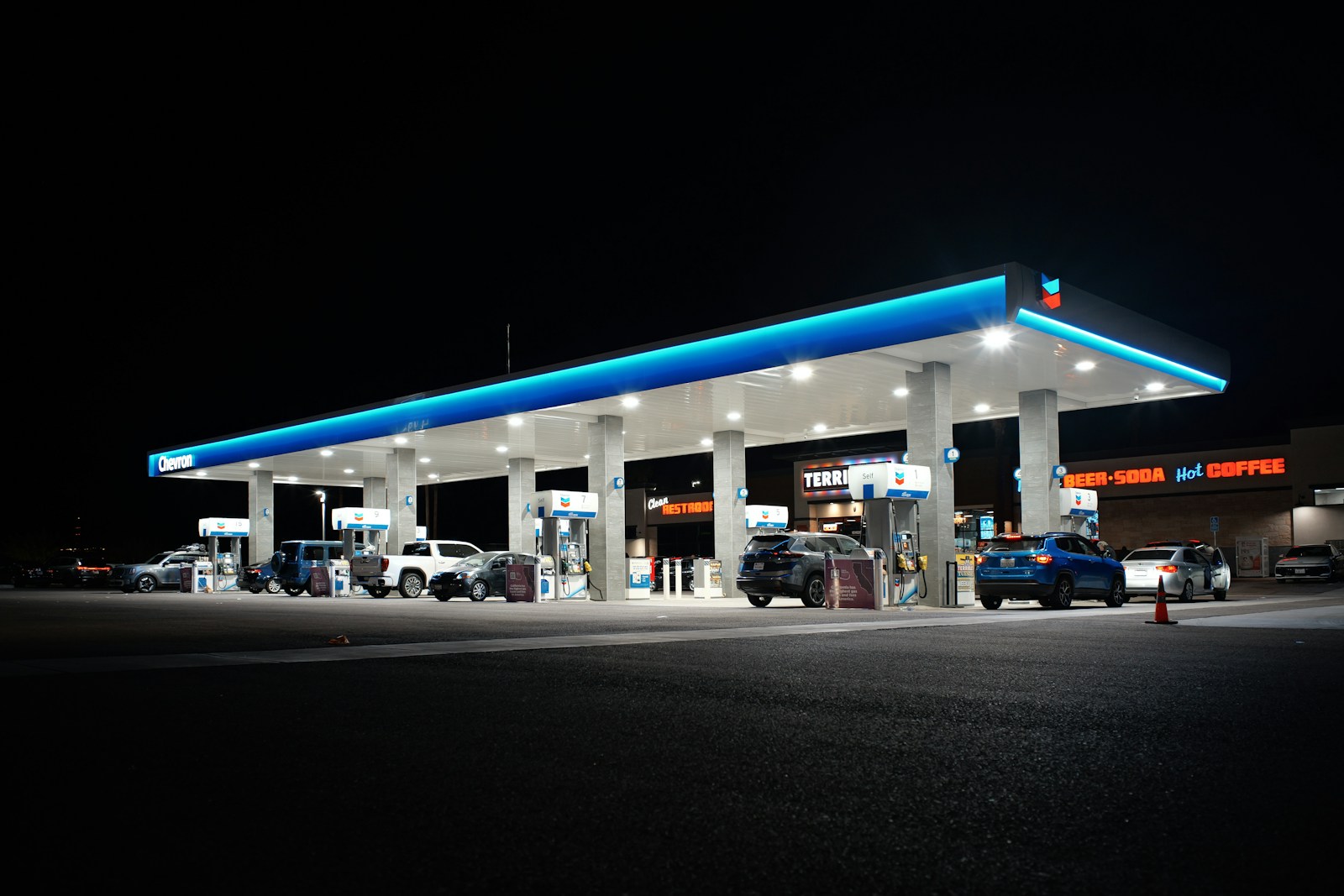
Pull up to the pump this fall and you may have felt it in your stomach before you saw it on your card. AAA reports that gas prices reached a record high for the autumn season. In its Fuel Prices release dated October 8, 2026, the national average hit $4.36 a gallon, compared with $3.12 a year ago and $4.15 a month ago. Read the details on the AAA Fuel Prices page.
That is a jump of about $1.24 a gallon in twelve months. And what you pay depends on which side of the country you fill up on.
What That Looks Like At The Pump
Just for the sake of simple math, take a 15 gallon fill-up. At $4.36 a gallon, that comes to $65.40. At last year’s $3.12, the same fill-up would have been $46.80. That is $18.60 more every time, and for a household that fills up every week or two, it adds up fast.
Where It Is Priciest And Cheapest
AAA lists the most expensive and cheapest states in the release.
- Most expensive: California at $6.34, Hawaii at $5.63 and Washington at $5.46.
- Cheapest: Ohio at $3.71, Indiana at $3.72 and Georgia at $3.84.
The gap between California and Ohio is $2.63 a gallon. On that same 15 gallon fill-up, a California driver pays $95.10 while an Ohio driver pays $55.65. Same gasoline, same size tank, and a $39.45 difference.
What Is Behind The Price
Crude oil is typically the biggest single piece of what you pay for gasoline, so it is a good place to look. The AAA release notes that West Texas Intermediate crude, the benchmark often called WTI, settled at $88.28 a barrel. Other things matter too, including refining, distribution and state taxes, but when crude is up, the pump usually follows.
A Note On Timing
Gas prices move constantly, so the numbers above are a snapshot from early October. AAA’s page now shows a slightly lower national average, about $4.29 as of October 26, 2026, and the price dipped about five cents in one recent week. That is a bit of relief, but it is still far above where it stood a year ago. If you want the newest figure before you plan a trip, check AAA’s page for the current day’s average.
Ways To Stretch A Tank
You cannot control the price on the sign, but you can control how far a gallon takes you. None of these tips needs special equipment, and all are well known.
- Check your tire pressure. Under-inflated tires make the engine work harder. The right number is on the sticker in your door frame or in your owner’s manual.
- Ease off the gas pedal. Hard acceleration and sudden braking waste fuel, and smooth driving saves it.
- Slow down a bit on the highway. Most vehicles use more fuel the faster they go.
- Clean out the trunk. Extra weight means extra fuel, so do not haul around things you do not need.
- Skip the long idle. If you are going to be stopped for a while, turn the engine off when it is safe to do so.
- Combine errands into one trip. A warm engine is more efficient than several cold starts.
- Use the grade of gas your owner’s manual calls for. Paying for premium when your vehicle does not need it is money down the drain.
- Compare prices before you fill up. A few cents per gallon at the next exit can add up, though do not drive far out of your way to save a dime.
Planning Trips When Prices Are High
If you are headed out for a holiday visit or a weekend away, build the fuel cost into the plan ahead of time. Look at the price along your route, not just at home. Prices can change a lot from state to state, and the AAA numbers show how wide that gap can be. Filling up in a cheaper state before crossing into a pricier one, when you can, is an easy trick.
Know Where The Money Goes
One more habit is worth trying. For a month, write down what you spend on fuel each time you fill up. Most people are surprised by the total, and seeing it on paper makes it easier to decide where to cut back. Maybe a standing weekly drive can be shared with a neighbor, or a short errand can be done on foot. Small choices repeated every week are where real savings come from, and you do not need any special skill to make them.
The Bottom Line
AAA says the national average reached a record autumn high of $4.36 a gallon in early October 2026, up from $3.12 a year earlier. California drivers paid $6.34, while Ohio drivers paid $3.71. The price has eased a little since then, but it is still well above last year.
It is no fun to watch the numbers climb while you stand there holding the nozzle. But with a few smart driving habits and a bit of planning, you can keep more of that money for things you actually enjoy.
More Stories You May Like
- True Barn Find 1967 Corvette L71 427 Is Found in Georgia with Only Three Thousand Miles on It
- Classic Car Hunter Chases Down a Rare 1969 Mustang 428 Super Cobra Jet With a $50,000 Asking Price, Then Sees What Kind of Shape It Is Really In
- Car Buying Expert Lists The Sleazy Dealership Tricks That Take Advantage Of Shoppers From Add Ons On The Final Paperwork To Forcing You Into Their Financing