

Some repair jobs leave a mechanic shaking his head. This one left @allchipnodip06 without a single word to say. In a short clip set only to music, he walks through two Kia sedans with their back seats pulled up, showing the mess underneath. His caption sums up his mood: “Completely lost for words.” Then comes the kicker. According to him, Kia is not buying them back.
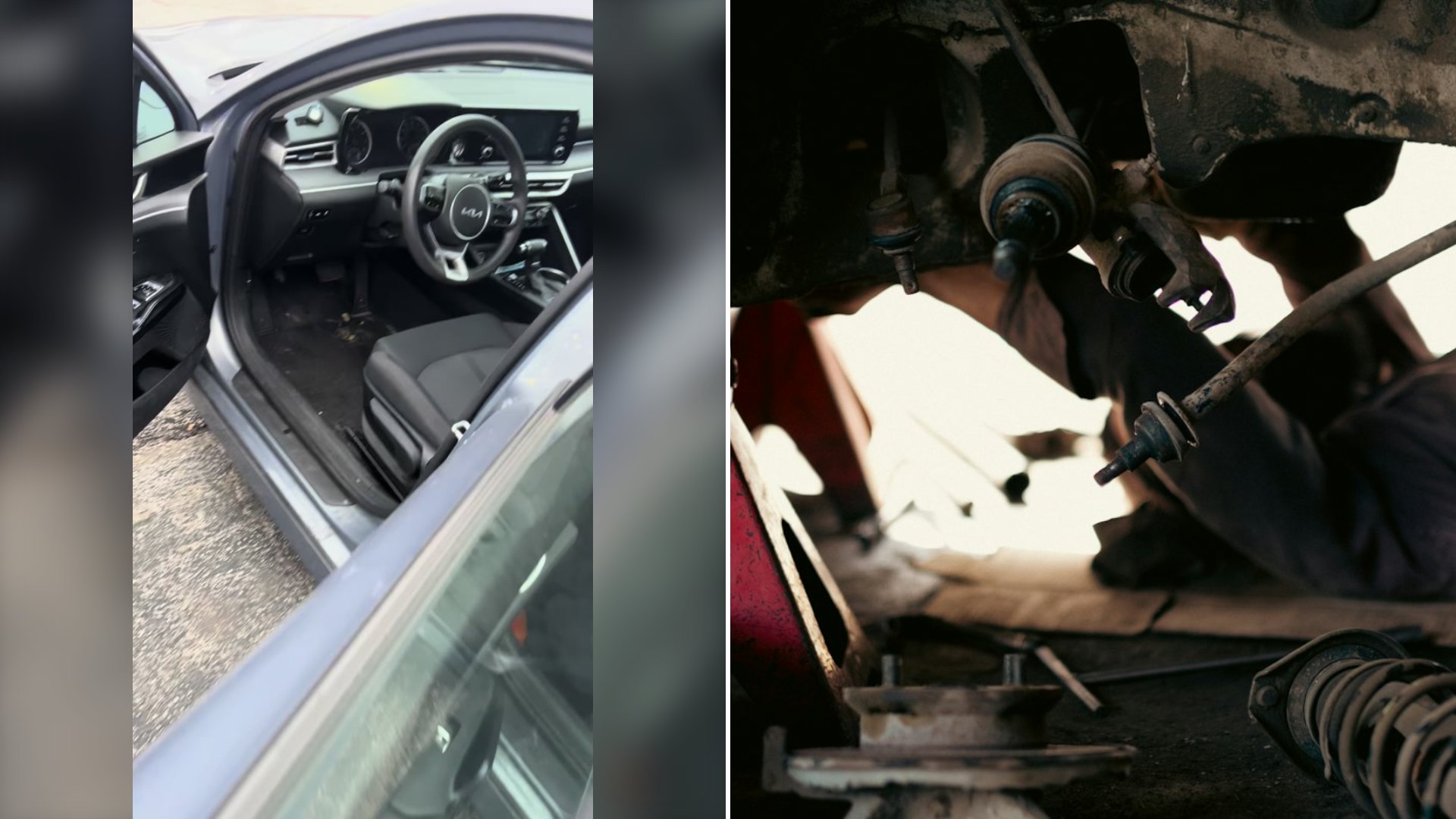
The video opens on a blue-gray Kia sedan in a parking lot, driver’s door open. The camera swings past the fuel filler door on the side of the car, a quiet hint at where this story is going, and then into the back seat.
That is where things get ugly. The rear seat bottom has been lifted out of position and is resting at an angle. Its underside is torn and patched, with ragged fabric hanging off it. The floor beneath is exposed down to the metal, and the sound-deadening material that normally lines it is shredded into long, fringed strips. A small pile of coins and a tangled bracelet sit in the middle of it all, the kind of lost treasures that collect under every back seat.
Two Cars, Same Story
He lingers on the damage from several angles, at one point waving a hand at the camera as if to say, “Can you believe this?” Then he walks to a second car, a white Kia sedan, opens the rear door and lifts the seat. The scene underneath is strikingly similar: torn padding, the seat bottom damaged on its underside, and the floor lining ripped apart.
The clip has no narration, so he never explains step by step what happened. What he does share are his hashtags, which include “gas,” “Kia forum” and “mechanic life.” In most sedans the fuel tank sits directly beneath the rear seat, with an access cover in the floor so technicians can reach the fuel pump and sending unit. That is the area he keeps showing, and it is clearly the part of the car he believes is to blame.
His laughing emojis after “Kia is not buying them back” suggest he has seen enough at this point that it has gone past frustrating into absurd.
@allchipnodip06
What Owners Should Know About Fuel System Trouble
The video does not spell out the exact failure, and only a hands-on inspection can say for sure what happened to these two cars. But fuel system problems in any vehicle deserve to be taken seriously, and there are warning signs every driver should know.
Trust your nose. A raw gasoline smell inside the cabin is never normal. Stop driving, park in a ventilated spot away from anything that could spark, and have the car towed or inspected before using it again.
Listen to the gas cap. A loud whoosh of air rushing in or out when you open the cap can point to a venting problem. A car’s evaporative emissions system is designed to manage fuel vapors and pressure in the tank. When a vent or valve in that system becomes blocked, pressure or vacuum can build up and, in some cases, deform the tank itself.
Watch the fuel gauge and the pump. Trouble filling up, a pump that keeps clicking off, a gauge that reads wrong, or a check-engine light can all be early signs that something in the fuel system needs attention.
Notice changes in the back seat. If a rear seat suddenly sits higher, feels lumpy or no longer latches properly, have someone look underneath. It may be nothing, but it is worth checking.
When the Automaker Will Not Buy It Back
A manufacturer buyback is usually tied to state lemon laws or a goodwill decision by the company, and the rules differ from state to state. If you are dealing with a serious defect, these steps strengthen your position.
Check for recalls first. Enter your vehicle identification number at NHTSA.gov to see any open safety recalls. Recall repairs are free at a franchised dealer. Also ask the dealer about technical service bulletins, which are repair instructions the manufacturer issues for known issues.
Document everything. Keep every repair order, receipt, photo and email. Lemon laws generally depend on how many repair attempts were made or how many days the car was out of service, so dates and mileage matter.
Open a case with the manufacturer. Call the automaker’s customer care line directly and get a case number. Put your complaint in writing as well.
File a complaint with NHTSA. Safety complaints from owners help regulators spot patterns that can lead to investigations and recalls.
Know the time limits. Most lemon laws cover new vehicles only for a set period or mileage. Your state attorney general’s office can explain the rules, and an attorney who handles lemon law cases can review your options, often at no upfront cost.
Shopping used? Look under the seat. If you are considering a used car, ask a trusted independent mechanic to do a pre-purchase inspection, and ask them to check the fuel system and the area under the rear seat. A few minutes of looking can save you from inheriting someone else’s headache.
As for these two Kias, the man who filmed them summed it up better than any repair order could. Sometimes the only honest reaction is to be completely lost for words.
More From Steel Horse Rides
- Dealers Use Lowball Trade In Offers And Bundled Deals To Hide What You Really Pay, So Negotiate Your Trade And Your Purchase Price Separately
- Volkswagen Tells ID.4 Owners To Stop Charging Past 80 Percent While A Battery Fire Recall Waits On A Fix For More Than 22,000 Vehicles
- Running Part Time 4WD On Dry Pavement Can Bind Up The Drivetrain And Lead To A Painfully Expensive Repair Bill, So Learn When To Shift Your 4×4 Properly