

Buying a used car from a stranger takes a certain amount of trust, and car flipper @abduflips has learned the hard way that some sellers do not make that easy. In a video he captioned, “Why Do I Have to Deal With These Kinds of Sellers?” he shares clips from Facebook Marketplace meetups that went sideways, including one seller who balked at a simple diagnostic check and another who insisted his car had never been in an accident. The vehicle history report told a very different story: two accidents and an airbag that had been deployed.
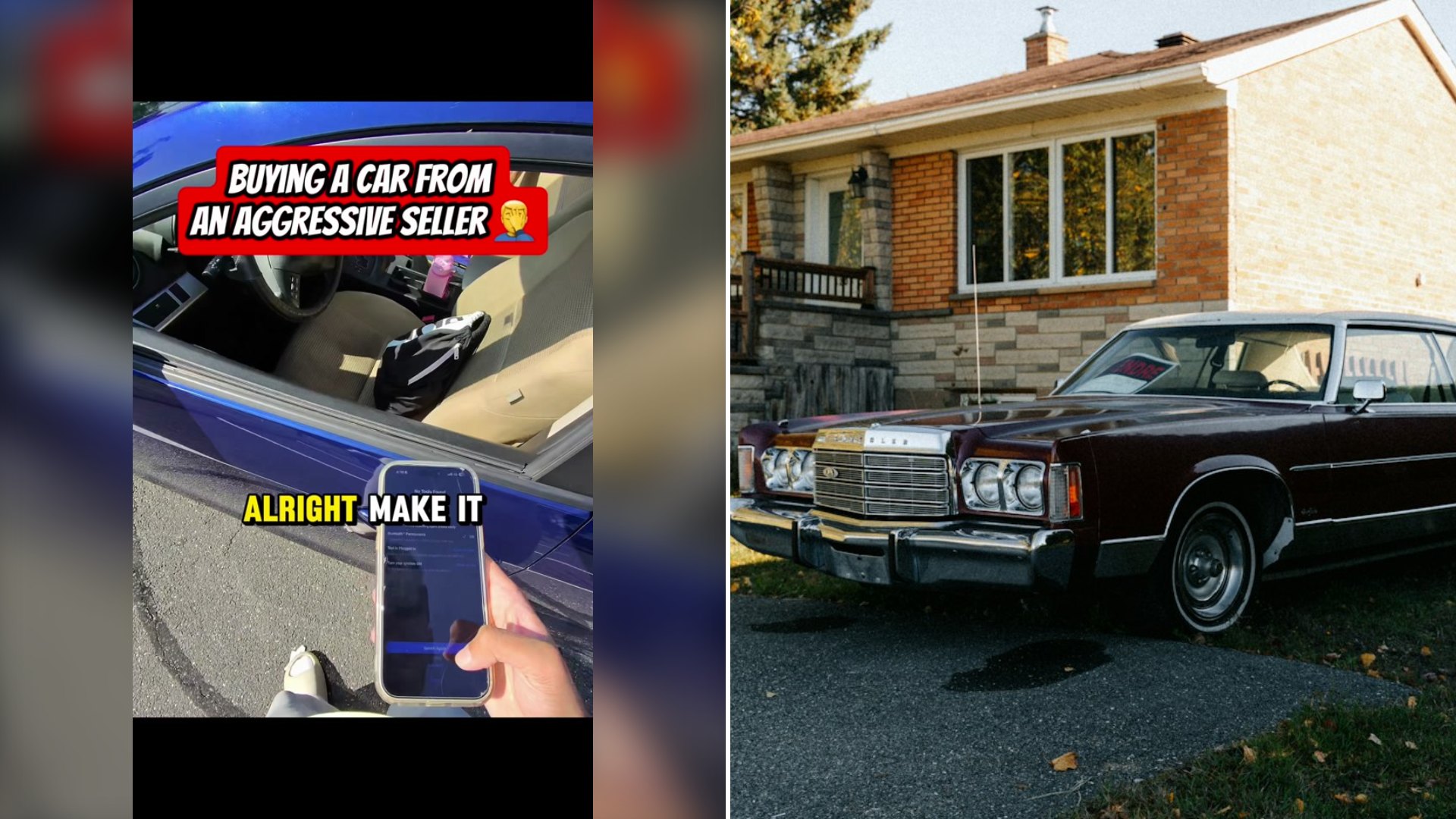
The first moments of the video set the tone. Arriving to look at a car, he makes his position clear: he is buying a car, and he is not simply going to hand over his money and walk away without checking it first.
His first step is a routine one for anyone who buys used vehicles. “I have an OBD scanner,” he tells the seller, explaining that he wants to plug it in. An OBD scanner reads the car’s onboard computer for trouble codes, the same codes that trigger a check engine light. The seller seems uneasy about having a device plugged into the vehicle and questions why it is taking so long. The flipper explains that it takes time to connect and that the small scanner has no screen of its own.
Then came the question every buyer asks: any accidents? The seller’s answer was no. So he ran the vehicle history report. It showed a past shop visit for an air conditioning compressor. It also showed something far more serious. “The car has two accidents and the airbag was deployed,” he says, before adding, “He’s straight up at this point just lying.”
He then turns back to the seller with the obvious question: “Are you sure there were no accidents on the car?”
@abduflips
Why a Diagnostic Scan Is Worth Insisting On
Every car and light truck sold in the United States since the 1996 model year has an OBD-II port, usually found under the dashboard near the driver’s knees. Plugging in a scanner takes seconds and does not harm the vehicle. Basic Bluetooth scanners that pair with a smartphone app are inexpensive and widely sold at auto parts stores and big box retailers.
A scan can reveal stored trouble codes even when the check engine light is off. Just as important, many scanners show “readiness monitors,” which are the car’s self-tests for emissions and engine systems. If several monitors read “not ready,” it can be a sign that codes were recently cleared, sometimes right before a sale to hide a problem. That does not prove anything by itself, since disconnecting the battery also resets them, but it is a good reason to ask more questions.
A seller who objects to a scan is not automatically hiding something. Some people simply do not understand what the device does. But a quick, calm explanation should be enough. If the seller still refuses, that tells you something too.
Do Not Take Accident History on Faith
Sellers may honestly forget an old fender bender, or they may have bought the car without knowing its past. Either way, the only safe approach is to verify. Before you meet anyone, ask for the vehicle identification number, or VIN, and run a history report through a service such as Carfax or AutoCheck. The federal National Motor Vehicle Title Information System, known as NMVTIS, also offers low-cost title history reports through approved providers.
A deployed airbag deserves extra attention. It usually means a significant impact. Ask whether the airbags were replaced with proper parts, and make sure the airbag warning light comes on briefly when you start the car and then goes off. A light that stays on, or never lights up at all, can signal a problem with the system.
Keep in mind that history reports only show what was reported. A crash paid for in cash at a small shop may never appear. That is why a physical inspection matters just as much as the paperwork.
A Safer Way to Buy From a Private Seller
- Do your homework before you drive over. Get the VIN and run the report first, so you do not waste a trip on a car with a hidden past.
- Look for signs of repair. Uneven gaps between body panels, mismatched paint shades, overspray on rubber trim, and new bolts on fenders can all point to past bodywork.
- Get a pre-purchase inspection. Many independent shops will inspect a car for roughly $100 to $200. A seller with nothing to hide will usually agree to let you take it in.
- Meet in a safe public place. Many police departments offer designated exchange zones in their parking lots. Bring a friend, and go during daylight.
- Check the title in person. Make sure the name on the title matches the seller’s ID and that the VIN on the title matches the car.
- Trust your gut. If the story keeps changing or the seller gets defensive about basic checks, it is perfectly fine to thank them and leave.
As this flipper’s experience shows, a few minutes of checking can be the difference between a fair deal and buying someone else’s wreck. A clean exterior and a confident “no accidents” are not the same thing as a clean history.
More From Steel Horse Rides
- Buyer Says Toyota Camrys and Priuses Are Almost Always the Smart Answer Because They Hold Their Value and Keep Running Well Past One Hundred Fifty Thousand Miles
- Driver Says He Just Went Around a Stopped Car in a Left Turn Lane and Headed Home Only to Be Ordered Out of His Tesla at Gunpoint
- Crew Rescues A Yellow 1977 Porsche 911 Targa That Sat In The Woods For About Twenty Years Then Power Washes The Dirt Off And Polishes Faded Paint