

Some of the best car stories start with a gut feeling and a price that seems too good to pass up. That is exactly how a 1967 Chevelle convertible ended up in the shop of DD Speed Shop. Dan, the man behind the channel, picked it up at an estate sale, tucked in the corner of a big barn. He had spent only seconds looking at it. By his own description, he bought it as a “total flyer gamble.”
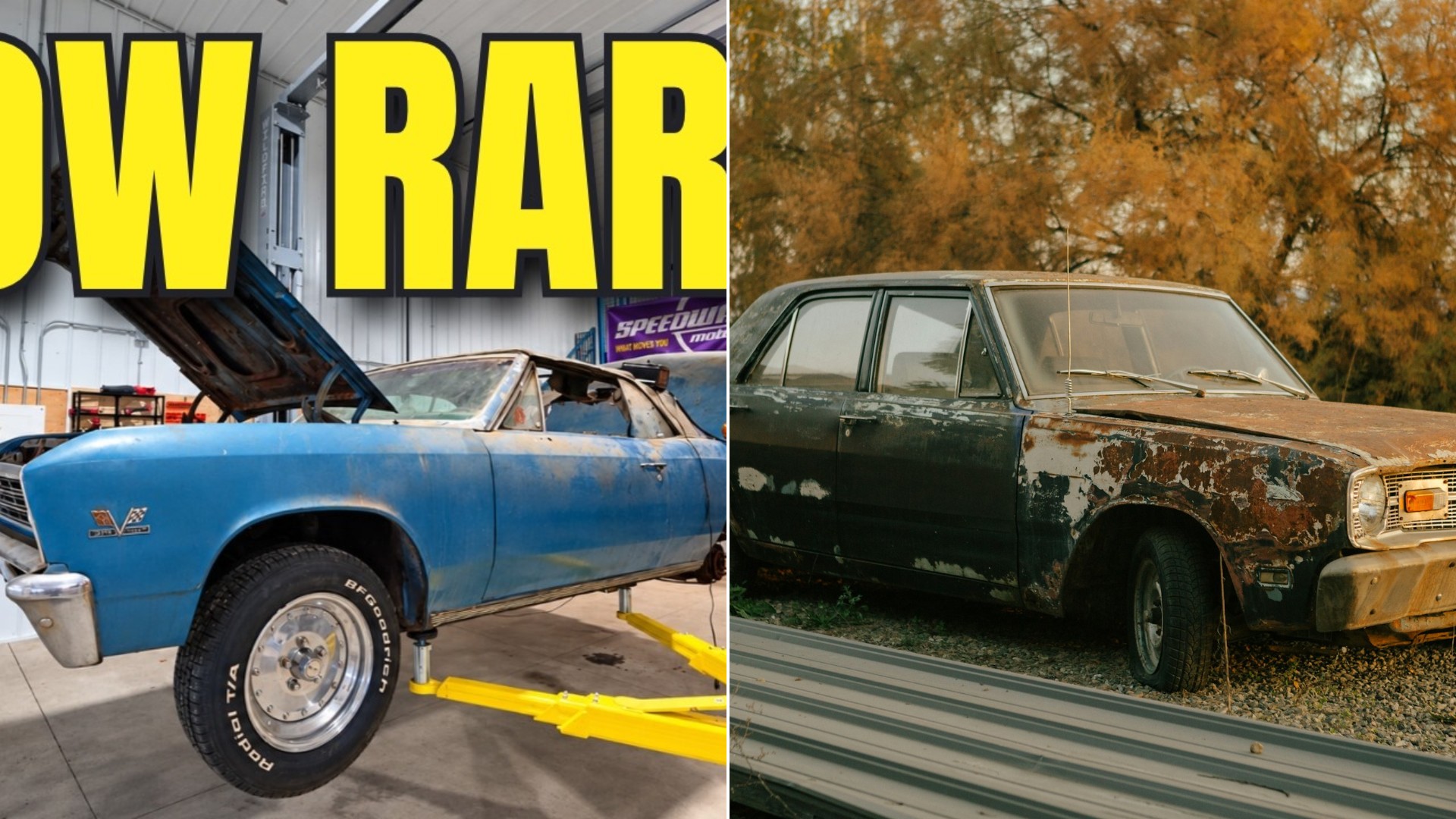
What caught his eye was simple. It was a convertible, it wore a 396 emblem, and it had that bulged hood. Under that hood, though, was a letdown: the data plate that should have been on the car was gone. The family selling the estate told him that if the tag turned up somewhere in the barn, it was his. Dan said they were a great family to deal with, and he made a point of not wasting their time.
Then he got it home and started digging.
The VIN Tells the Story
With no data plate, the VIN became the best clue he had. Dan pulled it and found what Chevelle fans hope to see: a 138 car, which he explained means a legitimate 396 Super Sport. The car also has the factory four-speed hump, the pedals, and the pieces in the back to match. What it does not have is an engine or a transmission. Both are gone.
That leaves a big question. Was it the 325-horsepower version, or the rare 375-horsepower setup, which Dan described as the king of the hill, a four-speed, 12-bolt convertible SS? He did not know yet. A buddy named Randy told him the VIN can be sent off to a service that reports the original options, though Dan wasn’t sure how that works. He also noted it likely only helps if the car was built in the United States, since this one appears to be a Toronto car that was brought to Alberta from Ontario decades ago. He sent an email off and was still waiting to hear back.
He did get one more hint from the rear end. After a long fight with a seized drum and some stubborn bolts, he got a look inside the differential and found a posi unit, a 12-bolt. A stamped code that he read as “KF” matched a 3.55 ratio when he looked it up. He also said that, in his research, 396 cars came with a 3.08 standard on automatics and a 3.31 on four-speeds, so that ratio could be a hint it was not a base big block. He was careful to say he wasn’t sure.
Going Through the Pile
The car came with a trunk full of parts, and Dan unloaded every bit of it on camera. The good news list is long: both door cards in nice shape, the kick panel, the console, seat belts, a Hurst competition shifter with its rods, the convertible switch, lug nuts, a Chevelle emblem, and even some new fuel tank straps. The back seat looked really nice. There was also what appeared to be a timing set and some valve covers that might be brand new.
The missing list is just as real. No gauges, no cluster, no front seats, and no data plate. A box of trim that he swore he saw has vanished. He also found pieces that clearly belong to other cars, including Tri-Five Chevy parts and an Oldsmobile item, which he planned to return to the gentleman who sold them.
How Bad Is the Rust?
Honestly, not terrible. Dan said the floors looked better than he expected, with a few crunchy spots that could be cut out and patched. The trunk floor needs a pan, and the wheel tubs need some attention. He felt the quarters had been replaced at some point, and not especially well, with sanding scratches and filler still visible. Up on the lift, the front end looked good, the bushings were fine, and it is a power disc brake car. His verdict was that it is very patchable and that he has seen far worse.
He also tried to coax the convertible top motor back to life. After cleaning the corroded pump and brushes, it ran for a moment, then a stuck ring ended the experiment. The roof will take more work.
Keep It, Sell It, or Restore It?
Dan admitted he isn’t a huge Chevelle guy or a convertible guy, yet he asked the question every old-car owner understands: a big block, four-speed, SS ragtop, how do you give up on that? He floated a cheaper plan, a used 454 and a T-10 four-speed for small money, as a driver. Then he said himself that it wouldn’t be proper, and that a car like this probably deserves a real restoration. He asked viewers to weigh in.
What to Know Before You Gamble on a Project Car
Dan’s story is a good lesson for anyone eyeing a car with missing pieces.
- Start with the VIN. On a car like this, the VIN and any surviving tags carry the real value, and a Chevelle’s VIN pattern can tell you whether it started life as an SS.
- Check the body honestly. Pull up carpet and mats where you can. Floors, trunk pan, and the area around the rear wheel tubs are where these cars usually rot.
- Count the missing parts. A drivetrain, gauges and a convertible top can add up fast, so price the whole job before the purchase, not after.
- Get a second set of eyes. Dan leaned on a friend for advice, and that is wise when your heart is running ahead of your wallet.
- Keep the paperwork. Original build documents, if they can be found, can matter a lot to value, so ask the seller for anything that came with the car.
For now, the Chevelle sits in the shop, and Dan said he is leaving it on the back burner since it is fall. Whatever happens, a real SS convertible that has been off the road since the mid-1970s is a rare thing to find in a barn, and a reminder that sometimes the quick gamble pays off.
More Stories You May Like
- Barn Find 2002 Pontiac Trans Am WS6 With A Six Speed And A Hurst Shifter Gets Pulled Out Of A Shed After Years Of Sitting And Starts Right Up
- Car Buyer Stopped a Stranger and Offered to Buy His Nearly New Car Then Pointed Out One Tiny Chip and Tried to Knock Off $5,000
- Car Shopper Found Cars That Had Sat on the Dealer’s Lot for Months Already Overpriced and Then the Dealer Said There Was No Wiggle Room at All