

Walk through a salvage yard with a man who has spent a lifetime around Mopars, and two rusty fastbacks turn into a history lesson. Steve Magnante took his camera to a Massachusetts junkyard to compare two first-generation Dodge Chargers, a 1966 and a 1967. Those were the only two years for that fastback body style, and he says you can learn a lot just by looking closely.
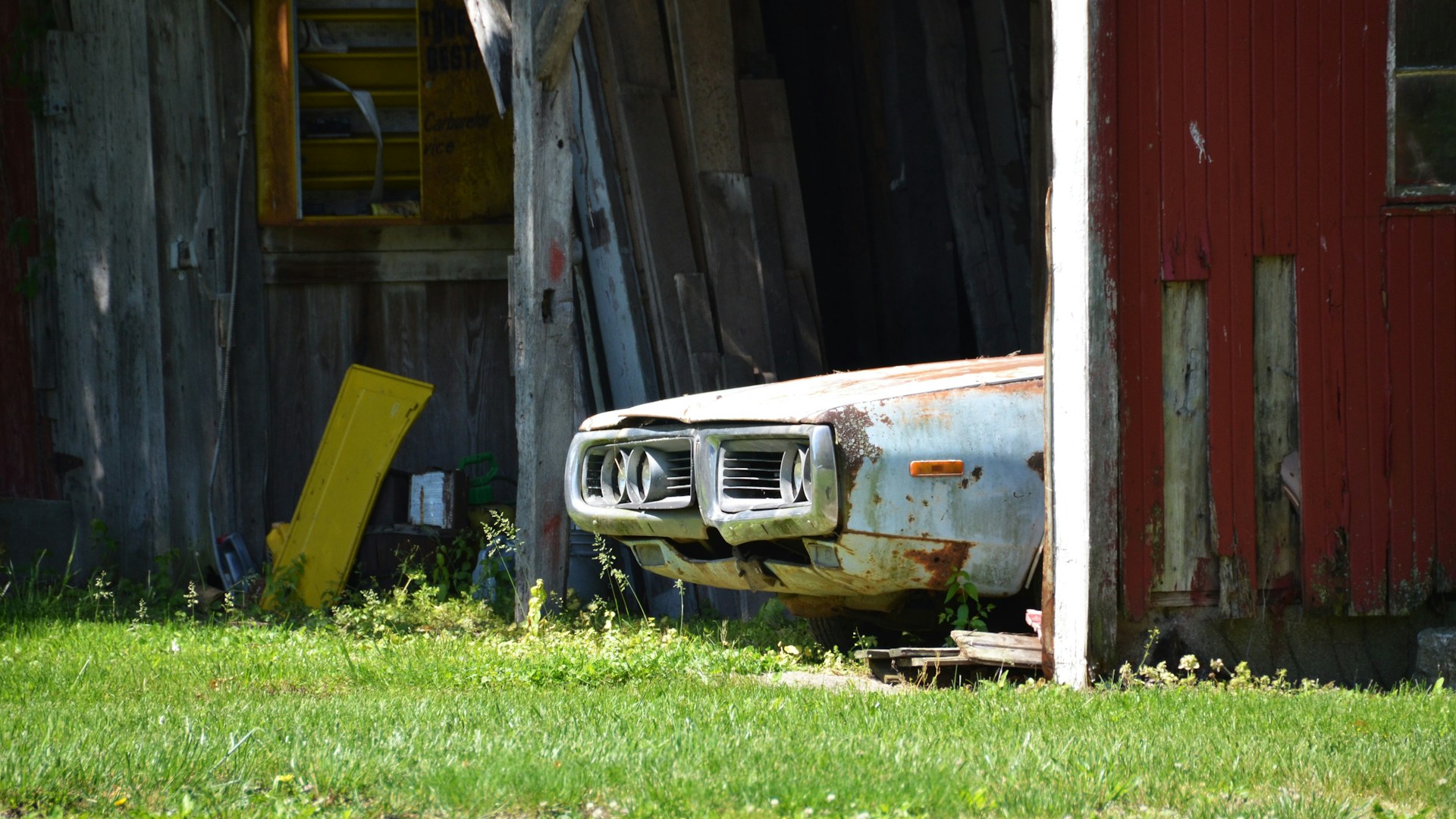
His first stop was a Charger that could have been either year. He did not need long to settle it, and the clue was a small part under the hood.
One Brake Part Gives Away The Year
The dual circuit master cylinder told him it was a 1967. In 1966, Chargers had a single pot master cylinder, and a federal mandate required dual circuit brakes on all American cars starting in 1967. He says the single pot setups still work fine as long as the brakes, hoses and lines are in good shape and not rusted.
This 1967 car once had power steering and was probably a small block car. He calls it a nice piece ready for rebuilding or hot rodding. The grille was still there, and he points out that the electric motors that run the hideaway headlights are elaborate and hard to find, but this car had them intact.
“Everything’s For Sale Potentially,” Says The Junkyard Crawler
He notes that anyone who wants something at the yard can contact the folks there, make a deal, and buy the car or the parts. Everything is for sale potentially, he says, and he stays out of the middle.
Then it was on to the next Charger, which he could identify for certain as a 1966 because of the single pot master cylinder. It also had power steering, and Magnante does not love it. The Chrysler power steering box is a heavy piece, and he figures about 55 pounds of dead weight on the nose of the car. He prefers the manual box, even if it is a little harder to steer.
The car is an automatic with a console shift and a little button to select between low, second and drive. Around the side, he showed how the Charger and the Coronet are cousins. From the firewall forward, a Dodge Coronet fender and hood will bolt right onto a Charger body.
Charger And Coronet Are Cousins, But Only From The Firewall Forward
Behind the firewall, the Charger goes its own way. The quarter panels and roof are unique to the Charger, and with no traditional package tray, a structure across the back bolsters the quarter panels. The deck lids are shorter to fit the fastback shape.
On the 1966 car, one of the rear tail lights had already been harvested, but the original lens is a wide piece that serves as tail light, stop light and brake light, and the glass is brittle. Reproductions are being made, which he finds reassuring, and it is strange to see one still in place on a car in a junkyard. The car was originally silver buff metallic, which he calls very attractive, and the big back window is hard to find as well.
There is also a mystery in the junkyard car. It has a column shifter but is set up for a console, which means it was either once a console car that was changed over or the other way around. As he says, that is the mystery of the junkyard, because you never know what you will get.
The 8 3/4 Rear Axle Is Tough Enough For About 600 Horsepower
Looking underneath, he pointed out the bottom of a torsion bar. Torsion bars have been unique to Chrysler Corporation cars since 1957, whereas most GM cars of the era used coil springs up front. The compact bars leave a wide engine bay, which makes room for a Hemi or whatever else you want to put in there.
The rust in this car is nasty, he says, but he adds that there are companies that make replacement floor panels for these cars, so the car is not dead by any stretch. Both Chargers have the 8 3/4 rear axle, which has a unique center section with a little dimple. There are no 7 1/4 axles in these cars, he says, and every 1966 and 1967 Charger has an 8 3/4.
He says the 8 3/4 can handle up to about 600 horsepower with an automatic transmission. With a stick shift, he says, they are damaged easily with over 400 horsepower.
A Big Wheel Cutout And A Few Character Lines
He likes the character lines on the body, one of which looks like a vent and is unique to the Charger. The Charger also has a big wheel opening, while the Coronet, its little brother, has a smaller opening that looks more like a skirt. The Charger’s cutout allows big tires without slicing up the wheel opening, which he calls a kind of cool thing.
For anyone thinking about a first-generation Charger, the lesson is to look closely before you buy. Check the master cylinder to date the car, look at the floors and quarter panels for rust, and make sure the parts you need, from tail lights to window glass, can actually be found. The reproduction market helps, and floor panels are available, but some of these pieces are hard to track down.
The two cars at the yard may never see a road again, or they may become someone’s project, and the owner of the yard is willing to deal. Either way, a half hour walking around these cars with a man who knows them is a nice way to learn why the fastback Charger, built for only two years, still has such a following.