

A Marketplace listing popped up for an old Chevy farm truck, and one man made the sellers an offer they could not refuse. They answered with a question that every truck hunter dreams of hearing: how soon can you be there?
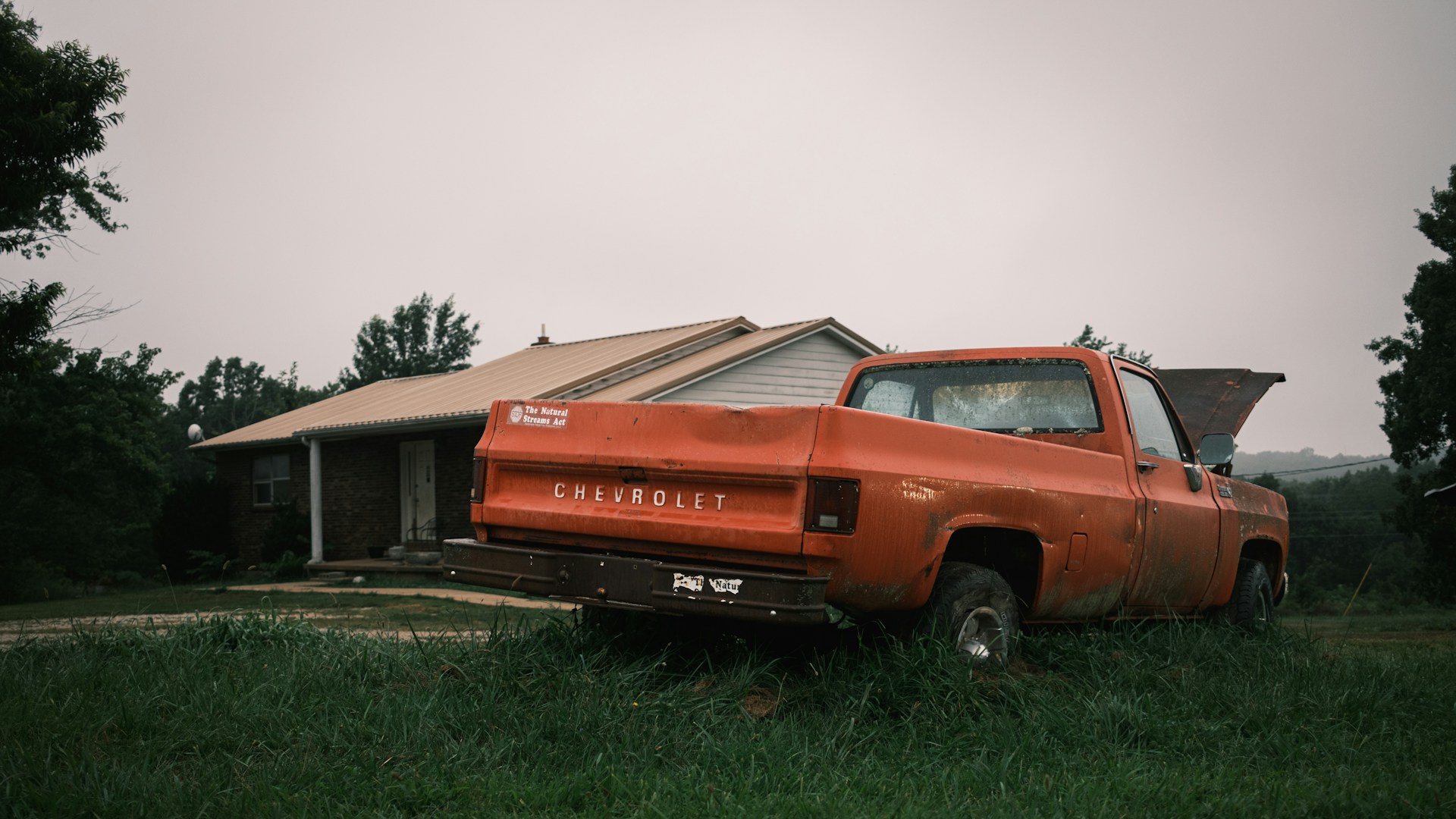
“I’ll be there in an hour,” said the man behind the Mortske Repair channel. The truck had been parked in a barn in 1978 and had not turned a wheel under its own power in 48 years.
The seller’s family needed their barn back, and he needed a truck. So he loaded it up and brought it home, with his dog Duff riding along as quality control.
Great Uncle Verlin’s Grain Truck Sat Untouched Since 1978
The story came straight from the sellers. This was their great uncle Verlin’s farm truck, and in 1978 he must have gotten a newer grain truck, parked this one and left it. It sat in the barn ever since.
You can tell it was a working truck. The grain door in the back still works, and the bed came loaded with stuff, including a lot of insulation. He guessed there were critters inside, which turned out to be right.
He thinks it is a 1948 Chevrolet three-quarter ton, with a title in his name. “Wow, that’s only 48 years ago,” he joked when he checked the last tag date. “Not that bad.”
Somebody Stole The Coil, And The Rotor Too
The truck sat dry for a few months while the shop stayed busy. Then a local park board called. They had borrowed an old truck the year before for pumpkins and hay bales in a fall display, and they asked if he had another one. He did, so the Chevy went to town for photos before coming back to the shop.
When he finally looked under the hood, the coil was missing, the rotor was gone and a spark plug wire was broken on number four. “Somebody always steals the coil,” he said. The family told him that is why they parked it, because the coil went bad and it would not spark.
He found a battery under the floorboard that looked far too new. It was dated 2016, which tells him somebody tried to get the truck going about ten years ago, swapped coils and played with the points, then gave up.
A Broken Rocker Shaft And Bent Push Rods Stood In The Way
He ran new cables, switched to 12 volts, and used a floor pedal to crank the engine, since this old stove bolt truck has a push pedal starter and needs no key. Spark plugs came out with some carbon and rust, but he thought they would run.
The engine turned over, but compression was poor, so he pulled a valve cover. “There’s our problem,” he said. Some push rods were bent and the valves were stuck.
He sprayed penetrating oil and tapped the valves, but he broke a rocker arm in the process, and later a rocker shaft as well. He says it was the first time he had broken a rocker shaft. Luckily he had picked up a couple of 1947 and 1948 Chevy fleetline cars that summer, and their 216 engines were laying in the trunk, so he had spares.
Even then, one mistake slowed him down. He put the wrong rocker shaft on, since the exhaust and intake versions have different angles. He had to take it apart and swap it. “Excellent engineering, GM,” he said.
“Mouse House” Packed Around The Starter Was Jamming The Whole Engine
He wanted heat in the cylinders, so he hooked the truck to his old tow rig, Bernie, and dragged it down the country road for four miles. That also helped to push oil to the top of the engine.
Back at the shop, the crew cleaned out the cab, finding a race suit, spark plug wires and spare parts. Then the truck refused to turn over. The starter sounded unhappy, and the clutch pedal jumped up and down on its own.
After he took off the inspection cover, he found the answer. Mice had packed the space between the starter and the ring gear so tightly that the engine would not turn. “Mice ruin everything,” he said. When he scraped out the packed nest, the engine turned almost free. “We’ve defied the laws of physics,” he joked.
A Boat Tank In The Passenger Seat And A Belt From A Model A
The original fuel tank sits under the cab, and when he looked inside, it was rusty. He set up a boat tank on the passenger side instead, and added an $11 electric fuel pump when the mechanical one would not pull fuel.
The carburetor was a Carter W1, and he took it apart on the bench, cleaned the passages and refilled the bowl. He also needed a new fan belt, and he found that the same Gates belt fits a 1928 Model A Ford and his 1948 Chevy pickup. “Crazy,” he said.
A gallon of fresh antifreeze filled the cooling system. Then he swapped a few cables, put the battery inside the cab and hooked up a starter button.
“We Got Some Steam Under The Hood” As It Rolls Down The Road
On the first drive, the truck moved forward and reversed, and the gauges worked. He saw 180 degrees on the temperature gauge and about 10 to 12 pounds of oil pressure. First gear is “just about useless,” and the truck needs a tune up, brakes, a muffler and a seat.
The truck rolled down the road, climbed a hill and picked up speed. Then the temperature crept up and steam showed under the hood. “Hopefully we make her back to the shop,” he said.
It did. The truck made it home, steaming and a little warm, and he could not shut it off for a while. “It’s got a title in my name,” he said. He is looking for a new home for it and asks buyers to message before coming to get it.
What To Know Before You Revive A Barn Truck
The Advanced Design Chevrolet trucks, built from 1947 until the Task Force series replaced them in late 1955, were the top selling pickups in America for that whole run. That popularity is why parts and know how are still easy to find.
- Check the ignition first. A missing coil or rotor, or a broken plug wire, can make a good engine seem dead.
- Inspect the valves before you tow it. Bent push rods and stuck valves are common after long sits.
- Look for rodent nests around the clutch housing, starter and wiring.
- Do not trust the old fuel tank. Rust and varnish can ruin the new system.
- Go slow on the first drive, and watch the temperature gauge.
The lesson from the Chevy is patience. A truck that sat for 48 years can run again, but expect surprises, and expect to learn a few things along the way.
More Stories You May Like
- Man Haggles A Moss Covered 1964 Mercury Truck Down To $900 On Facebook Marketplace, Then Short Tow Chains Dent The Hood Before It Gets Home
- Son Waits Years For His Dad’s 1977 Lincoln Continental, Then His Father Hands Him The Title Inside A Birthday Card When He Turns 60 In 2015
- Mustang Badged As A 289 Turns Out To Be A Big Block 390 S Code Sleeper After They Finally Get The Hood Open On An Old Barn Find